A Playground for the Eye
“The eye accomplishes the prodigious work of opening the soul to what is not soul — the joyous realm of things and their god, the sun.”
Maurice Merleau-Ponty, The Primacy of Perception
With Iggy on the water en route to London, the past week or two has been an opportunity to curate the website and reflect on our Pan-American journey. It’s had me thinking about what makes a good photograph for me — what an image can do, and how it derives its power to connect and communicate experience.
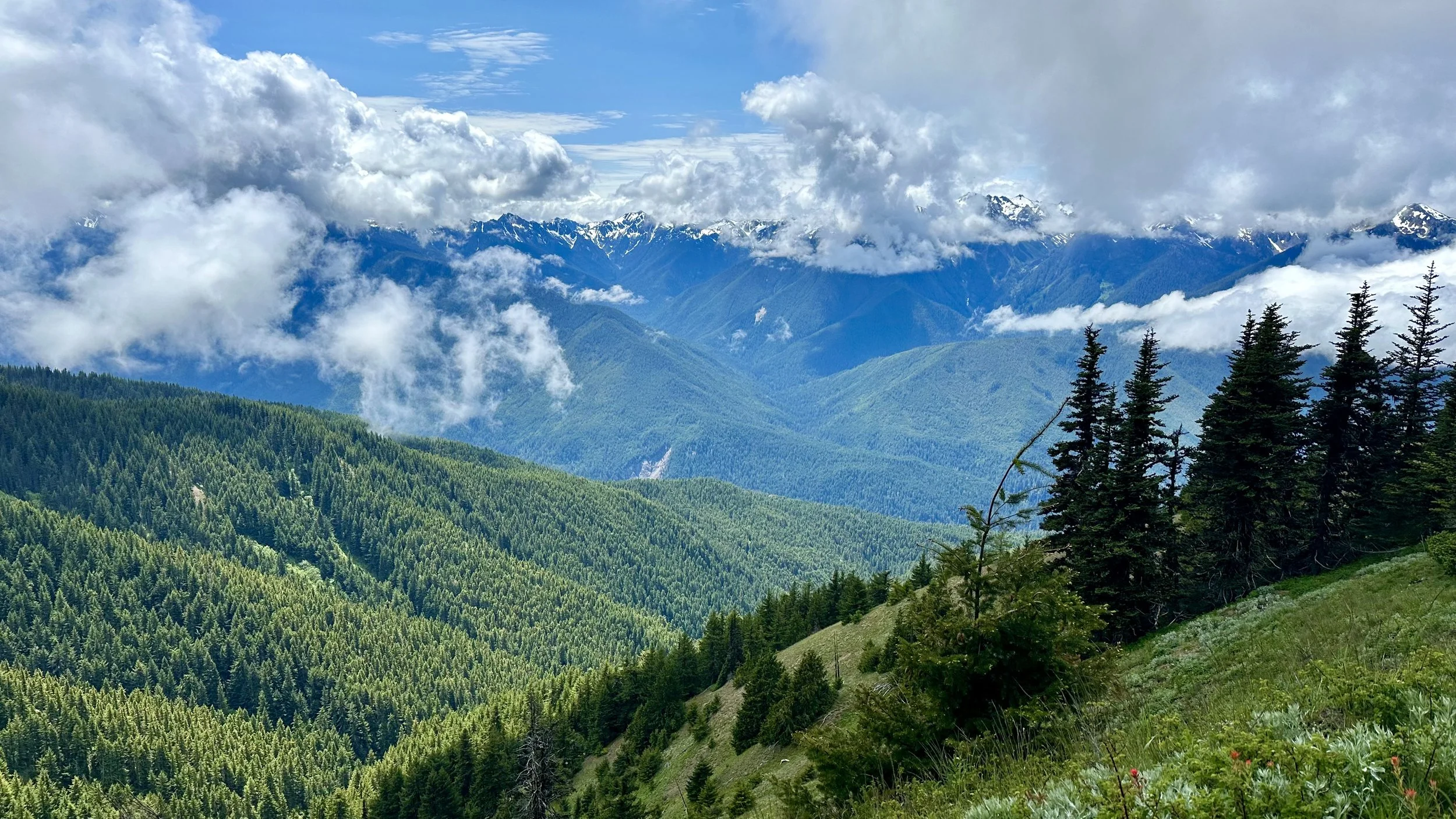
Merleau-Ponty quoted just now reckons the eye is an agent, reaching outward, bringing the world into being through the act of attending to it. Seeing is an ordering act. The eye selects, groups, resolves, and along with the imagination composes to make a world. The viewfinder orders experience into something shareable, available to another world-maker.
The curation exercise has been causing me to reflect on the cascading melange of ideas one has encountered across disciplines — all of these in turn echoes of different times of life, different cities, different lines of enquiry that turned out to connect in ways that weren’t obvious at the time. All while this time, our two years on the Carretera, comes to a close, and I find myself with so many new connections crowding my mind.

Before I ever went anywhere I studied Psychology and I remember being intrigued with Gestalt. Gestalt posits that the visual system perceives organised wholes before individual parts, and that the whole carries meaning the parts alone don’t. Proximity, similarity, continuity, closure, figure and ground describe mechanisms for how the eye processes the visual field that have made it through into theories of composition. The governing principle, Prägnanz, is simply that the eye resolves complexity into the simplest available interpretation.

Fast forward five years and I found myself studying the History of Design via Architecture, having escaped Perth to Tasmania and then Melbourne. Somewhere in there was an assignment on the Bauhaus School, whose search for a scientific foundation for good design had led it directly to gestalt psychology.

Commonly seen so-called ‘rules’ of composition are based on geometric schemata, each triggering a specific cognitive and embodied response.
The rule of thirds is maybe the most familiar, as it is available default within phone cameras: the frame divided into nine equal parts creates four intersection points where the eye first attempts to anchor meaning, based on gestalt theory. The choice of which to activate is a choice of portal into the four-dimensional world contained within the frame.
Less a prescription, it turns out, than a description of how the eye enters an unfamiliar space, and thereby a mechanism for establishing an empathic relationship between the photographer and the future viewer of the photograph.
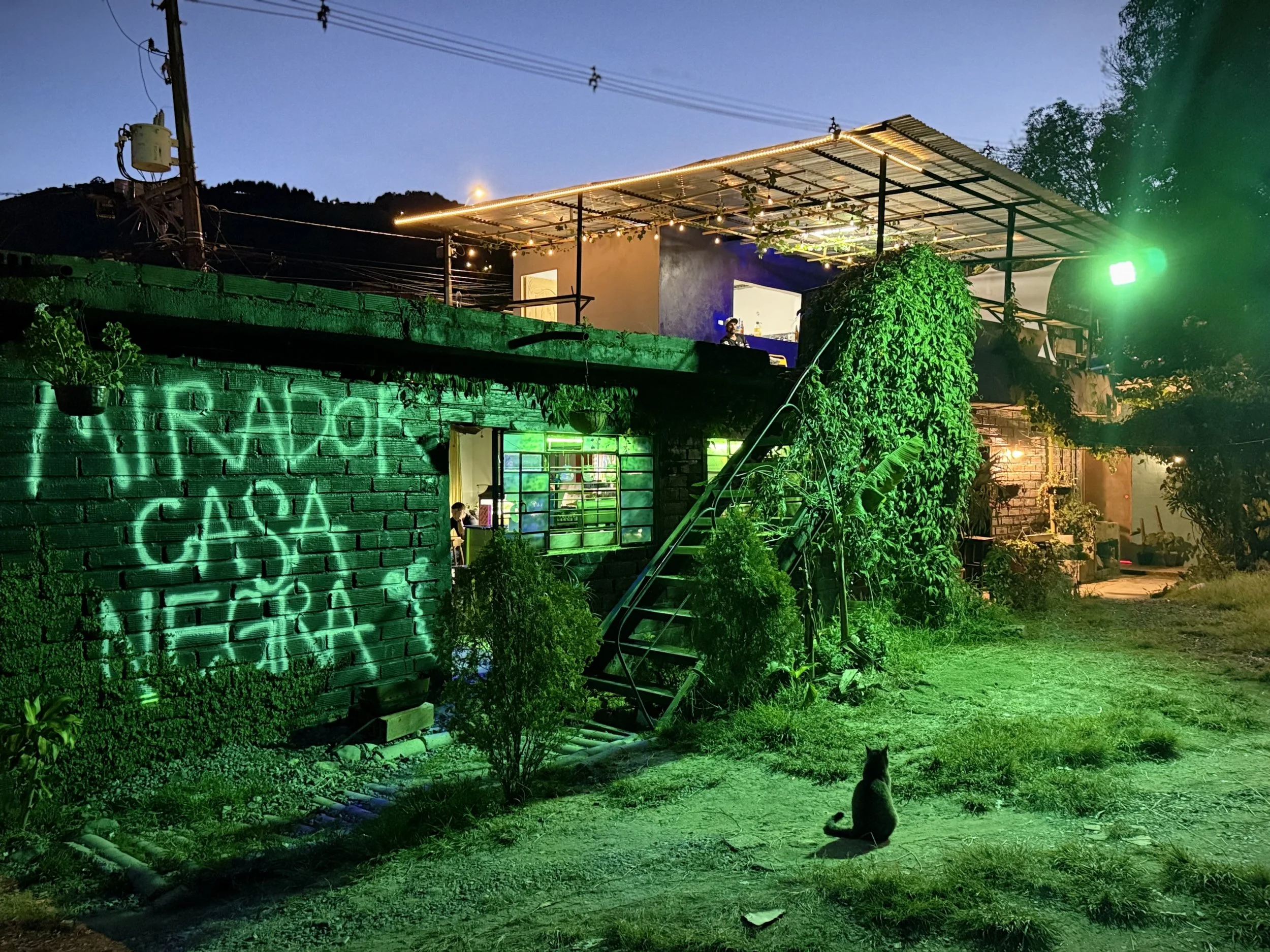
Back in the Architecture days I started to appreciate there was a kind of cross-disciplinary opportunity to connect these dots that defied ‘fields of study’ as I’d previously understood. That realisation changed my trajectory, unleashing polymath curiosity long before travel, language and photography emerged as various means of its expression.
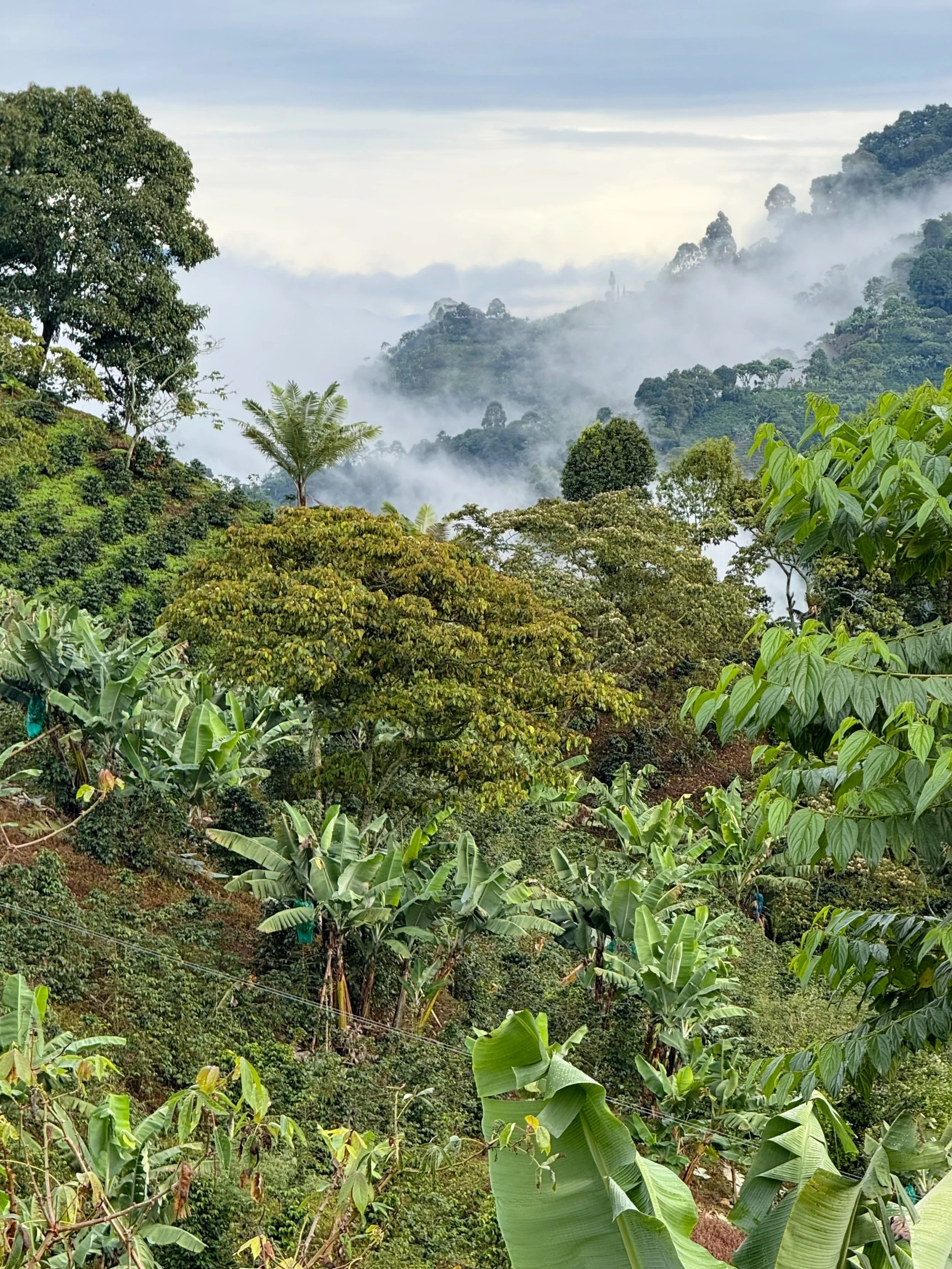
An early philosophic topic was Edmund Husserl. Husserl coined the term epoché for a bracketing of the natural attitude — the suspension of our taken-for-granted engagement with the world in order to attend to experience itself. The frame of our attention.
In the natural attitude, or when we submit to algorithms, we move through the world purposively, consuming rather than attending. The epoché interrupts that. It holds experience up for inspection on its own terms. The photograph is such a bracket: a moment of the world suspended, removed from the flow of before and after, offered for pure attention.
Kierkegaard wrote of eternities in time: the possibility that the eternal could irrupt into a single moment and be genuinely present within it, that a moment might hold within its brief duration something that the forward motion of existence normally forecloses. The plunge toward the end of all possibilities briefly suspended.
A good photo reaches for exactly this — not a record of an experience from some fleetingly brief life but an experience in itself, self-contained and inexhaustible. The eye, as Merleau-Ponty understood it, opens the soul to the joyous realm of things. A great photo holds that opening ajar: a playground for the eye, outside of time.