A Lighthouse on Avenida de Mayo
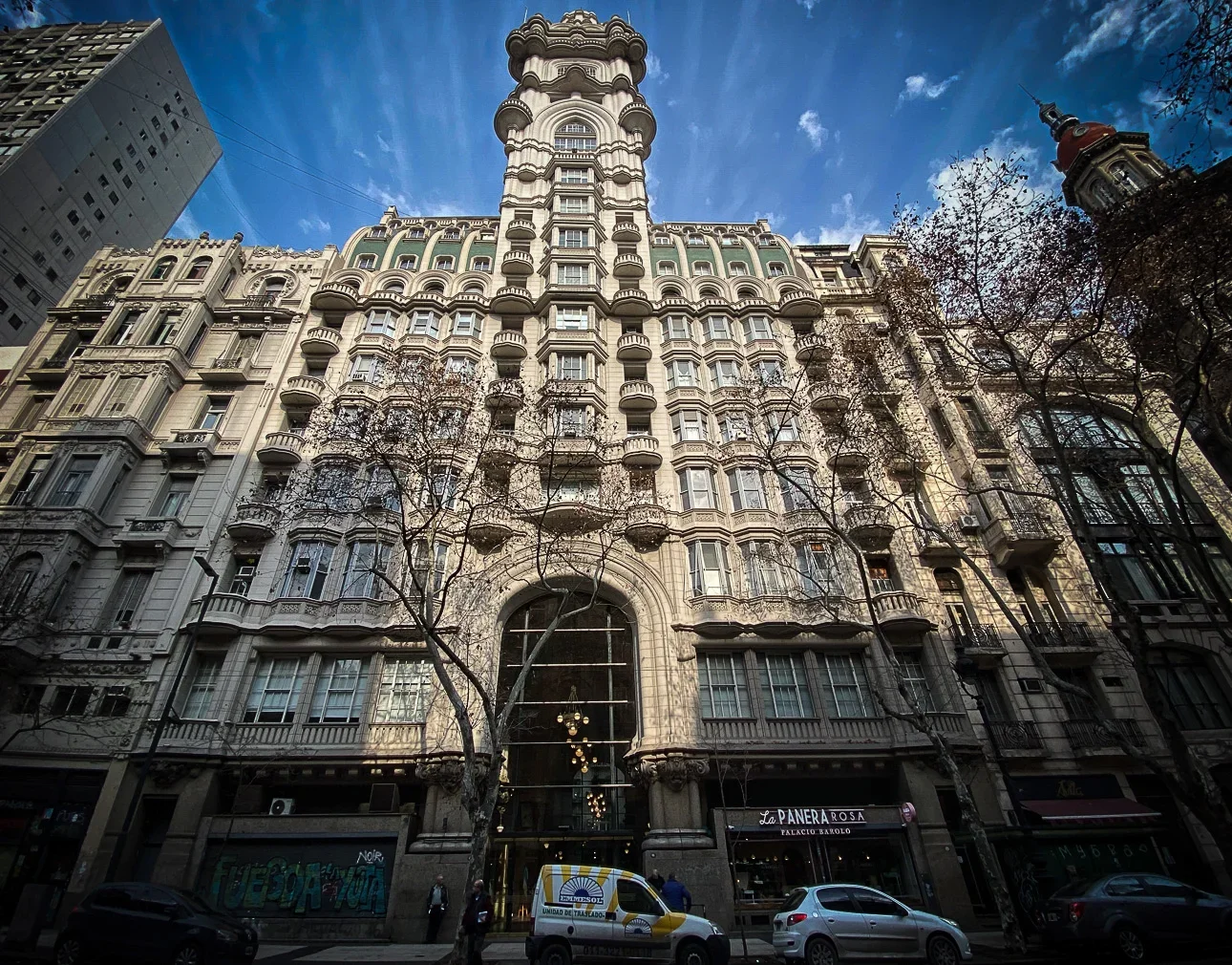
Palacio Barolo.
Dante's Inferno opens with a man lost in a dark wood, midway through his life, and the only way out is down through the full structure of suffering, past every form of human failure and cruelty, before any ascent toward light is possible.
Above the gate of Hell, Dante reads this inscription:
Per me si va ne la città dolente, (Through me you enter the city of woes.)
Per me si va ne l'etterno dolore, (Through me you enter eternal sorrow.)
Per me si va tra la perduta gente. (Through me you enter among the lost.)
Giustizia mosse il mio alto fattore: (Justice moved my maker on high:)
fecemi la divina potestate, (divine power made me,)
la somma sapienza e 'l primo amore. (the highest wisdom, and the primal love.)
Dinanzi a me non fur cose create (Before me nothing was created)
se non etterne, e io etterno duro. (but eternal things, and I endure eternally.)
Lasciate ogne speranza, voi ch'intrate. (Abandon all hope, you who enter here.)
Dante was expelled from Florence in 1302, accused of corruption and sentenced to death if he ever returned. He spent the last twenty years of his life moving between the courts of northern Italy, dependent on the hospitality of patrons, writing a poem in which he personally escorted himself through the entire structure of the universe. In the Inferno he placed his enemies. In the Paradiso he placed his heroes. The poem is, among other things, the most elaborate act of revenge in literary history, and the most enduring. Florence eventually acknowledged its error and offered to reinter his remains. Ravenna, where he died and is buried, declined the proposal.
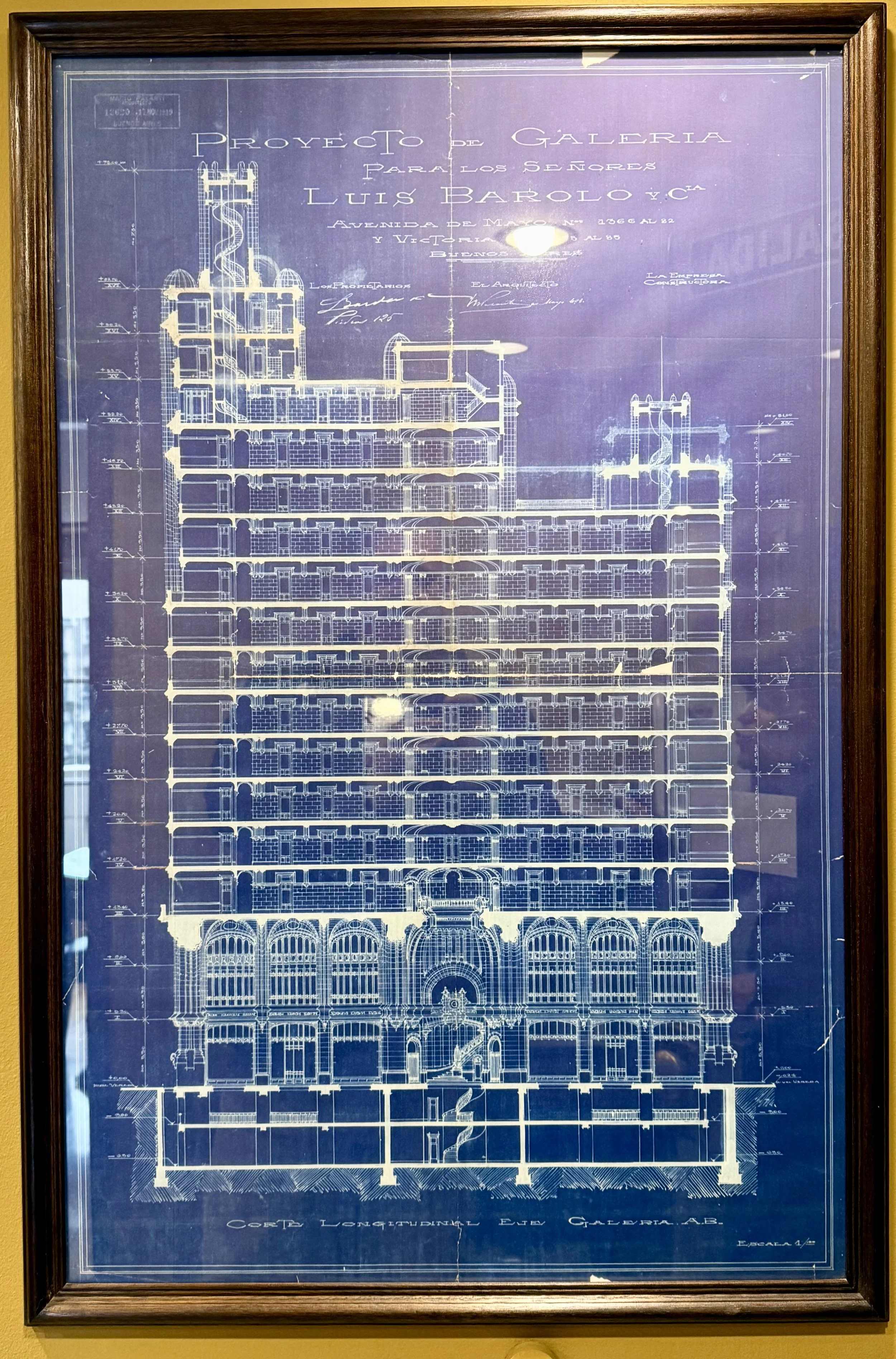
Palacio Barolo.
At the time of its completion in 1923, Palacio Barolo in Buenos Aires was the tallest building in South America. Its architect was Mario Palanti, a Milanese who arrived in Buenos Aires in 1909. The commission came from Luis Barolo, an Italian immigrant who had built a fortune in the Argentine textile trade and who, like Palanti, was a member of La Fede Santa — a fraternal order that claimed Dante himself among its historical initiates. The two men proposed that this commercial building be a mausoleum for Dante in the New World.
The Palacio rises to one hundred metres, one metre for each canto of Dante’s Divine Comedy. Its twenty-two floors correspond to the stanzas of the poem's verses. The lobby opens into nine vaulted archways representing the nine circles of Hell. The floors rise through Purgatorio. The dome is Paradiso. At the summit, a lighthouse. The building faces the Argentine National Congress at the far end of Avenida de Mayo, and on a clear night its beam reaches across the Río de la Plata toward Montevideo, where Palanti built a second, taller version of the same structure, the Palacio Salvo, completed in 1928, which in turn became the tallest building in South America.
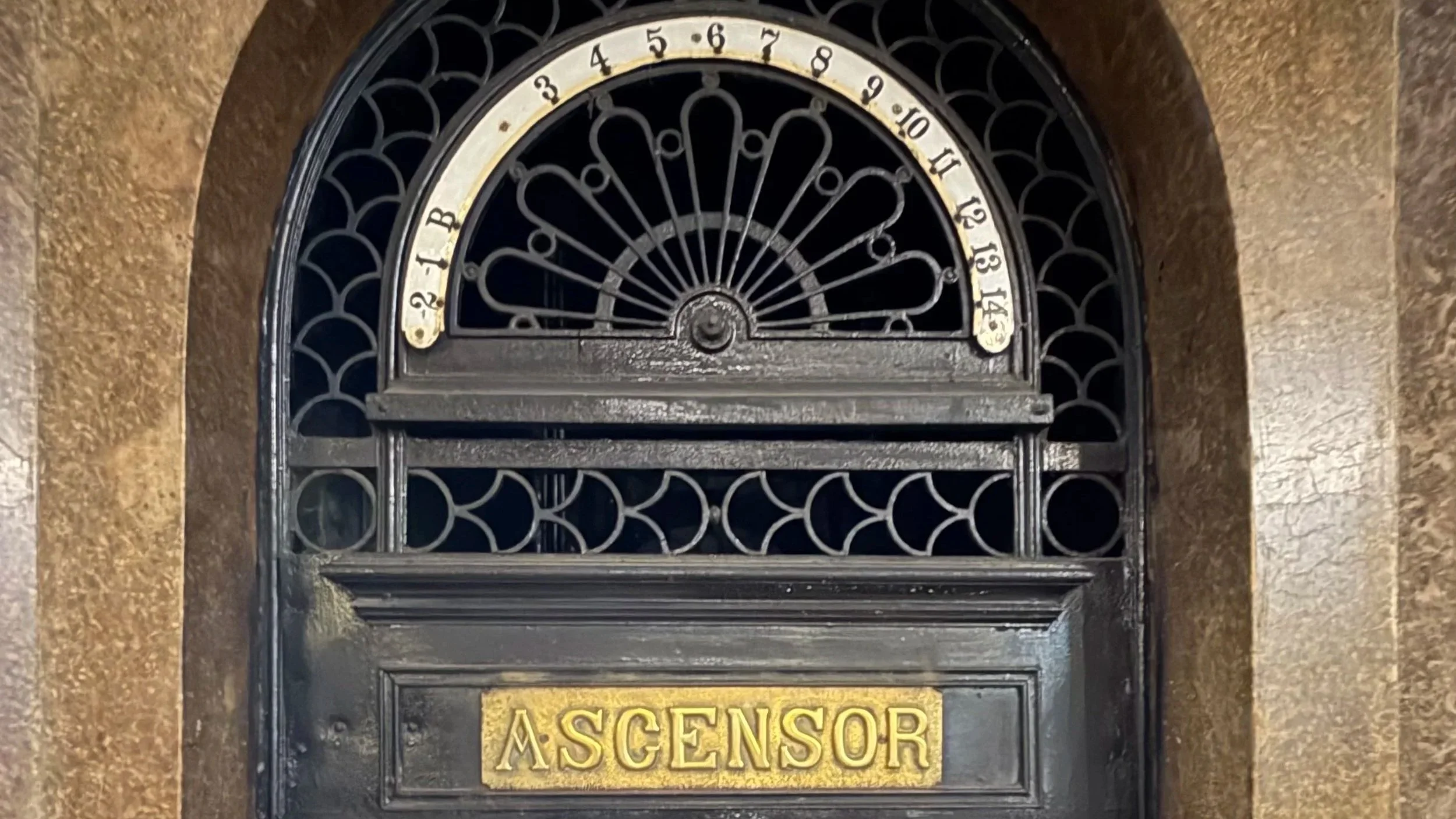
A Masonic easter egg.
While Dante’s poem is the skeleton of the building on Avenida de Mayo, the animating logic is something else. Theosophy, Freemasonry, the Fede Santa lodge to which both Palanti and Barolo belonged are different names for the same underlying claim, that reality is structured in hidden layers, that the initiated few possess keys the uninitiated cannot see, and that this access constitutes a different and superior relationship to the world. The Masonic symbols worked into the first-floor detailing are legible only to those who know how to read them, deliberate signals to the initiated and deliberate exclusions of everyone else. The building speaks two languages at once. The public one is Dante and beauty and the cosmos. The private one is addressed to those who understand what the numbers and the symbols actually encode: that the initiated possess real arcane power.
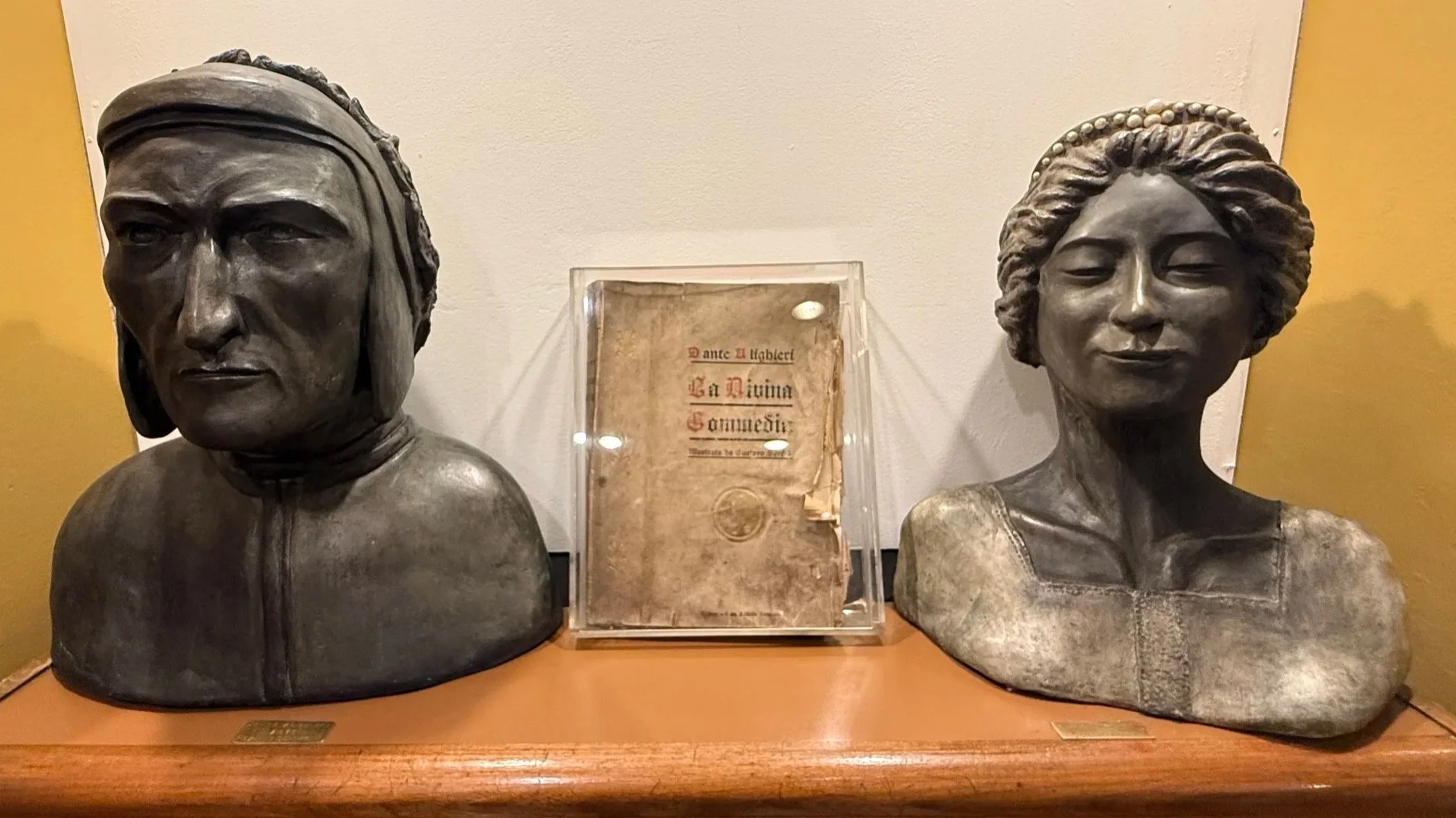
Dante, his paramour Beatrice, and an ancient copy of The Divine Comedy.
The Risorgimento that established modern Italy saw in Dante not just the founding text of the Italian language but a model of what it meant to make a claim that history could not erase. Giuseppe Mazzini (1805–1872), the revolutionary philosopher who devoted his life to Italian unification and spent most of it in exile, found in Dante both a forefather and a justification. From Mazzini to the interventionists of 1914, the same paragon of victimhood was invoked: the man unjustly dispossessed who built something of which he could not again be dispossessed.
By 1915, the machinery had been running for decades and the poet driving it was Gabriele D'Annunzio. He was the most famous living Italian writer, a dandy and polemicist that understood that beauty and power were the same thing. He wrote about Fortuny gowns and torpedoes with identical enthusiasm. Once Italy joined the war, he volunteered for combat at fifty-two, flying missions over Austrian territory, only to lose an eye after a hard landing.
His philosophy was stated plainly in his 1889 novel Il Piacere:
You must make your own life, as you make a work of art. In that alone lies true superiority.
This was not mere aestheticism, but a complete ethical system - with chilling consequences. If life is a work of art, then the ordinary constraints of other people's suffering do not apply to the artist. The sculptor is not obliged to apologise to the marble, it is a means of his achievement. D'Annunzio called this estetismo, the belief that aesthetic experience was not merely pleasure but a form of superior knowledge, and that the man who lived most intensely, most beautifully, most dangerously, stood in a different and higher relationship to the world than those who merely endured it.
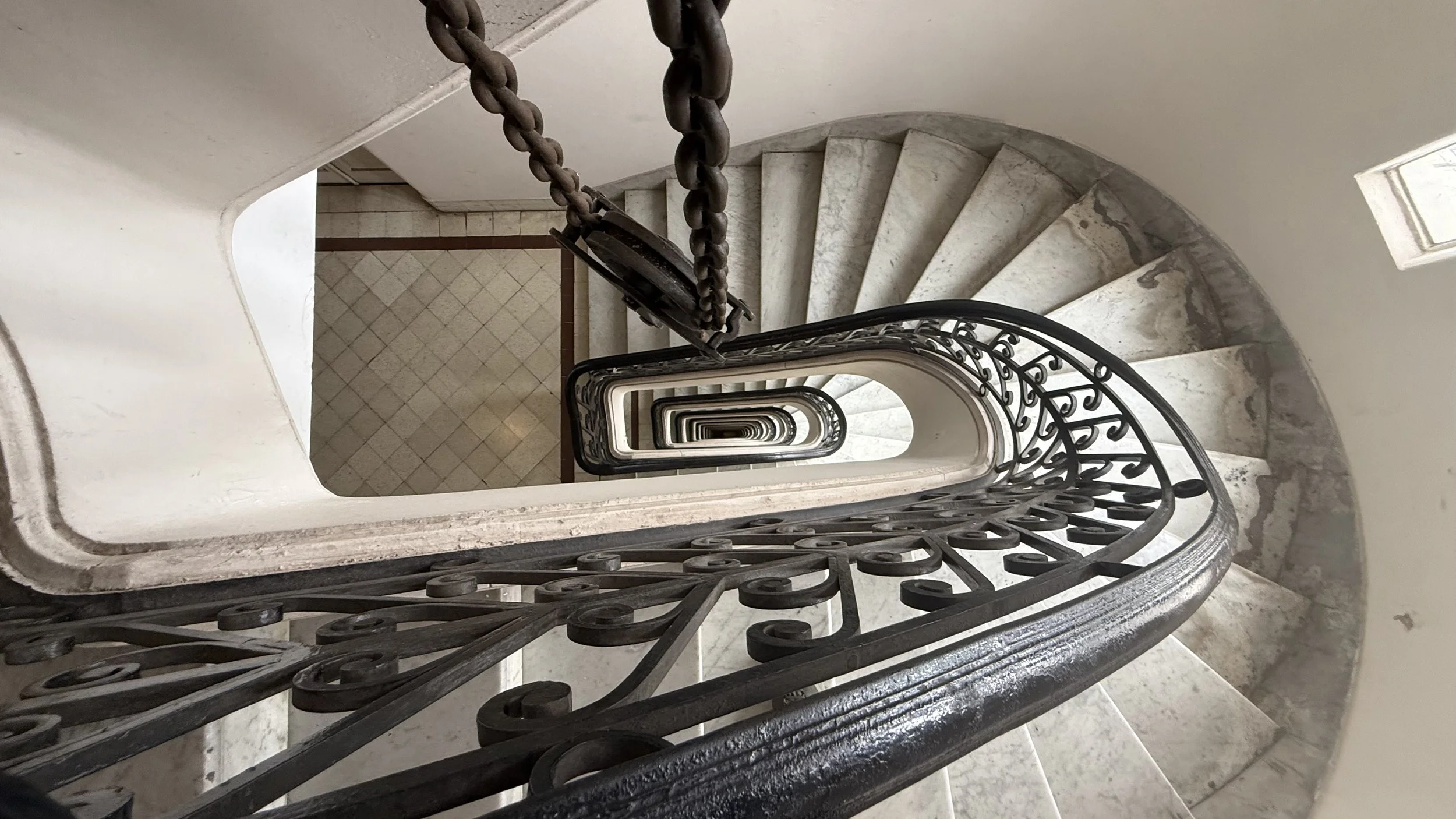
Construction materials were imported from Italy.
When Europe went to war in 1914, D'Annunzio campaigned ferociously for Italian intervention. His speeches drew enormous crowds. At Genoa in May 1915, days before Italy entered the war, he delivered the Discorso di Quarto, a reworking of the Sermon on the Mount in which every beatitude became a call to sacrifice.
Blessed be those who, having opposed the war, will accept in silence the supreme necessity and will want to be, not the last, but the first ones to sacrifice themselves. Blessed be the youths who hunger and thirst for glory, for they will be sated. Blessed be the merciful ones, for they will cleanse a luminous blood and bind a shining grief.
The crowd that heard these words sent its sons to the Isonzo, to Caporetto, resulting in an estimated six hundred thousand Italian dead. When his friend Major Giovanni Randaccio lay dying in a field hospital, begging for the poison capsule he knew D'Annunzio always carried, D'Annunzio refused him. It was necessary for Randaccio to suffer so that his life could become sublime in the immortality of death. He lied to the dying man, telling him that the position he was assaulting had fallen to the Italians. Final brushstrokes on the magnificent canvas of Randaccio’s sacrifice.
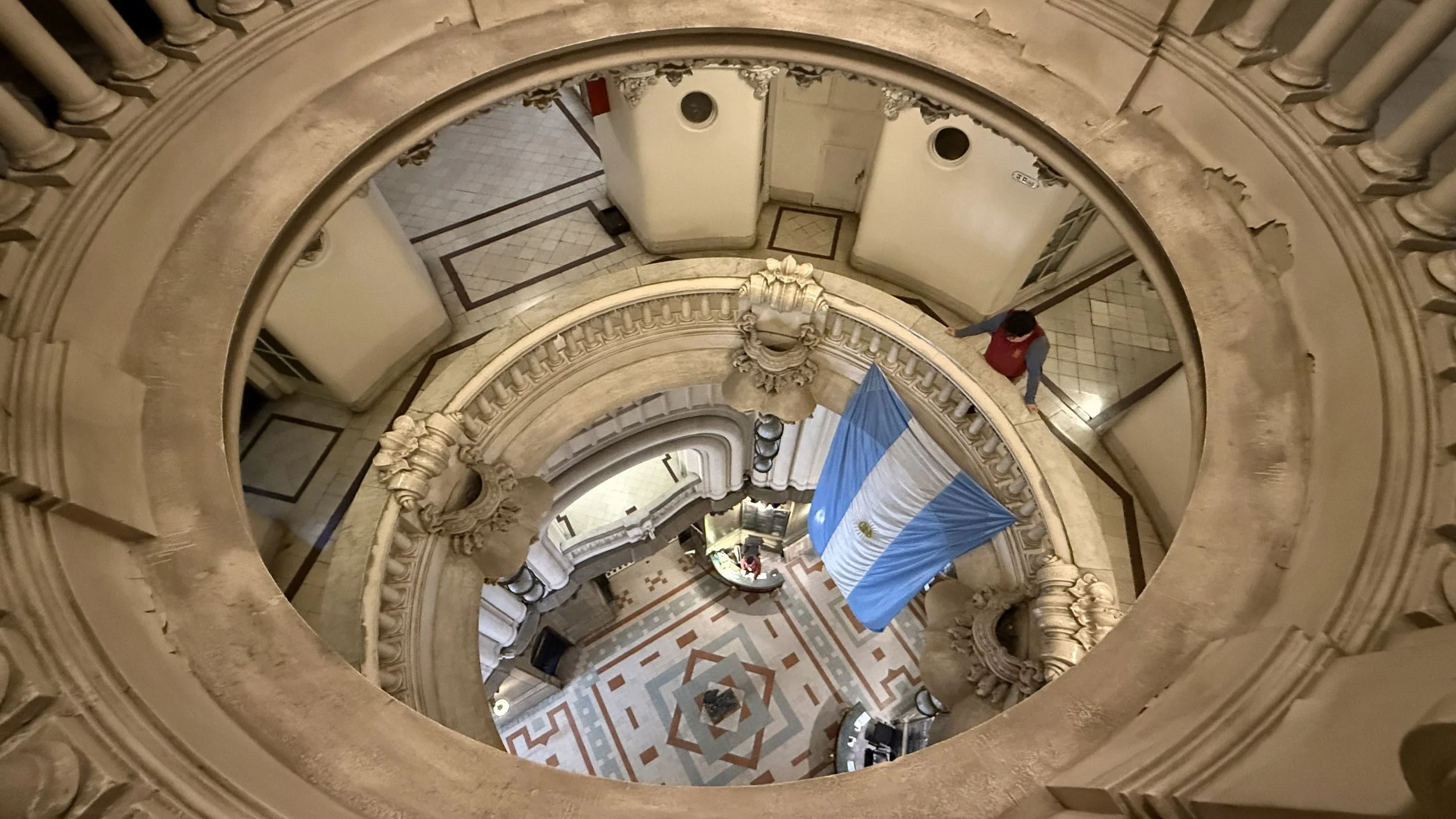
The view from Purgatory.
Italy had not been dragged into the war. In 1914, with Europe already in flames, Italy initially declared itself neutral. What the newly-formed Italy saw was an opportunity for territory: Trentino, Trieste, Istria, stretches of Dalmatia, concessions in Africa and the Ottoman east. These were not strategic necessities but rather the demands of an aggrandising nationalism that had spent decades insisting the Italian nation was incomplete, that its borders were a wound, that the map had to be made whole. In April 1915, Italy signed the secret Treaty of London with Britain, France and Russia, extracting precise territorial commitments as the price of intervention. The Allies, facing catastrophe on the Western Front, acquiesced and six weeks later Italy declared war. 1.25 million Italian soldiers and civilians would die for the bold claims of poetic rhetoric and a map drawn by irredentists in the previous century.
At Paris in 1919, the bill came due and the Allies declined to honour the agreement in full. Woodrow Wilson's Fourteen Points had made territorial annexation ideologically inconvenient. Italy received Trentino and Trieste and almost nothing else. D'Annunzio coined the phrase that defined what followed: vittoria mutilata, the mutilated victory. He led his listeners in chants in which the word blood tolled repeatedly, the blood shed already and the blood which yet must flow to cleanse Italy of the filthy shame of a negotiated peace. One observer described him as blasphemous, unreasonable, electrifying. In September 1919 he led two thousand nationalists into Fiume, declared himself Duce, instituted the straight-armed salute, gave speeches from balconies, and governed for fifteen months. Three years later, Mussolini took on the precedent and did the same thing at national scale. The black shirts, the salute, the balcony speeches, the glorification of youth and blood and sacrifice were all present in Fiume before Rome.
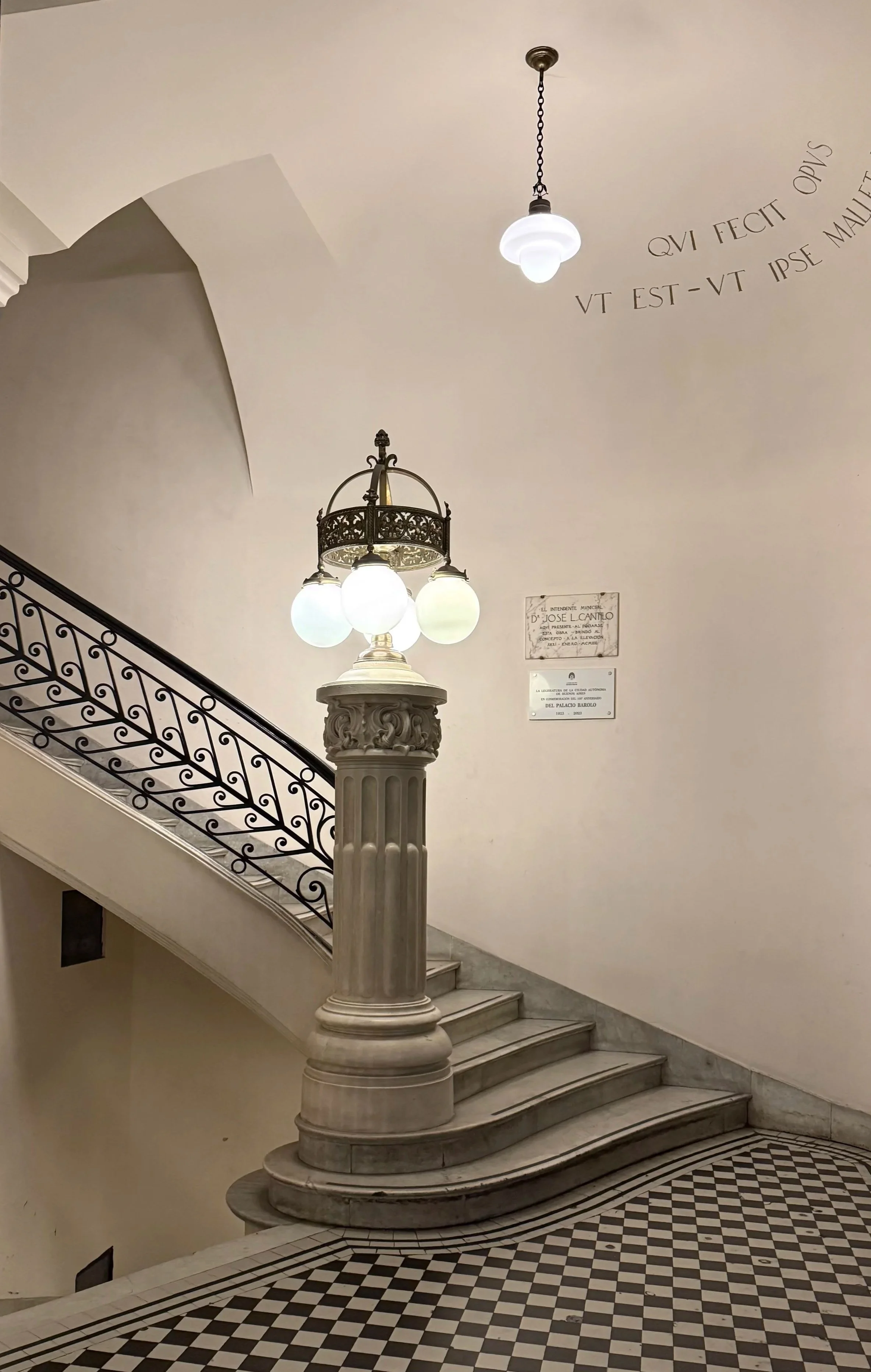
QVI FECIT OPVS VT EST — VT IPSE MALLET (He who made the work as it is — as he himself would have wished it.)
What Palanti understood, and what the Palacio Barolo makes permanent, is this intoxicating ambition to greatness. People hunger for something larger than bread and procedure. They are fascinated by the esoteric, the elusive, the symbolic – particularly when these suggest an underlying order and source of emancipating power. This theme persisted through Italian nationalist movements of the nineteenth and twentieth centuries and into the post-WWII politics of post-colonial South America.
Palanti’s encoding runs into every detail. Nine is the number of circles in Dante's Hell, descending from Limbo through Lust, Gluttony, Greed, Anger, Heresy and Violence to Fraud and Treachery at the bottom, where Satan himself sits. Palanti built nine archways into the lobby, nine elevators rising to the tower, nine portals into every floor. Latin inscriptions from nine classical sources cover the vaults. An order and ethic from outside of the turbulent times that he lived in.
The desire to participate in something that defeats time and chaos is one of the most persistent features of human experience. The horror is what happens when men of genuine intelligence and real aesthetic power place that hunger in the service of their own aggrandisement, and determine that other people's deaths are an acceptable price of their ambition.
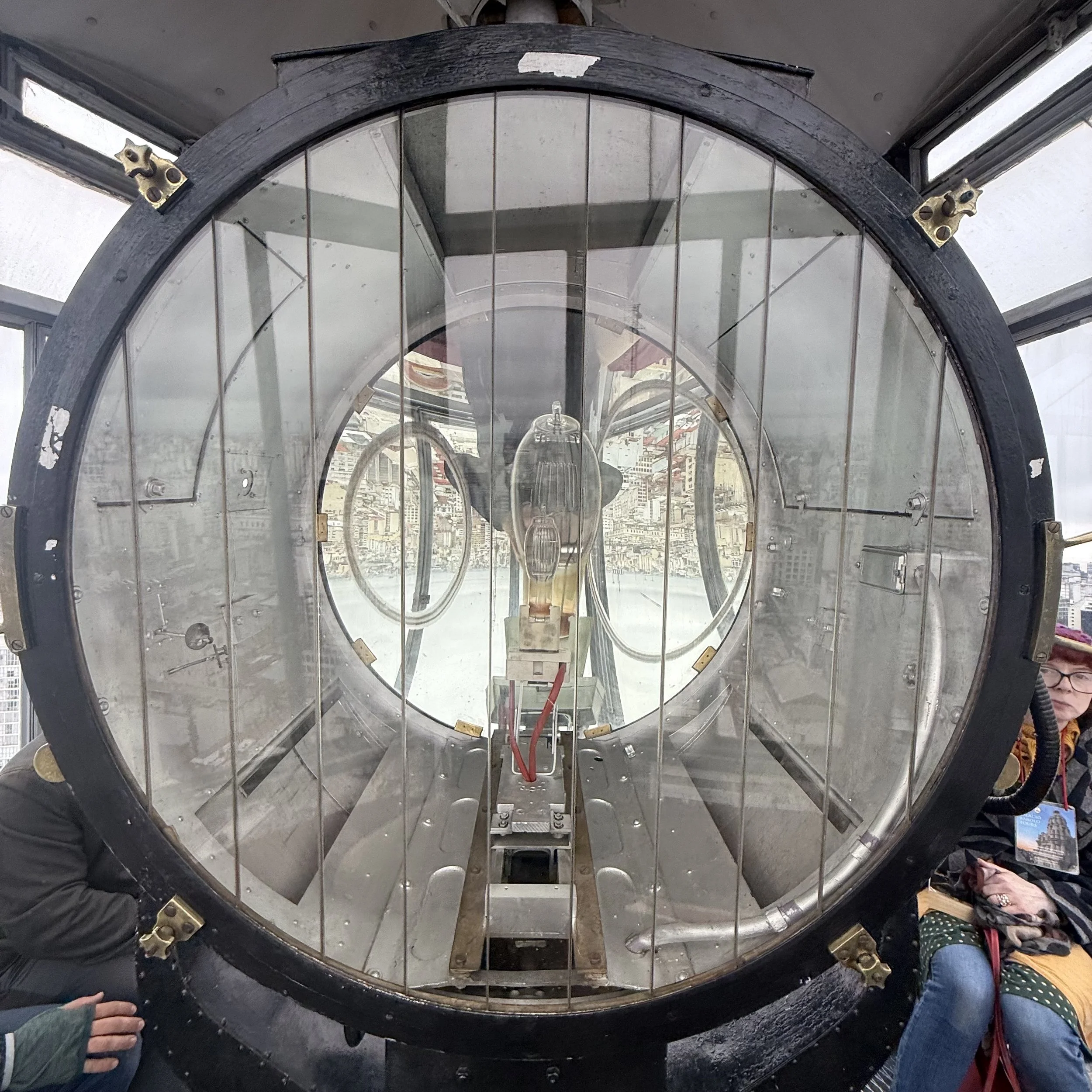
The lighthouse beacon in the tower of the Palacio.
The estetismo did not die with Mussolini. It persisted in the gold braid and grand balconies of the juntas, in the crowds summoned to be mirrors rather than citizens, in the particular emotional register of a politics that presents itself as poetry. Eva Perón understood the stage as well as D'Annunzio did. The shirtless workers, the tears performed in public, the dying drawn out as a national event: the same grammar, life as art, suffering as sublimity, the crowd as the medium in which the artist inscribes himself.
In the shadows of that politics were the unmarked vehicles and the black sites, the thirty thousand who disappeared into the Río de la Plata.
Argentina's territorial imagination runs on the same Risorgimiento logic and has done so since San Martin and the nations independence. The founding claim was the Viceroyalty of the Río de la Plata, the vast Spanish administrative territory that Buenos Aires believed it was entitled to inherit in its entirety. Uruguay, Paraguay, Bolivia, parts of Brazil, Chile and Peru: all of it, by right of succession. Uruguay was lost within a generation. Paraguay was fought to near-extinction in the War of the Triple Alliance and yielded almost nothing. Patagonia was seized from its Mapuche inhabitants in the Conquest of the Desert in the 1870s, partly in competition with Chile for the same land. The Falkland Islands have been claimed since 1833. South Georgia and the South Sandwich Islands alongside them. An Antarctic wedge, formalised by Perón in the 1940s, overlaps the British and Chilean claims both. The 2010 official bicentenary map, mandatory in schools, redraws Argentina as a bicontinental nation with Tierra del Fuego at its centre.
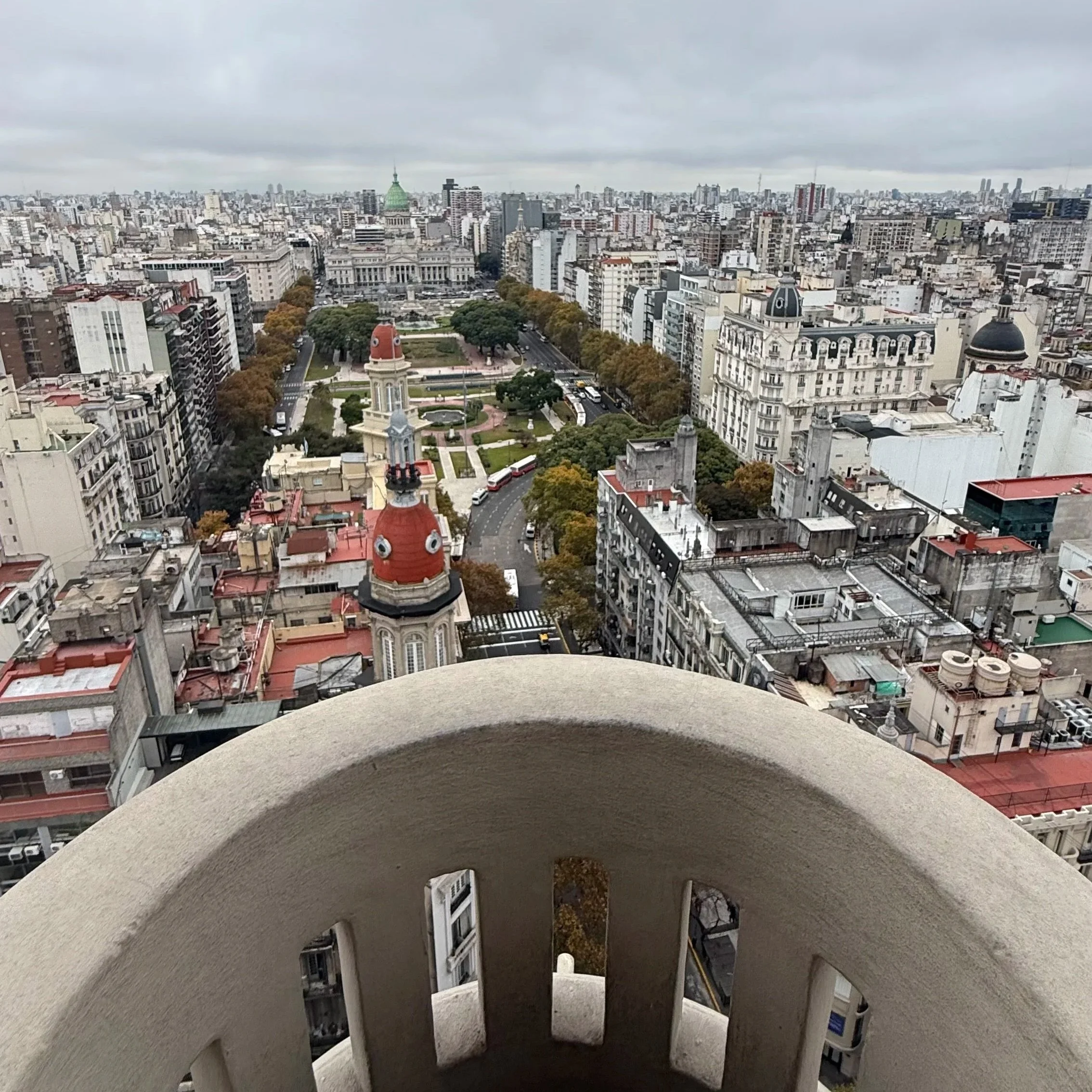
From the balcony… the seat of government and the lives of el gente.
An Argentine politician writing in 1910 described this history of territorial frustration using the same phrase that D'Annunzio would deploy in Italy nine years later - a “mutilated victory”. Drive into almost any Argentine town and there is a sign at the entry and exit. Malvinas Son Argentinos (The Falklands are Argentine). The Malvinas War cost Argentina 649 dead and ended in ignominious military defeat. The signs are still maintained, and only recently the claim to annexation was renewed.
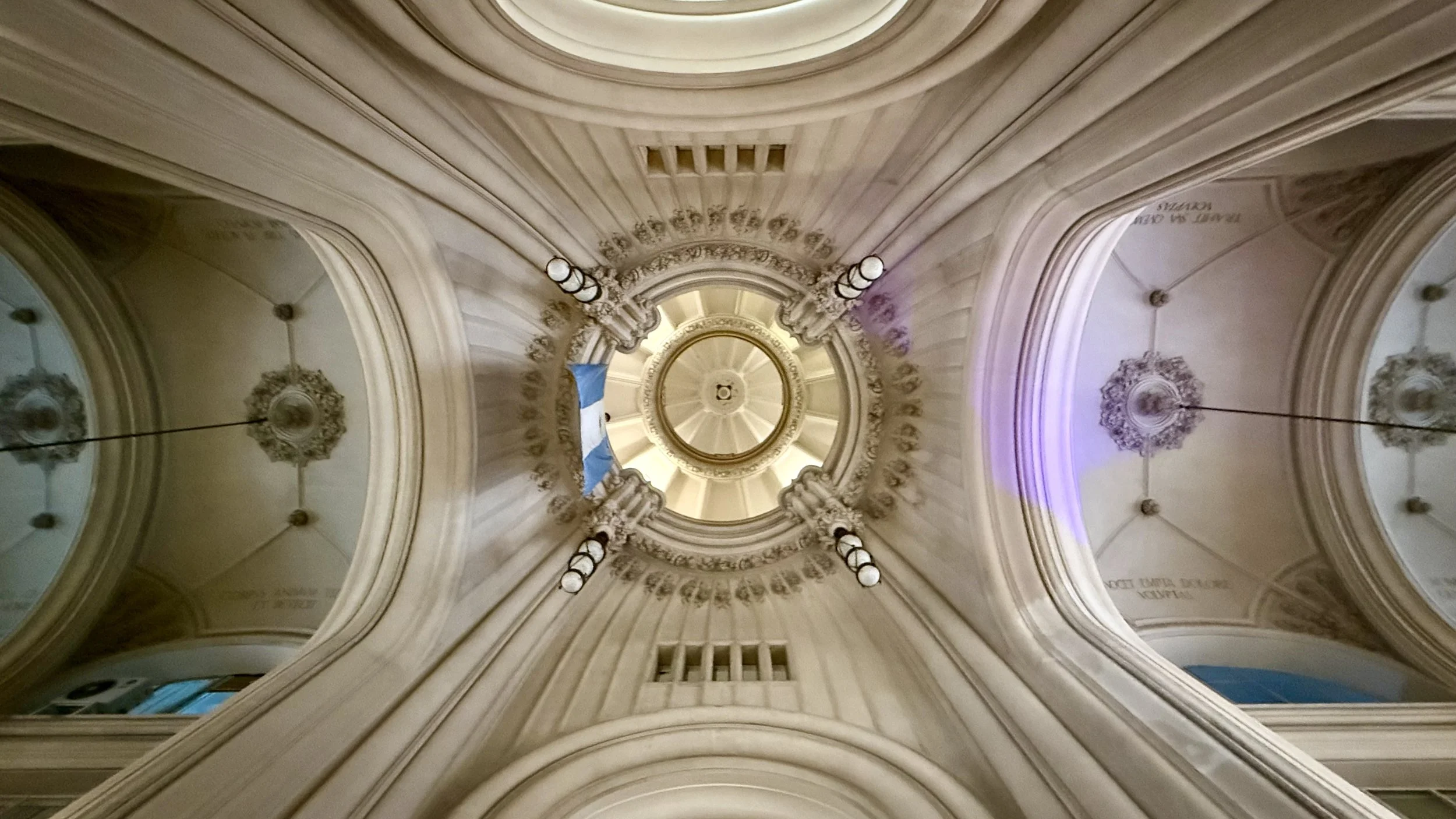
Purgatory from the proposed tomb of Dante.
Palanti had proposed the building originally as a memorial to Italy's war dead, with Dante's ashes to be reinterred in the crypt below, the poet's bones carried safely across the Atlantic away from a Europe destroying itself. Ravenna however declined and the crypt stands empty. The palacio faces the Argentine National Congress at the far end of Avenida de Mayo, the seat of the political power. From the tower balconies the city spreads in every direction, the grid running to the horizon, el gente going about their lives in the streets below.
Dante, Palanti, Barolo, D'Annunzio, Mussolini, Perón, San Martin: middle-aged men dreaming of power and permanence, of the gesture so large that time cannot erase it, and therfore worth the journey that others must make through hell to achieve it. The poet, the theosophist, the Freemason, the liberator, the demagogue: different robes, the same perilous ambition, alive and vigorous to this day.
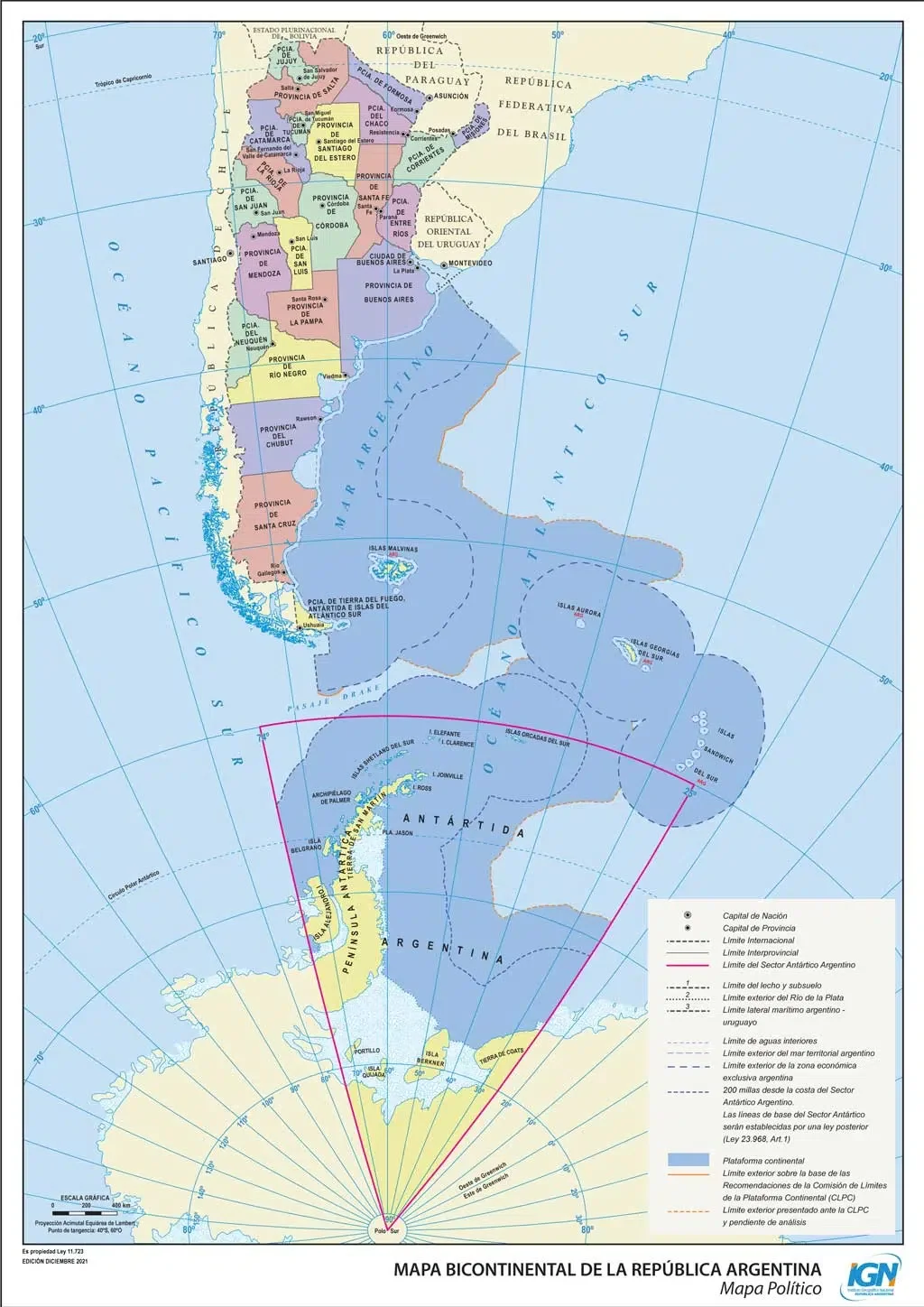
In Chile they have a saying: más peligroso que argentino dibujando un mapa (more dangerous than an Argentine drawing a map).
