The Best Sandwich in South America…
…is of course the chivito. But let us get to that together, which means starting way further north.
North America makes some outstanding sandwiches. We’ve travelled from the Arctic to the Antarctic, and along the way we encountered smash burgers in Los Angeles, (pink salmon) fish cake burgers in Alaska, bison and moose and bear burgers in Canada, lobster rolls in Newfoundland, pastrami on rye and lox bagels in New York, cheesesteak in Philadelphia, shrimp po’boy in New Orleans, fish tacos and cochinita pibil in the Yucatán. Great sandwiches, all to be celebrated.
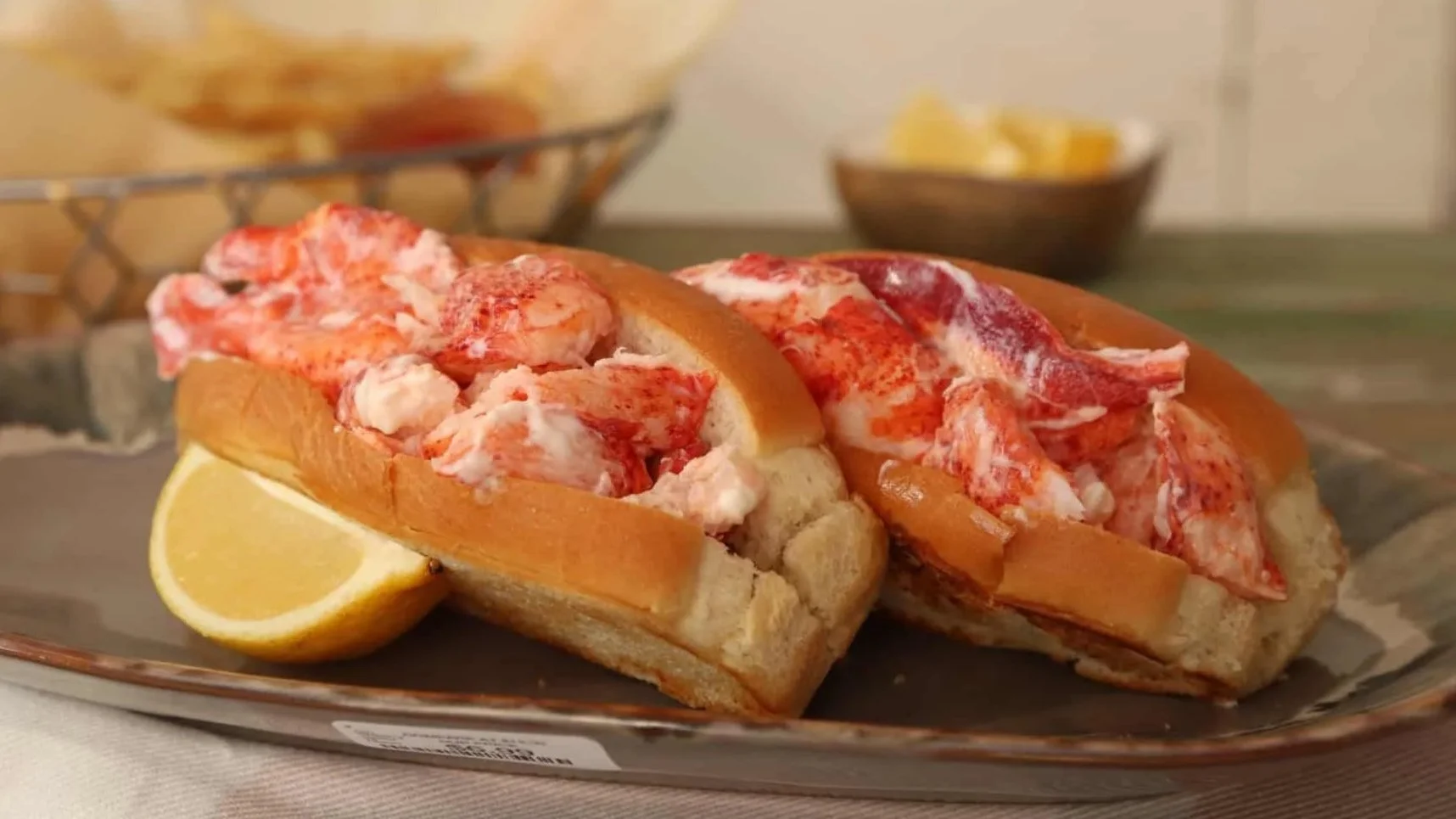
Lobster rolls, enjoyed with the Moncaster family at The Salt & Shaker in Lunenburg, Nova Scotia.
South America is a different story altogether. The continent has been pursuing the perfection of a single idea: pork and bread. Every country from Colombia to Chile is enlisted to the project.
Colombia: Is an arepa a sandwich?
The arepa is a flat cake of ground corn, pre-Columbian in origin, cooked on a griddle until the outside chars and the inside stays dense and yielding. In its plain form, the arepa paisa of Medellín is thin, white, and barely seasoned. Let’s call it a pancake. In Colombia, the transformation to sandwich, and consequently our story, begins simply with the addition of cheese.
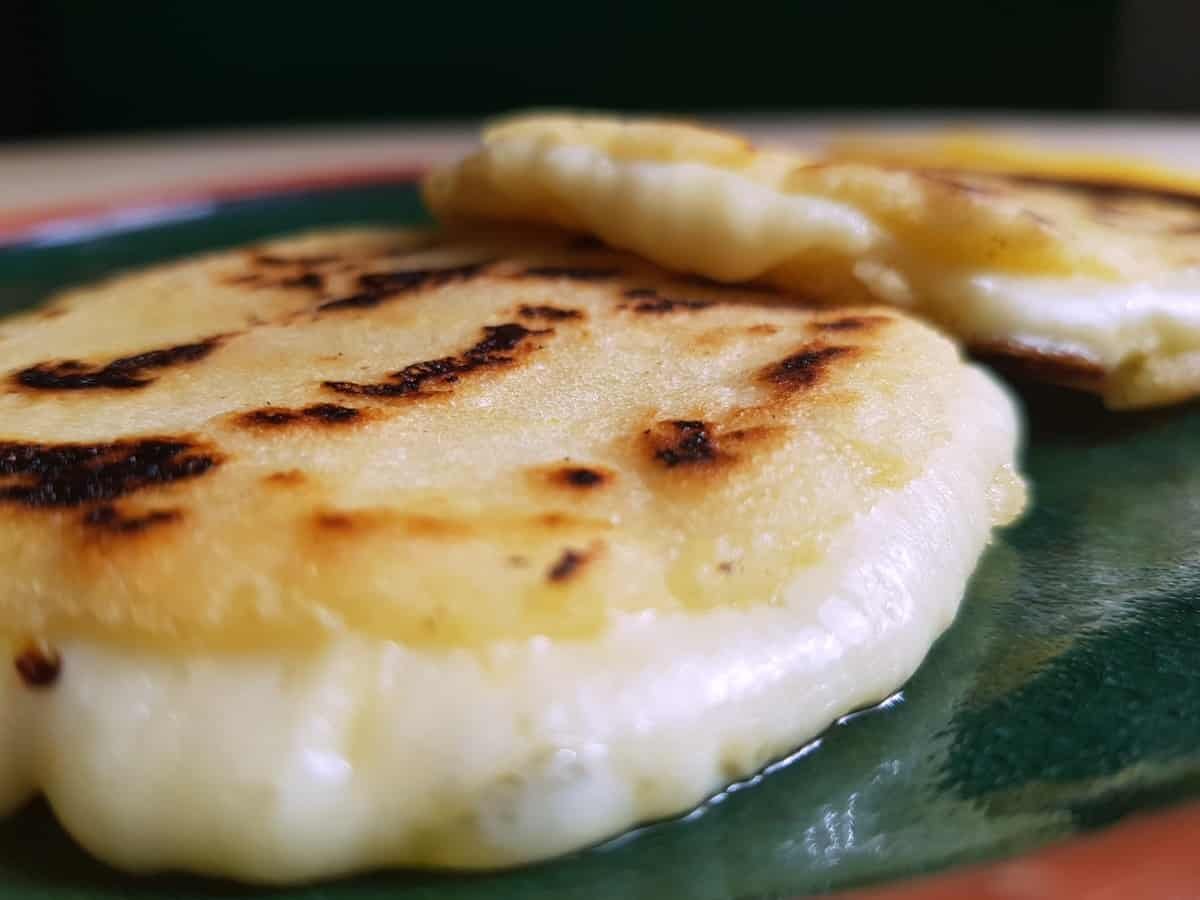
Off to the races with a Colombian cheese arepa.
Colombia and Venezuela have been arguing about the arepa for decades, and the sandwich question sits at the heart of it. The Colombian version is thicker, and the filling goes in via a pocket cut into the dough. The Venezuelan version is thinner, split in half like a burger bun, the filling layered inside.
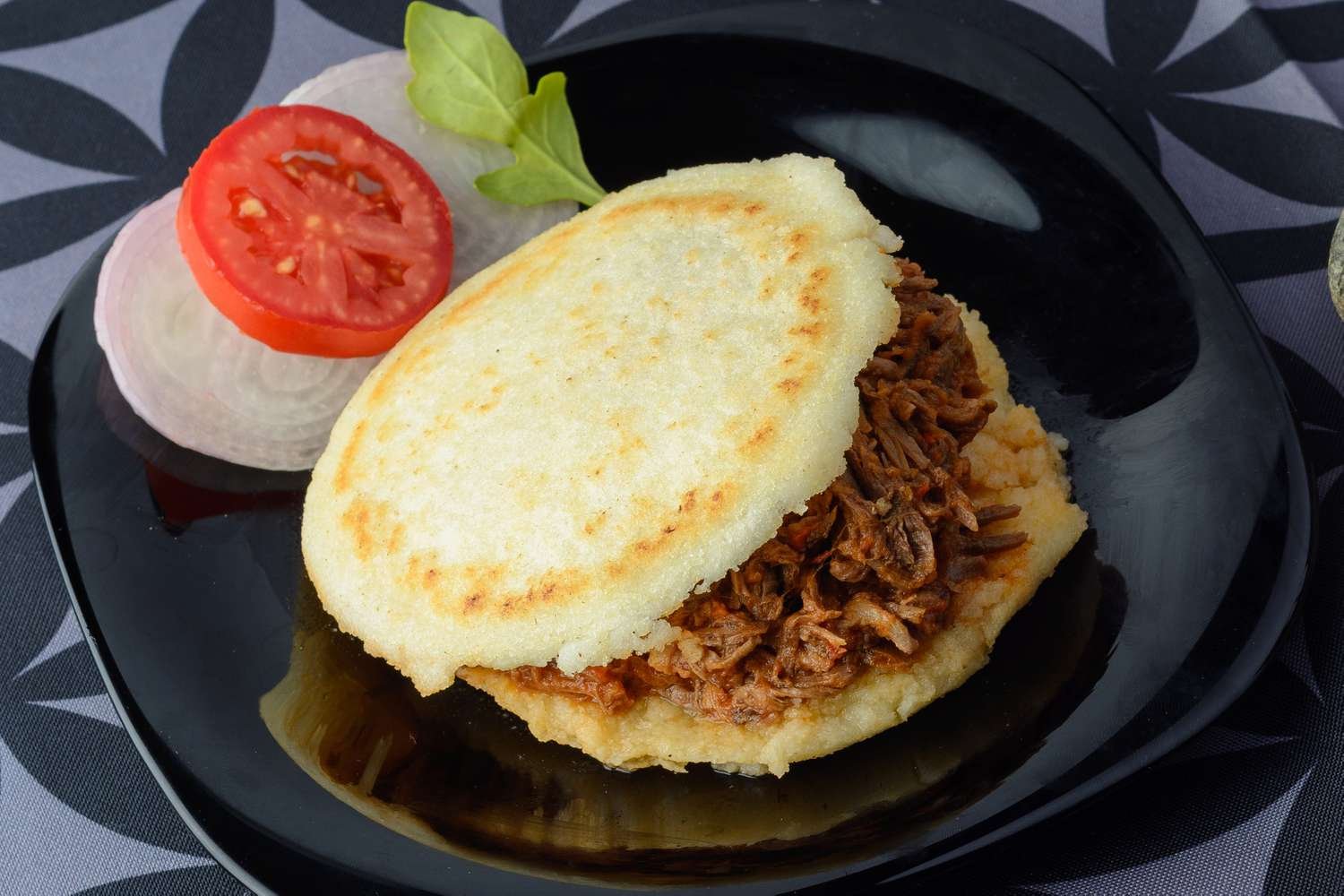
The arepa paisa rellena con lagarto de pierna de cerdo desmechada is a mouthful in every sense. Pork shank, slow-cooked until the meat surrenders completely and pulls apart in long fibres, is folded through salsa criolla: red onion, ají, and lime, then packed into that pocket. You are now holding a disc of charred corn dough containing a filling, which is the working definition of a sandwich, or in my books as good as.
One final note on vocabulary: in crude Medellín street slang, arepa alternatively refers to (ahem) female genitalia. This can give interactions with street vendors a certain frisson when one is a student of Spanish yet to master sentence construction and yet really likes a good arepa.
Ecuador: Hornado de chancho and the sanduche de pernil
South America does not mess around with pork. Every country, every altitude, every climate has its own bad news for piglets. In the highlands of Ecuador, that answer is the slow roast. Along the roads outside Cuenca and throughout the Ecuadorian highlands, roadside stalls announce themselves with a whole roasted pig displayed on a steel table out front, lacquered mahogany skin, standing as if mid-trot, an advertisement and an invitation simultaneously. This is hornado de chancho: the whole pig, slow-roasted over several hours until the skin pulls tight and crisps across the carcass.
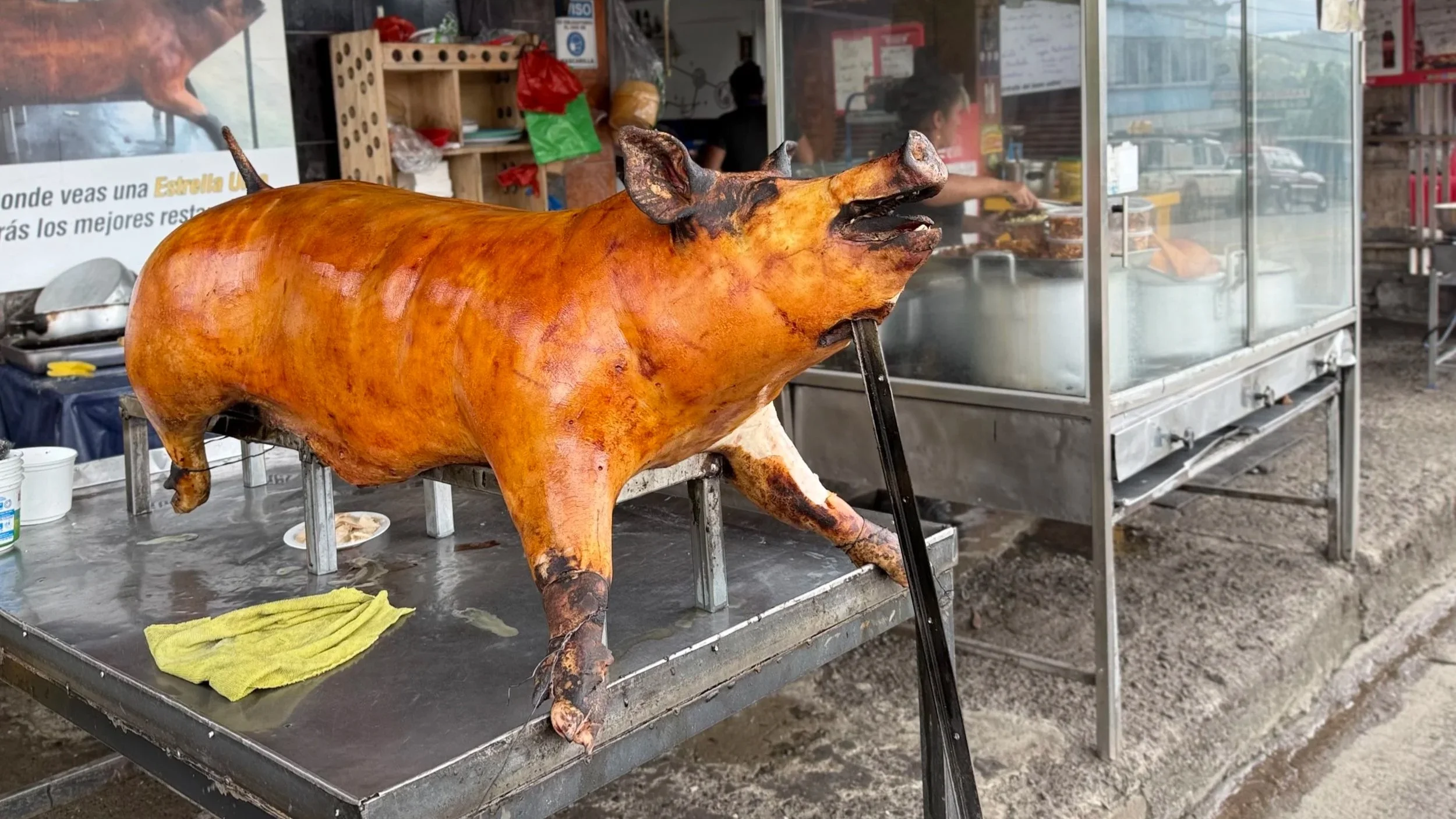
“Elevenses, anyone?”
The vendor carves from it to order and delivers it on plastic plates alongside mote, the large white Andean hominy corn, topped with a fresh salsa of tomato, onion, and herbs. Chicharrón served as a meal in its own right, no bread required.
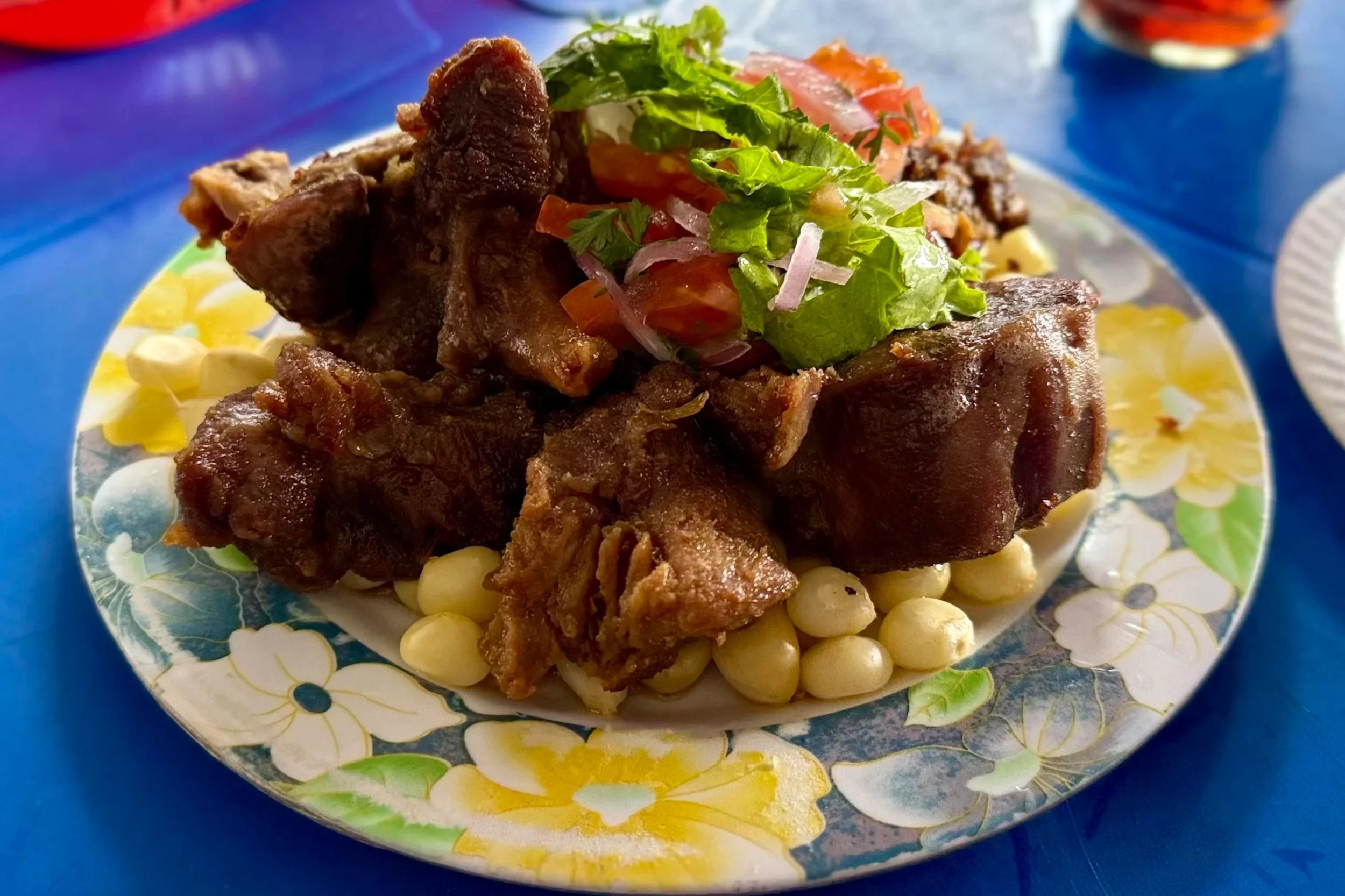
Crispy, rich, decadent… and with more than the daily dose of soluble fibre.
Moving south in Ecuador, something happens. The pork comes off the plate and into a roll. The mote disappears and salsa criolla takes its place. The sandwich form asserts itself.
In the city centre of Cuenca, vendors set up at the markets in the early morning. As the city wakes and the markets come to life accompanied by the wafting scent of roasting pernil, pork leg marinated in garlic, cumin, and citrus, cooked low and slow until it can be carved in thick, yielding slices.
The sanduche de pernil of Cuenca is a crusty roll stuffed with pernil and dressed with ají de tomate de árbol. The tree tomato is an Andean fruit, deep orange-red, sharp and complex, and the sauce it makes is brighter and more interesting than anything a lowland tomato could produce. It does not travel well, which is the polite way of saying you cannot replicate this sauce anywhere below a certain altitude, making this sandwich a distinctively Peruvian experience.
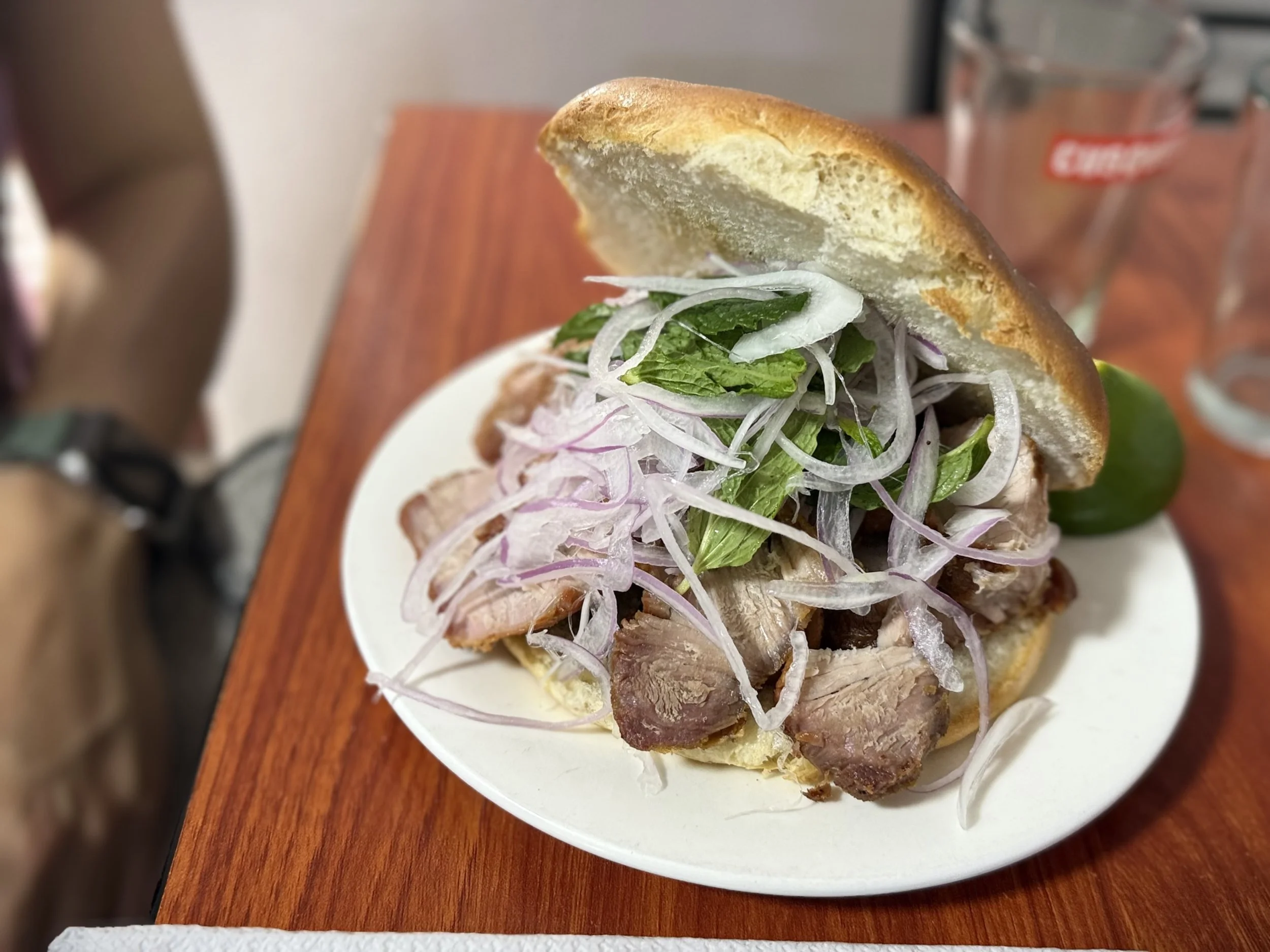
At the central market in Cuenca you will smell pernil long before you see it.
Peru: Classic city kitchens and the butifarra
Cordano has been serving the same sandwich in the same room since 1905. The room has high ceilings, timber posts, marble-top tables, a checkerboard floor, and bottles arranged on shelves along every wall. It was founded by Italian immigrants, Luigi, Antonio, and Virgilio Cordano, and sits at the corner of Carabaya and Áncash streets in Lima’s historic centre, directly adjacent to the Government Palace. Almost every Peruvian president in modern history has eaten here. The staff refer to what happens over butifarra and pisco sours as sandwich diplomacy, which is either a charming piece of institutional folklore or a precise description of how Peruvian politics actually works. Possibly both.
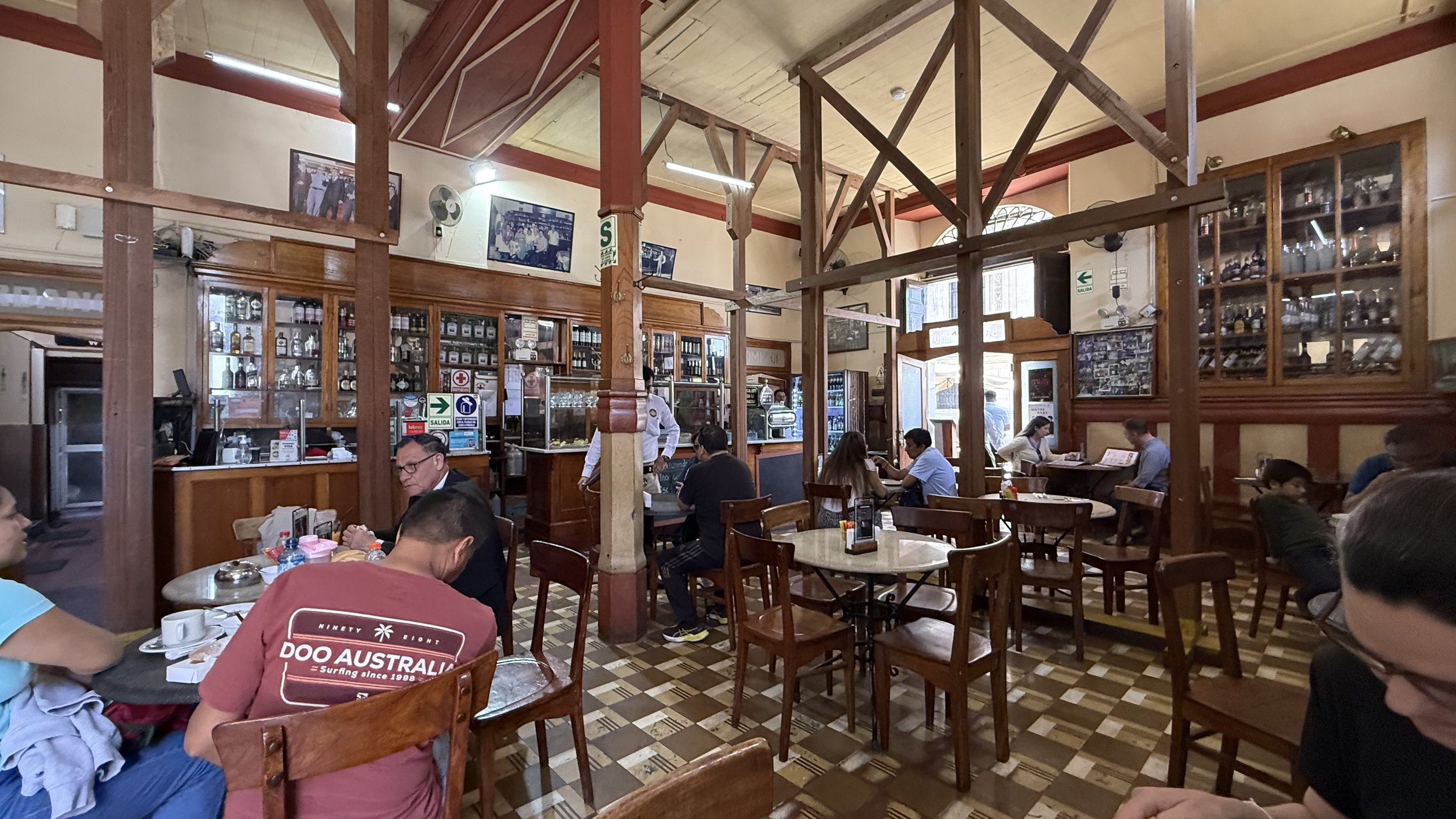
Restaurante Cordano, a Lima institution.
The butifarra is built around jamón del país, Peruvian country ham made from a boned pork leg cooked in a broth of garlic, ají chilli, and red pepper, served on a roseta roll with salsa criolla. The ham is pale, dense, and deeply savoury. The salsa criolla, red onion and ají in lime juice, does what it always does in Peru: cuts straight through the richness and wakes the whole thing up. The roll holds it all without collapsing, which is a structural achievement that deserves more recognition than it receives.
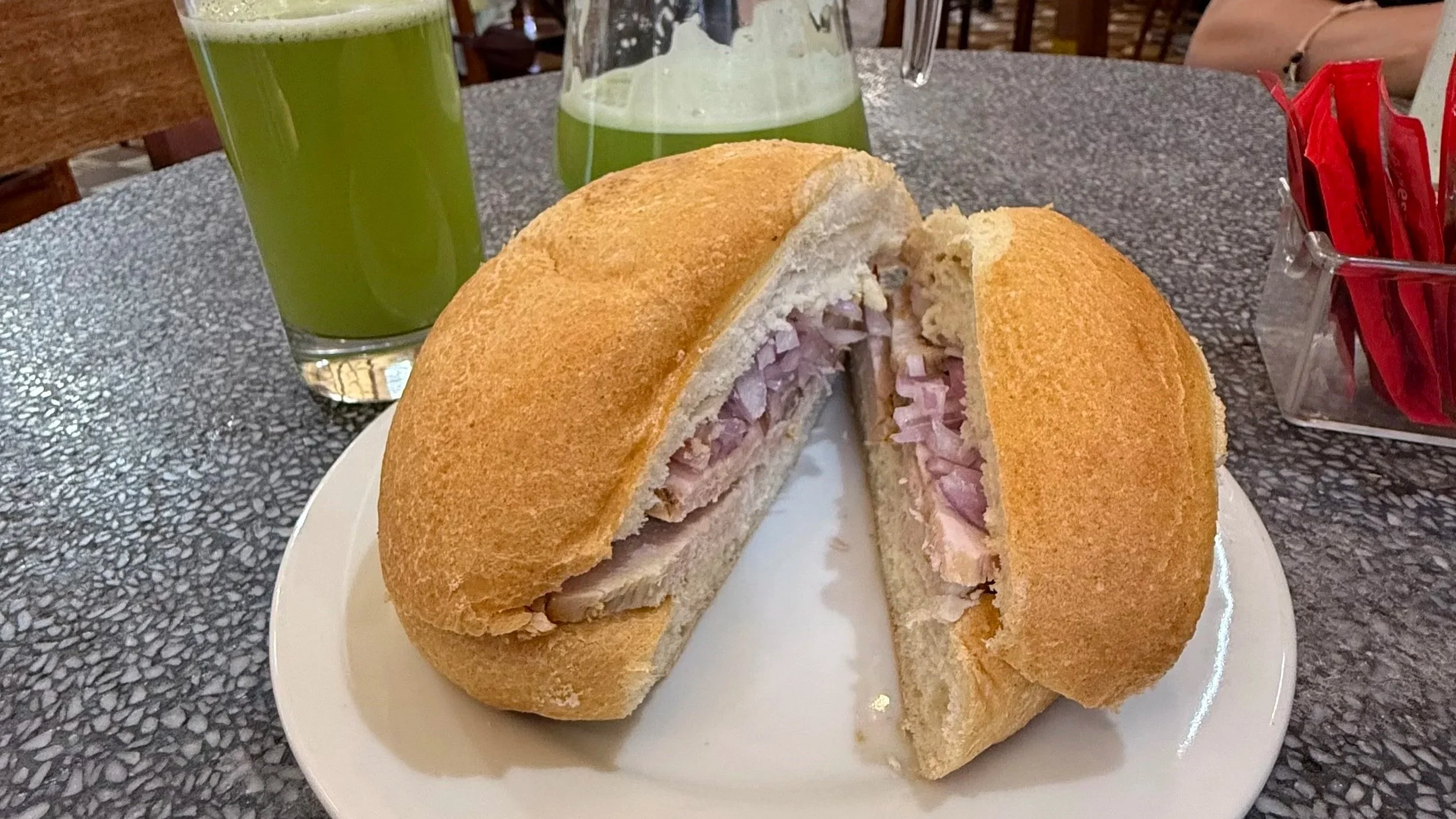
Cordano’s butifarra and limonada verde.
The jamón del país was created by Lima’s Italian immigrant community, who arrived in the nineteenth century from Genoa and Liguria and adapted their curing traditions to local ingredients and local heat. Cordano itself was their establishment. The butifarra is an immigrant sandwich that became a national institution, which is a more interesting origin story than most sandwiches can claim.
Chile: Brace yourself for the completo
Chile looked at the hot dog and thought: “nice try, but what this needs is mayonnaise, and let’s not die wondering if there can be too much”.
The completo was brought to Chile in the 1920s by a Santiago restaurateur named Eduardo Bahamondes, who encountered the American hot dog while travelling in the United States and decided to import the idea. When he opened his restaurant near the Plaza de Armas, he found Chileans had little interest in the ketchup-and-mustard preparation. He added tomato, then avocado… then mayonnaise in quantities that suggest some kind of rational break.
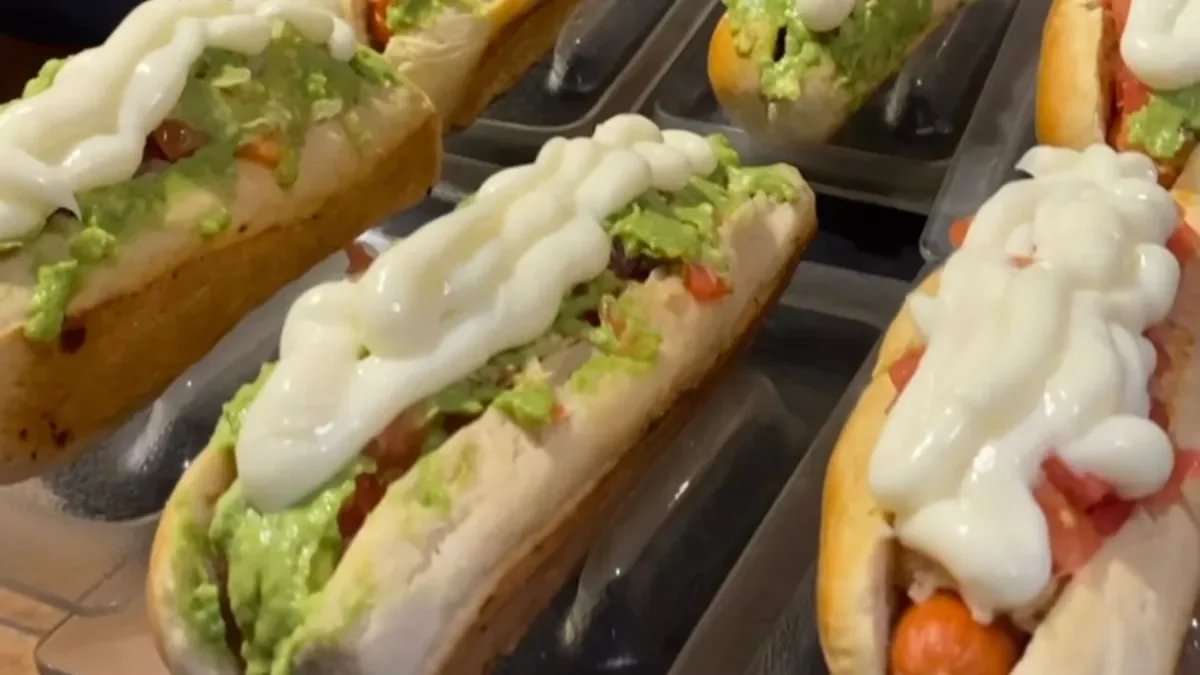
Oh god.
The completo italiano, the classic version, carries mashed avocado, diced tomato, and mayonnaise applied with what can only be described as total commitment. The three toppings mirror the colours of the Italian flag: green, white, and red. This is a charming detail that becomes harder to appreciate when you are confronted with the physical reality of the sandwich. Locals are inexplicably all aboard.
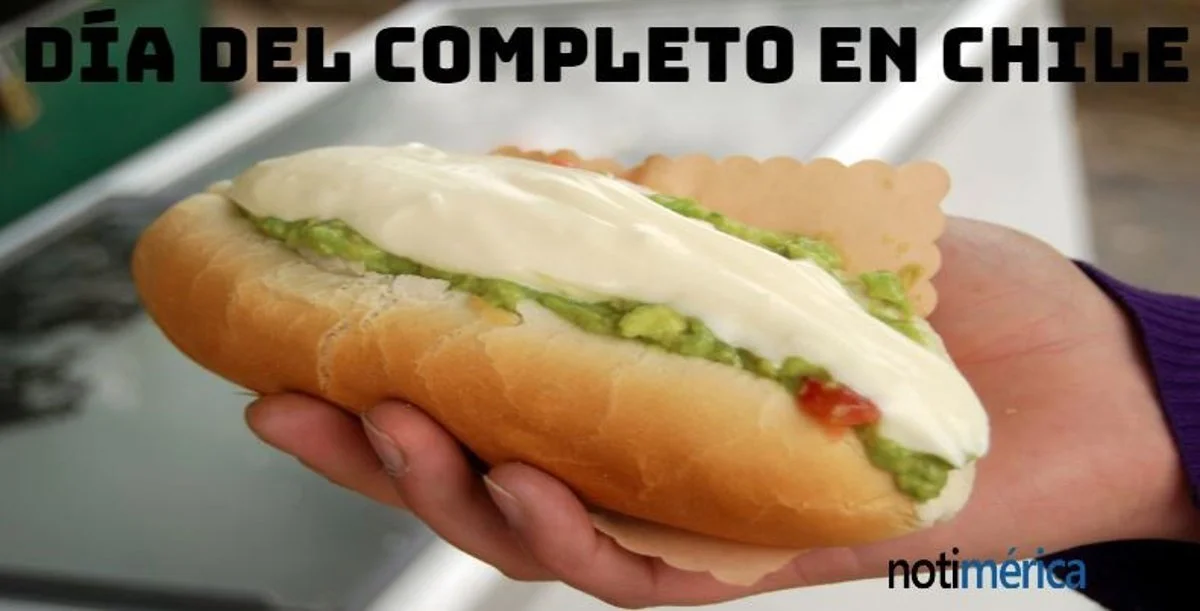
Chile celebrates Día del Completo every May 24th
Argentina: Ignore the milanesa, this is all about the choripán (and not the pancho!)
The choripán began with the gauchos, the cattle drovers of the Argentine pampas, who were grilling chorizo over open fires in the nineteenth century and eventually noticed that bread was nearby. The name is just the two words fused together: chorizo and pan. There is no artifice here. The sandwich is the name and the name is the sandwich.
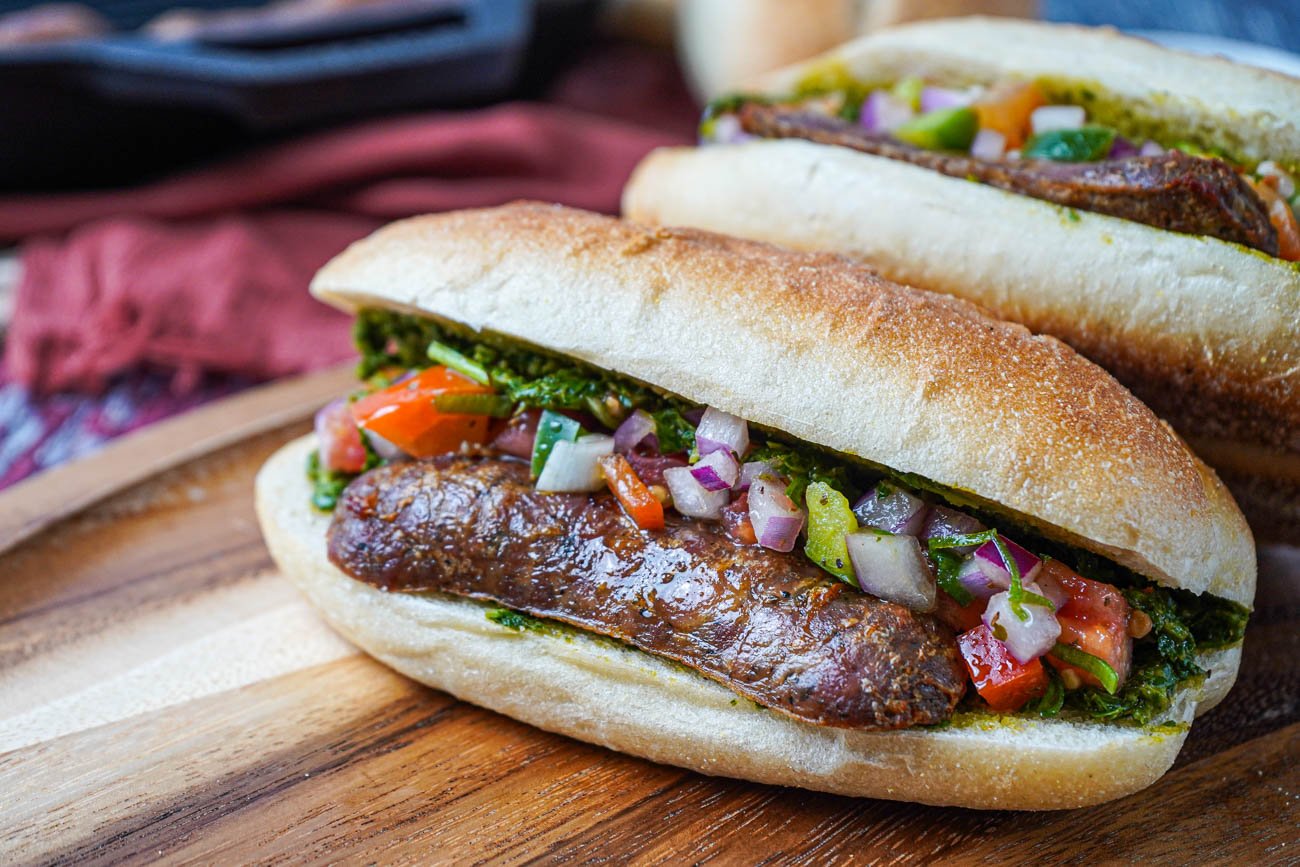
Choripán as nature intended.
The Argentine chorizo is not the dried, cured Spanish version. It is fresh pork, sometimes cut with beef, seasoned with paprika and garlic, split along its spine before grilling so the cut face chars and crisps against the grate. It goes into a crusty roll with chimichurri: parsley, garlic, oregano, vinegar, and oil. That is the entire recipe. The chimichurri is sharp enough to cut the fat and the fat is rich enough to need cutting. The balance is not an accident. It has been arrived at through a century and a half of iteration by a nation that treats the grilling of meat as a civic responsibility.
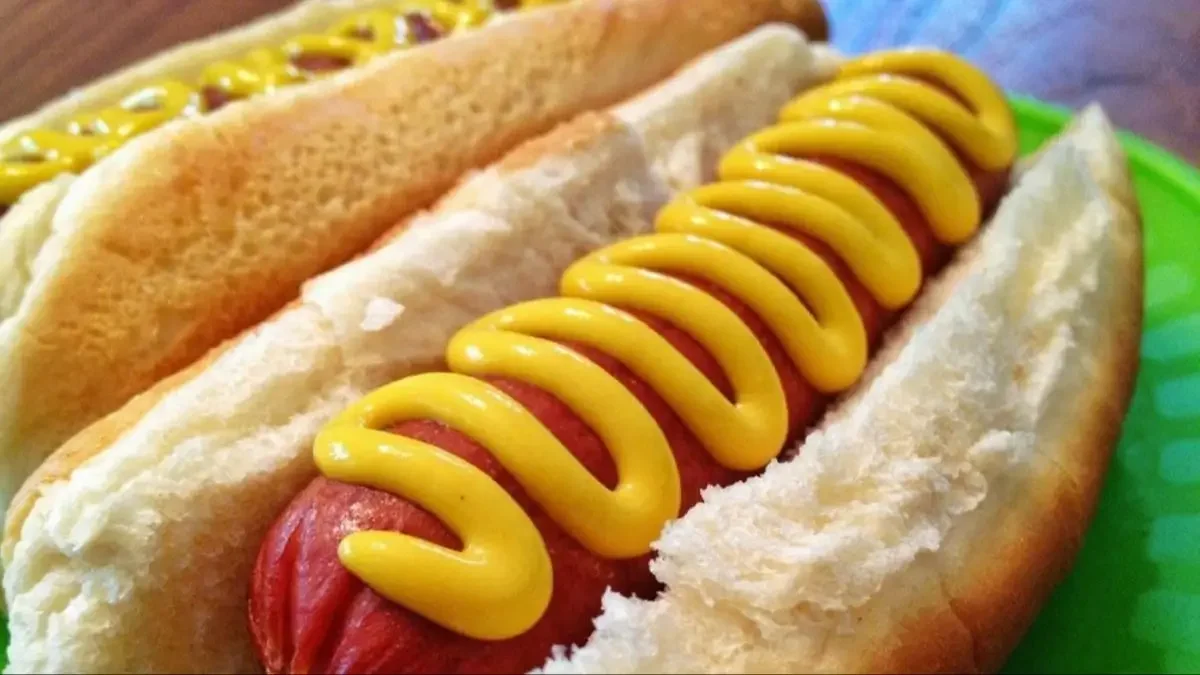
The soulless pancho, not to be confused with the choripán.
The choripán is present at football matches, political rallies, union meetings, and national holidays. Argentina consumes approximately five hundred million of them per year. There is an annual Choripán World Cup held in Córdoba. The folk saint Gauchito Gil, protector of the poor and the travelling, presides over a choripán stand on the Costanera Sur in Buenos Aires. At some point a sandwich stops being a sandwich and becomes a load-bearing cultural structure, and the choripán crossed that line a long time ago.
Uruguay: South American sandwich perfection with the (not-goat) chivito
On New Year’s Eve, 1944, a woman walked into a bar called El Mejillón on the rambla in Punta del Este and asked for chivo: roasted goat, which she had eaten in Córdoba and loved. The owner, Antonio Carbonaro, did not have goat. What he had was beef fillet, ham, butter, and toast, and rather than lose a customer on New Year’s Eve he assembled them into a sandwich, told her it was called a chivito, meaning little goat, and watched her eat it. She loved it. Carbonaro reportedly sold a thousand of them a day at the sandwich’s peak.

El Mejillon, birthplace of the chivito.
Nobody expected Uruguay. This is a country the size of a state, wedged between Argentina and Brazil, so frequently overlooked that its greatest contribution to world culture is routinely attributed to its neighbours. But Uruguay chose a sandwich as its national dish, which is the most lovable thing a country can do, and in doing so it built a monument to the idea that a great sandwich is not a simple thing, it is a considered one.
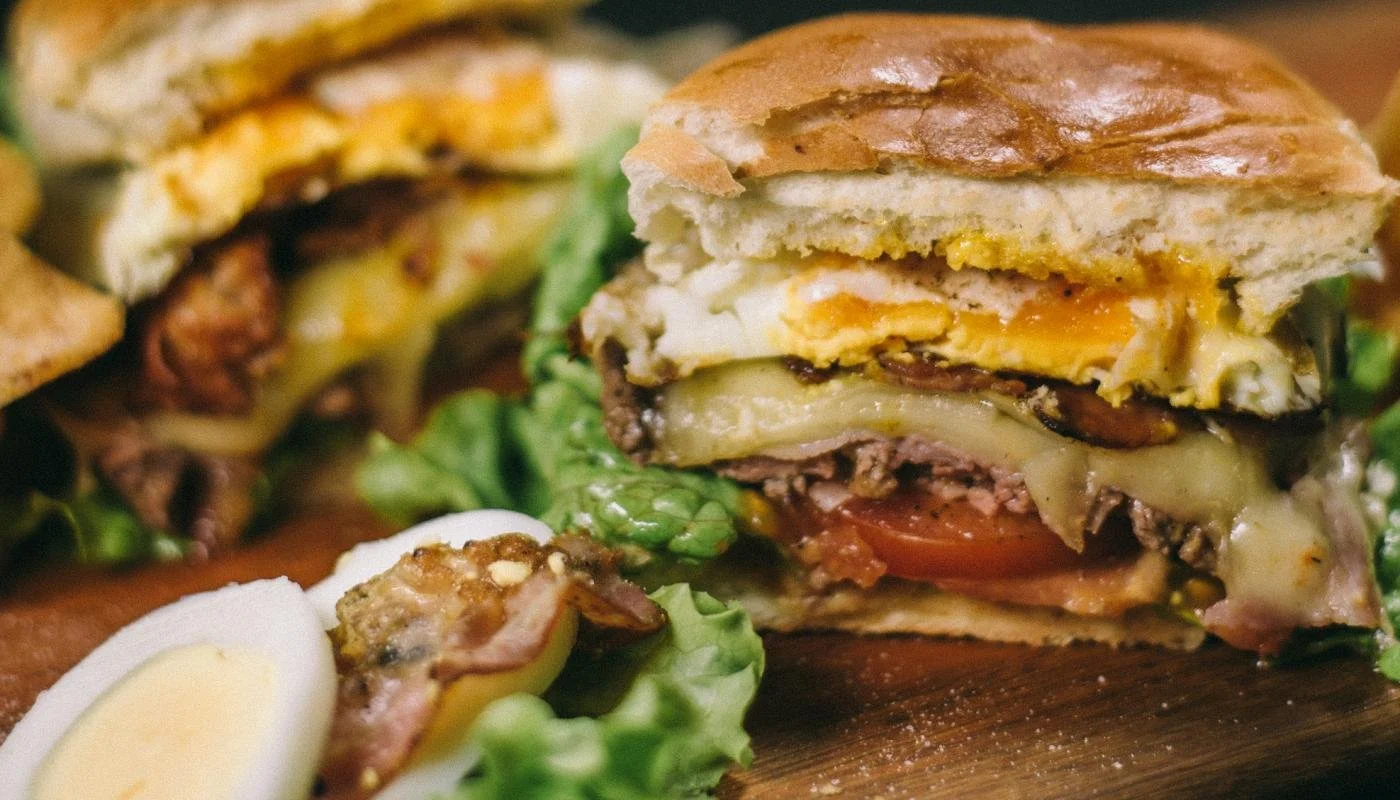
No baby goats were harmed in the making…
The chivito as it exists now is a more ambitious structure than Carbonaro’s improvisation. Thinly sliced beef tenderloin, cooked medium-rare, is the foundation. On top of it goes bacon, a fried egg, ham, mozzarella, tomato, lettuce, olives, and mayonnaise, all on a warm bun. The cheese is laid on the steak while it is still hot, so it softens rather than melts. The egg yolk should still be yielding. The olives, which seem optional until you remove them and notice something is wrong, provide a brininess that pins the whole construction together.
Everything answers to the steak. Uruguay’s cattle country is among the finest in the world, and a good chivito is built around a piece of beef that could justify its presence on any table in any restaurant. The sandwich does not elevate the meat. The meat elevates the sandwich.
Recipe to follow...
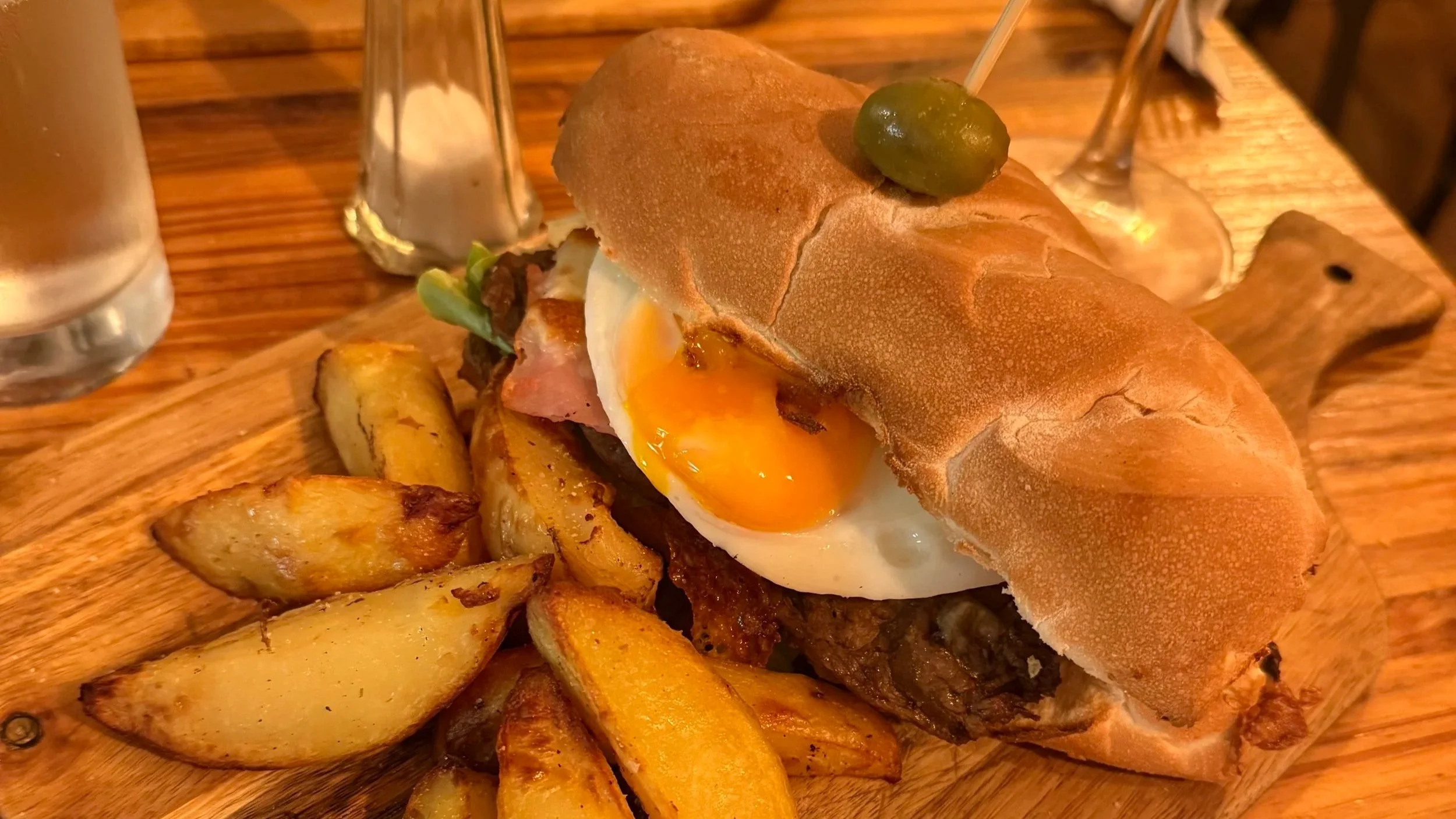
A chivito lunch in downtown Montevideo.
How to Make a Chivito
Serves 2
For the sandwich:
- 2 brioche-style rolls
- 300g beef tenderloin or eye fillet, cut into two thin steaks
- 4 rashers of bacon
- 2 eggs
- 2 slices of ham
- 2 slices of mozzarella
- 1 tomato, sliced
- A few lettuce leaves
- A handful of green olives, pitted and halved
- Mayonnaise
- Salt and pepper
- Butter or olive oil for cooking
For the salsa criolla:
- Half a red onion, very finely sliced
- 1 mild red chilli or ají amarillo, deseeded and finely sliced
- Juice of 1 lime
- Salt
Make the salsa criolla first by combining the onion, chilli, lime juice, and a pinch of salt. Set aside for at least fifteen minutes. The lime will do its work.
Flatten the steaks to about half a centimetre thick between two sheets of baking paper with a rolling pin (or your fist if you’re old school). Season well with salt and pepper.
Cook the bacon in a pan over medium heat until crisp. Set aside and keep the pan. In the same fat, fry the eggs over medium-low heat until the whites are set and the yolk is still soft, about three minutes. Set aside.
Sear the steaks in the same pan over high heat, ninety seconds per side for medium-rare. The fond from the bacon will improve them. Rest for two minutes, then lay the mozzarella on top of each steak while it is still warm so it softens into the meat.
Warm the buns in a low oven or dry pan. Spread mayonnaise on both halves.
Build from the bottom up: lettuce, tomato, steak with softened mozzarella, ham, bacon, fried egg, olives, a spoon of salsa criolla. Put the lid on.
Wrap in foil for thirty seconds if you want the street-food compression that melds the layers. Serve with chips. Eat immediately, leaning slightly forward.
-----
South America sandwich Glossary
Arepa: A flat corn cake of pre-Columbian origin, cooked on a griddle. The arepa rellena, stuffed via a pocket cut into the dough, is arguably a sandwich. The Colombian version uses this pocket method; the Venezuelan version splits the arepa in half like a bun. Also slang for vagina in Medellín.
Chancho: Ecuadorian and Andean slang for pig. The animal, making no promises about what has been done to it. Hornado de chancho is oven-roasted pig.
Chicharrón: Pork belly or pork skin, deep-fried until crisp. Not pernil, which is roasted. Not chancho, which is just the pig. Not just pork rinds however - usually a bit meaty and unctious.
Chimichurri: The Argentine herb sauce of parsley, garlic, oregano, vinegar, and olive oil. The essential companion of the choripán. Bright, sharp, and impossible to improve upon.
Chivito: Uruguay’s national dish. Named for a goat, contains no goat. See above.
Chorizo: In Argentina, a fresh pork sausage seasoned with paprika and garlic. Emphatically not the dried, cured Spanish version, despite sharing a name. Choripán = chorizo (sausage) + pan (bread); pancho (hotdog) = pan + chorizo…
Completo: Chile’s loaded hot dog. The word means complete. The mayonnaise is non-negotiable and, in this correspondent’s view, excessive. Chile disagrees.
Fuente de soda: A Chilean soda fountain or diner. The spiritual home of the completo.
Hogao: The Colombian sofrito of tomato and onion, slow-cooked until deeply savoury. The standard companion for arepas rellenas and much else besides.
Hornado de chancho: Whole roasted pig, an Ecuadorian roadside institution. Displayed outside the stall as advertisement and invitation. The source material for the pernil and the chicharrón both, before each country decides what to do with it next.
Jamón del país: Peruvian country ham. A boned pork leg cooked in a broth of garlic, ají chilli, and red pepper, then pressed and sliced. Created by Italian immigrant communities in Lima in the nineteenth century. The soul of the butifarra.
Mote: Large white Andean hominy corn, served alongside chicharrón and hornado throughout Ecuador and Peru. The starchy counterweight to fried or roasted pork. Not a sandwich ingredient, but the thing the pork sits on before someone puts it in bread.
Pan francés / Pão francês: The crusty white roll used across South America. Portuguese in origin, named in French, found everywhere. The structural hero of the South American sandwich, doing serious work in silence.
Palta: The Chilean and Peruvian word for avocado. The rest of the Spanish-speaking world says aguacate. Chileans apply palta to everything, including hot dogs, and are broadly correct to do so.
Pernil: A leg or shoulder of pork, marinated and slow-roasted. The Cuencan sanduche filling. Softer and more herbal than chicharrón. See also chancho, which is the pig before any of this happens.
Salsa criolla: Red onion, ají amarillo, and lime juice. Cuts fat, brightens everything, appears in Peru and Uruguay and anywhere else where someone has thought carefully about what cured or grilled pork needs alongside it.
Tomate de árbol: Tree tomato. An Andean fruit, deep orange-red, sharp and acidic. The soul of Ecuador’s ají sauce for the sanduche de pernil. Does not survive descending to sea level with any integrity. One of the best arguments for visiting the Ecuadorian highlands.
