A wide open moment
Here we go with the second in our short what-the-hell-is-Jon-pondering-now series of travel contemplations. Topic this time is Andean cosmology, specifically the tripartite construction of the three pachas and what I’d describe as my personal experience of the axis mundi, the ‘world axis’ that connects them.
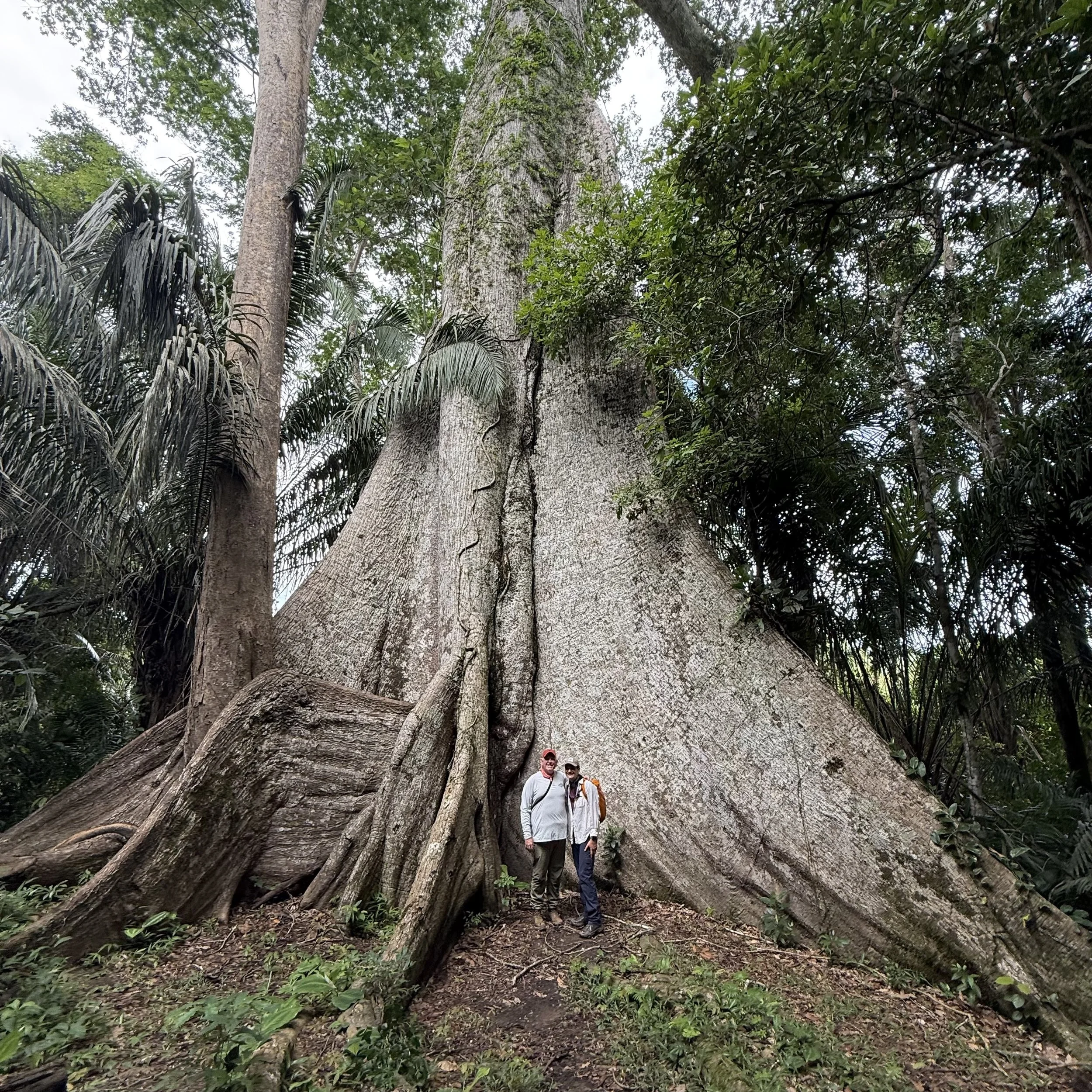
The axis mundi is a recurring motif in Central & South America - in Guatemala symbolised by the Kapok tree, the tallest tree in the jungle
High in the Andes the curvature of the earth seems legible and the air thins into something sparse. One finds a certain galeforce stillness at a high pass, a shaft of hard light falling across a ridge, a distant rainstorm, the shadow of a cloud on the landscape, the wind murmering across the high plain. In these moments the landscape does not announce any grand metaphysics; but it does pensively reveal the self. Not as an idea, but as an agency being lived—a presence stretched between memory, task, and possibility. A traveller moving from cloud-forming peaks, to the oppresive tropical heat of the jungle, to the wide, unbroken skies of the Altiplano feels that the world is not neutral. It is patterned, perspectival, insistent, ageless. One is humbled by it.
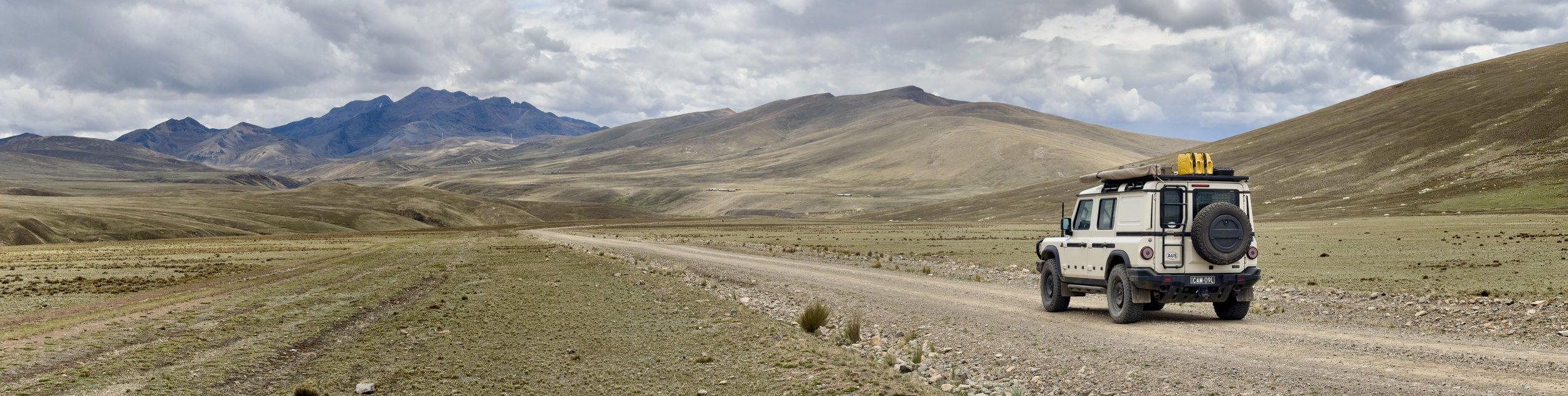
The Altiplano (high plain), whipped by ceaseless wind, whispers like the Mongolian steppe
Though mountains lend themselves to philosophical inference, the traditional Andean cosmology expresses the structure of experience in a remarkably concise triad. Hanan Pacha, the realm of what comes from above—possibility, orientation, demand—is totemically marked by the condor, whose wide, effortless circuits mirror the sweep of the future’s horizon. Kay Pacha, the world of present involvement and labour, is symbolised by the puma, an animal of alertness and decisive action, inhabiting the same grounded immediacy in which human commitments unfold. Uku Pacha, the underworld, the depth of origin and the long sediment of memory, carries the serpent as its sign: a creature of the earth and the unseen, moving through what lies beneath surfaces, the place from which all things grow. These pachas are not separate realms but directional metaphors—three temporal orientations that inflect how a life can understand itself.
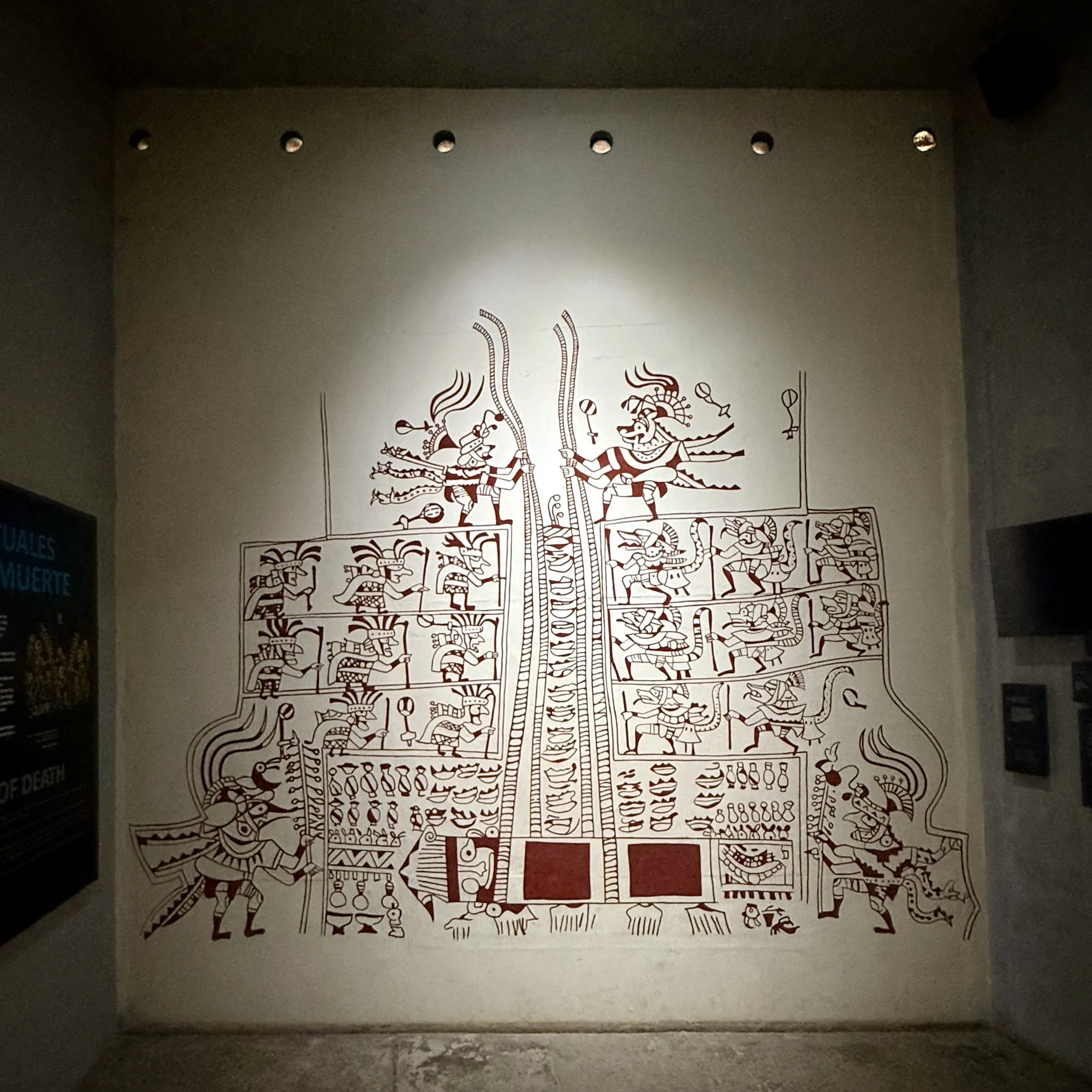
A mochica funerary bundle is lowered into an underworld populated by all past people and animals, the source of all new things
Moving through the mountains, rainforest, and desert, one encounters these orientations not as doctrine but as a sort of lived phenomena. In the Cordillera Blanca, standing beneath peaks that appear carved from light as much as stone, the future takes on a kind of vertical weight. It is not a schedule or plan but a horizon of demands—the sense that existence is always compelled by something it did not choose. The condor’s wheeling on thermals rising up high valleys merely externalise this inward structure: the spaciousness of what calls one forward. The question arises unbidden: What are is one being summoned toward? The landscape does not ask it; the moment does. The upper world becomes perceptible as the mood of possibility itself. What thermal am I rising on?
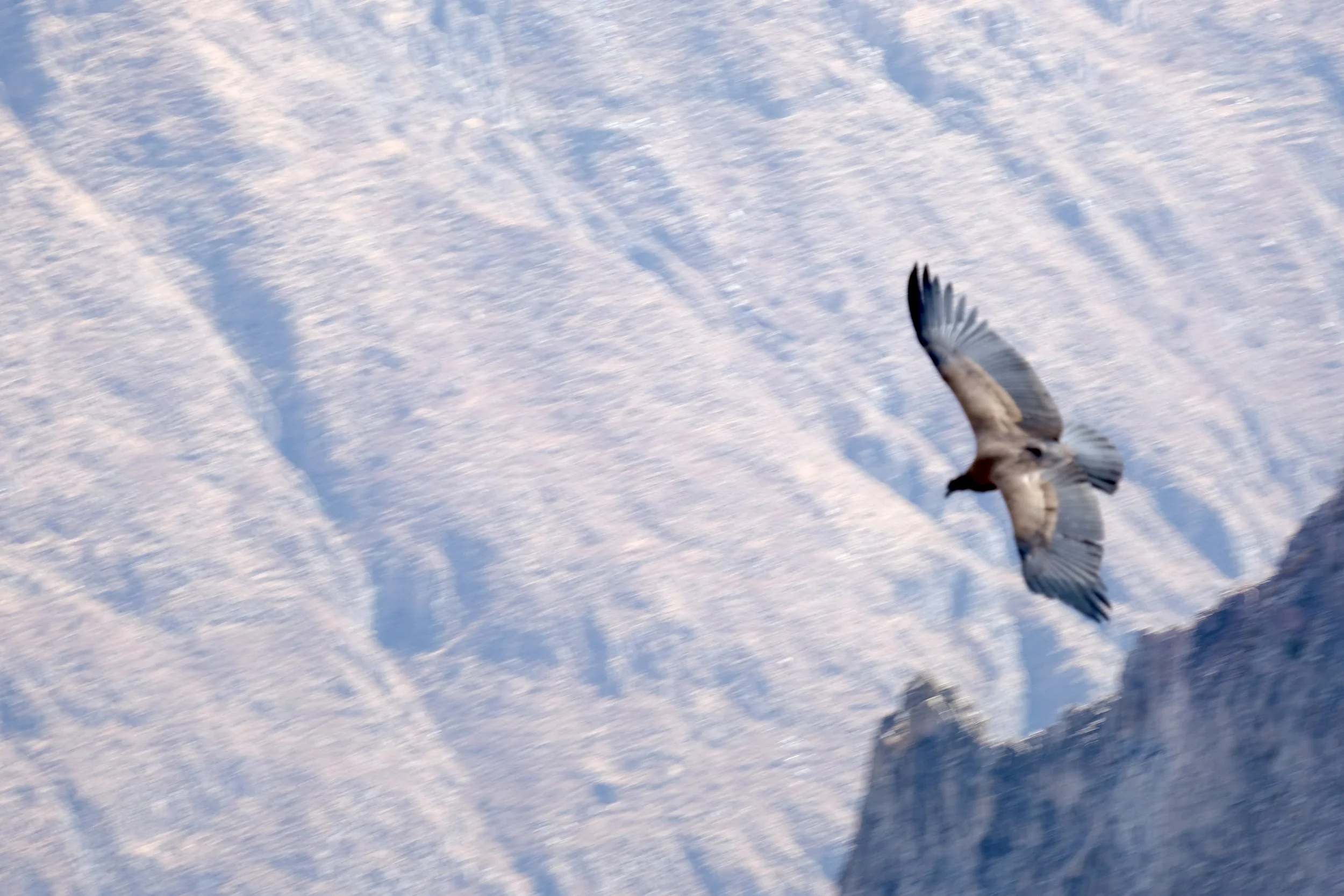
Waiting on the condors at Colca Canyon one realises that the birds themselves are waiting… on the wind, to raise them up
Elsewhere, the present asserts itself with an entirely different texture. In farming valleys around Cusco, perilous elevated tracks, on another land-slipped road, or in the rain-soaked jungle, the world insists on involvement. One cannot remain a spectator here. You feel the labour etched into terraces, the interplay of water and stone, stairs upon stairs, the rhythmic maintenance that life at altitude requires, where one is always short on breath. In such places the puma’s domain becomes palpable—not in the animal’s physical presence but in the quality of attention it signifies: alert, embedded, responsive. The present is not a point in time but a dense field of obligations. The self appears not as an observer, but as something already entangled in care, shaping and shaped by what must be done.
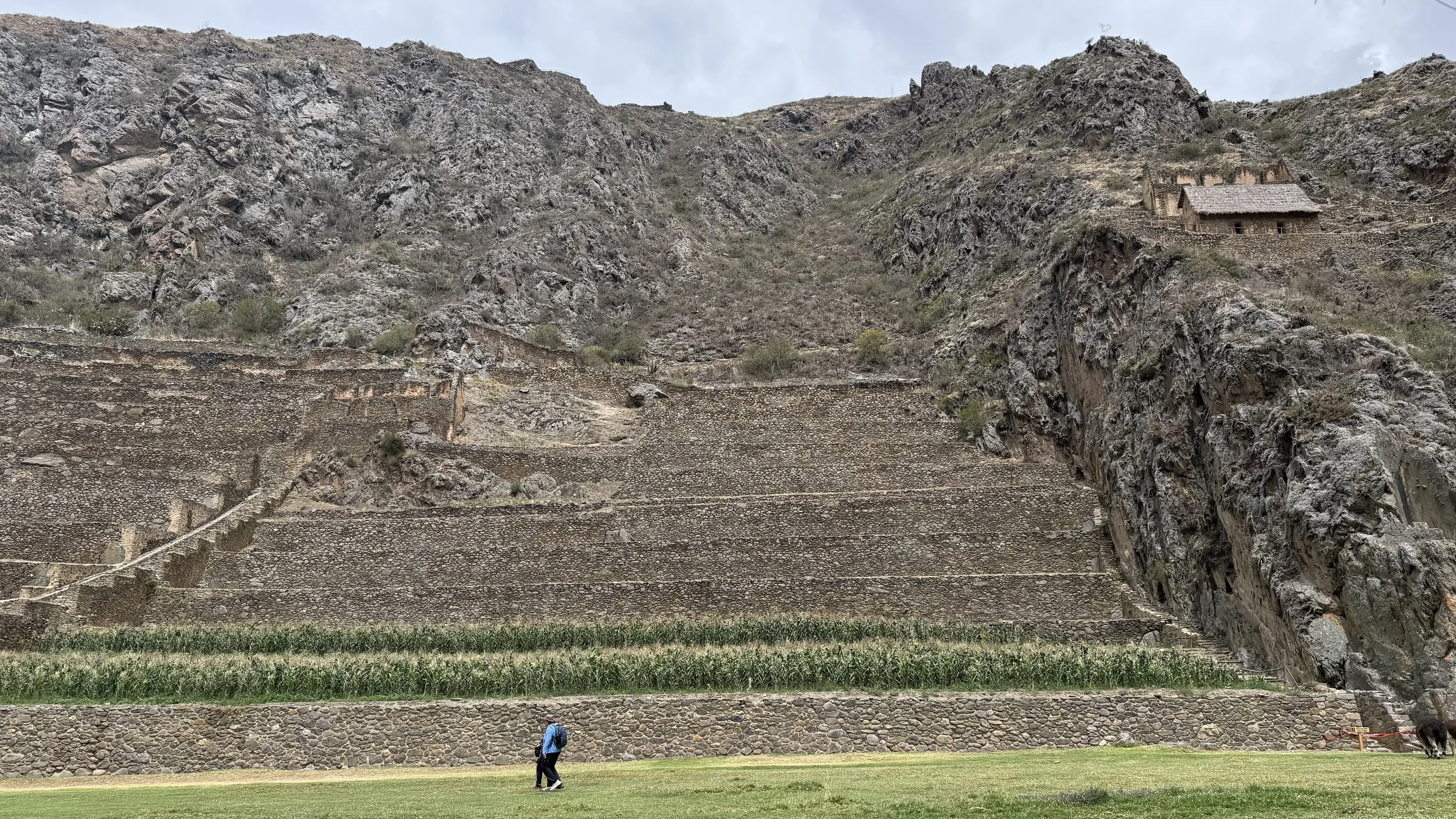
In a world view of cyclical time, is there fast-and-slow? Once-and-done? Or is the present a steady heartbeat of obligation?
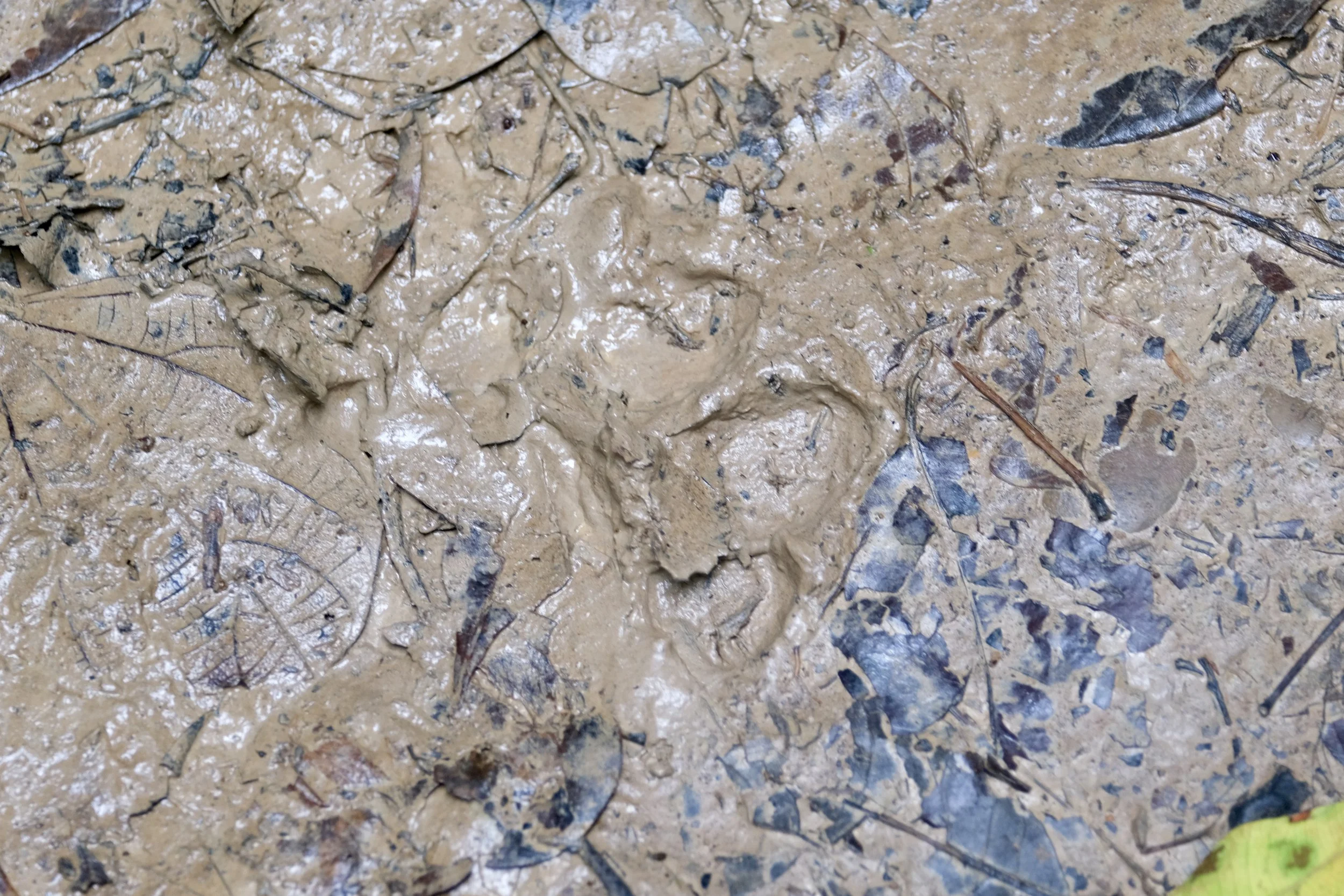
The jaguar, present but unseen, will likely see you before you see it
And then there is the downward pull—the recognition that a life is not merely a story improvised day by day, but a long, inescapable inheritance. The Amazon rainforest along the Río Madre de Dios makes this sensation tactile. Beneath the canopy lie layers of human and ecological pasts: forgotten clearings swallowed by vines, traces of human presence softened by centuries of rain, whispered knowledge of healing properies carried across generations. The serpent’s world is this world of depth: unseen foundations, formative pressures, and the subterranean architecture of character. The reality of childhood, family history, the things that we’ve done and seen.
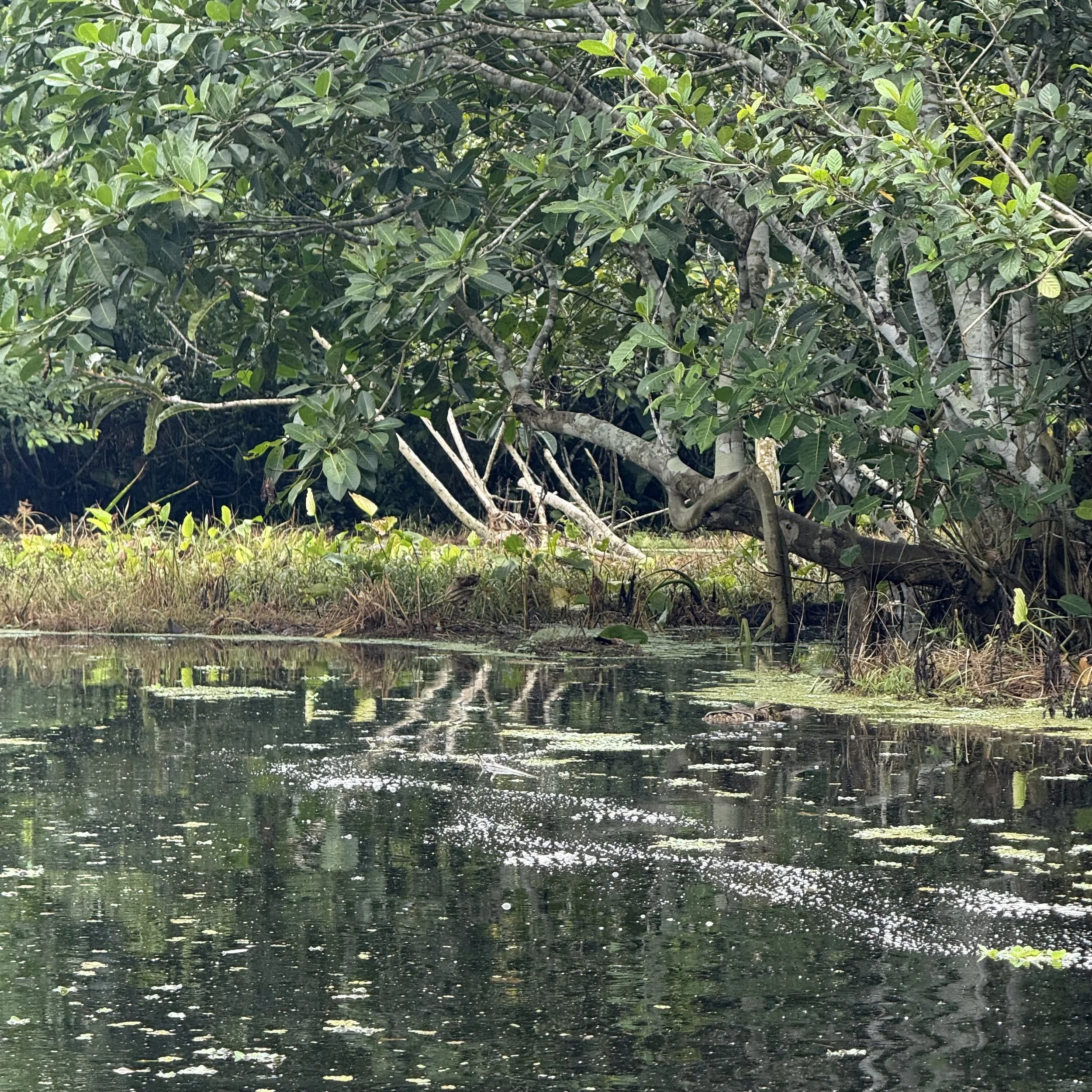
A telltale trace of bubbles indicates a massive black caiman below
A similar feeling arises in the northern desert, where fragments of pre-Incan ritual sites lie half-revealed under shifting sand, as though the land were remembering itself. One’s own past behaves like this—periodically exposed, periodically buried, always shaping what can arise now.
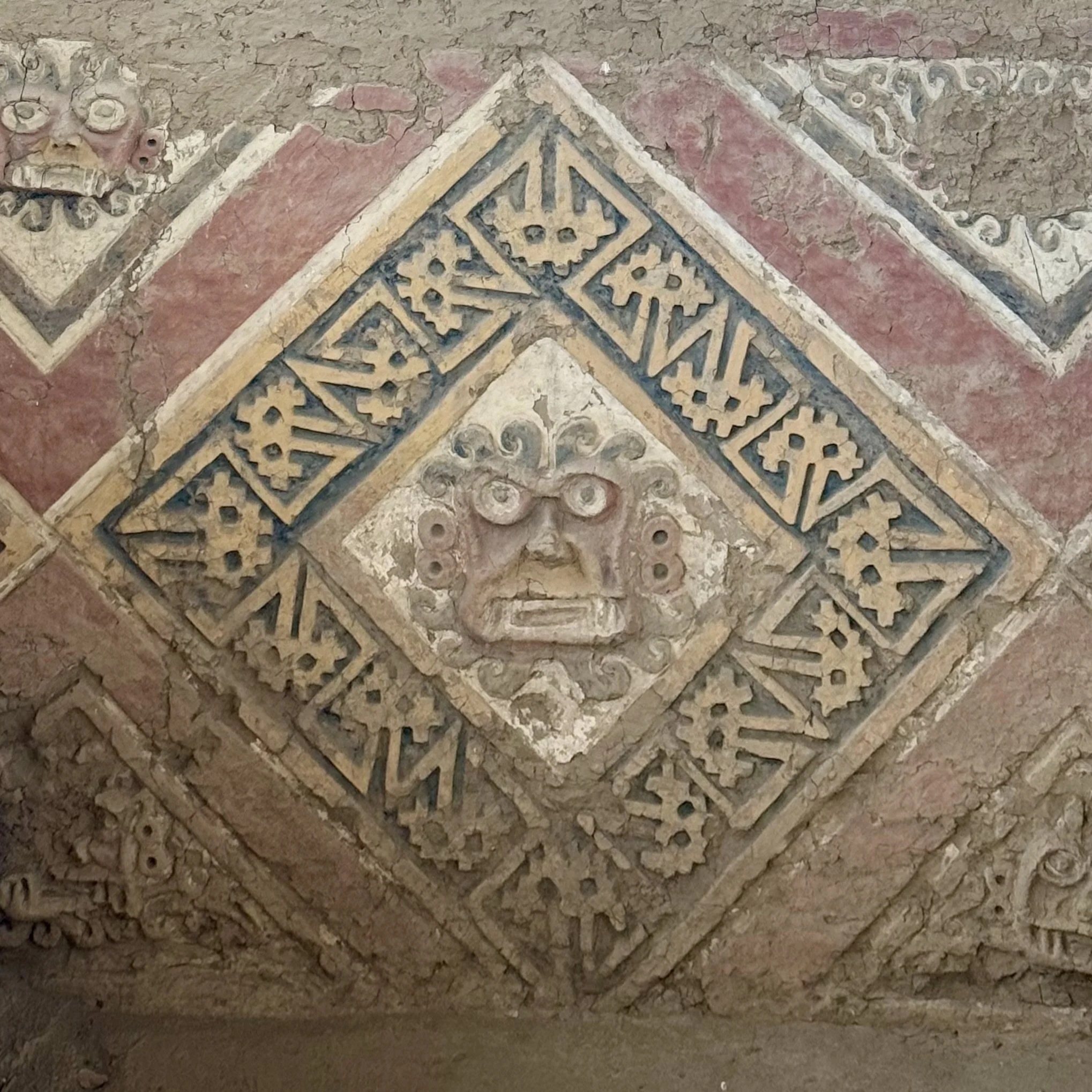
Ai-Aipec, ‘god’ of the Moche. A mediator between binaries, the decapitator, an agent of renewal via rupture at the cosmic centre
Yet the most revealing moments are those in which these temporal orientations—above, middle, below; future, present, past—converge in a single gesture of experience. You crest a ridge on the road between Puno and Arequipa and the sky opens with impossible breadth. In that instant, the self gathers. Memory rises from below—not as sentiment, but as ground. The present clarifies: the immediate task, the decision that can no longer be postponed. And the future leans in: not abstractly, but with the condor’s authority which in turn awaits the essential thermal. The worlds do not separate here. They braid into a single, coherent moment. The mountain can’t be conquered by the mountaineer - it is the climber conquering the climbers weaker self with the mountain as a datum. All that one was and is on the way to being.
The land teaches this through an eternal set of experiences: the cold shock of altitude air, the quivering Amazon at dusk, the stratified silence of a desert older than memory, a gasp for more oxygen than the air can offer. These places clear a space in which the self can be seen without ornament. Past, present, and future become not chronological markers but dimensions of one’s own being—depth, involvement, horizon—momentarily aligned with countless human encounters before it.
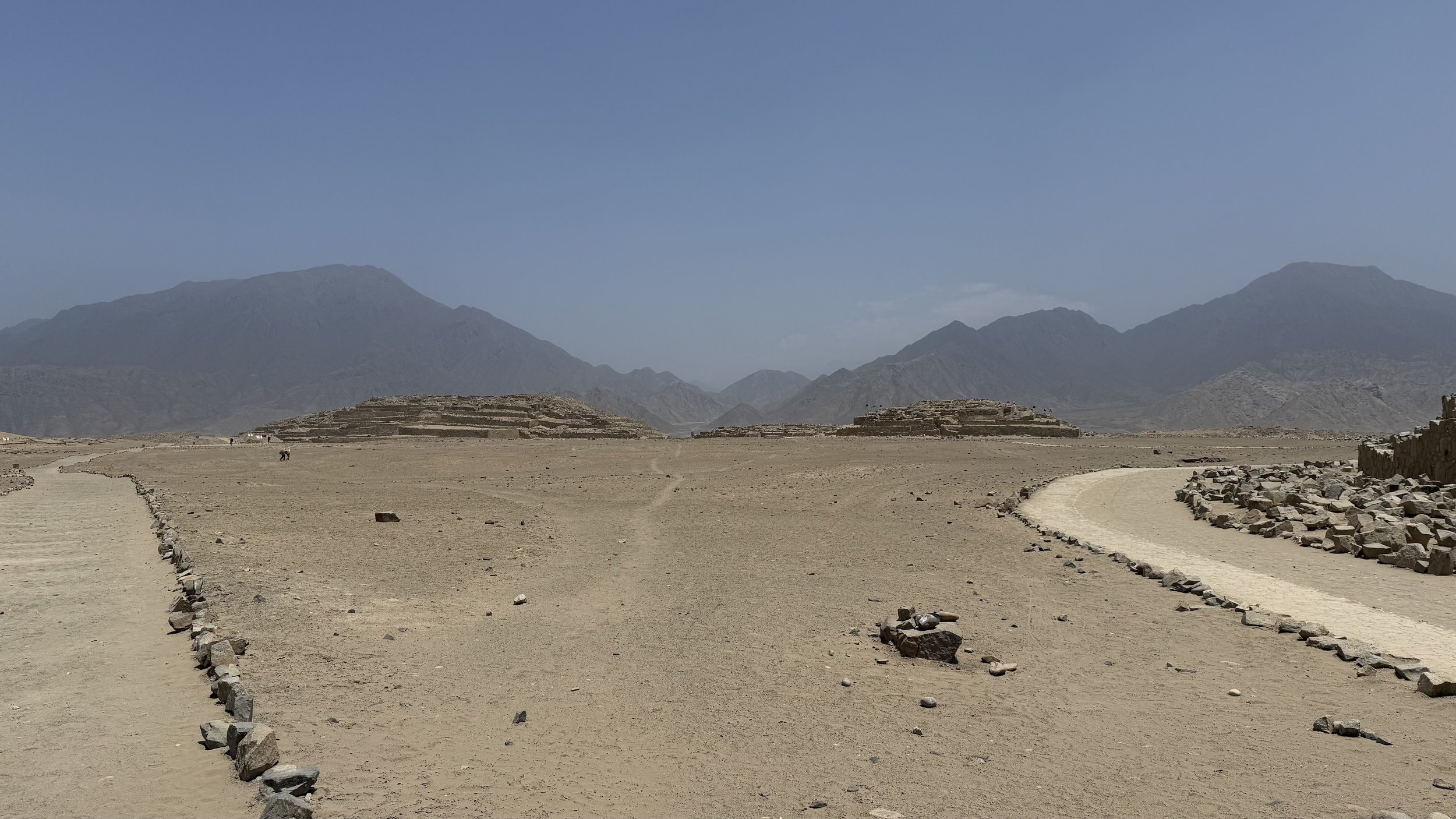
Caral, oldest city in the Americas, dates to about 2,500BCE
To traverse the world is to be reminded that existence is not stretched between competing forces. It is a gathering. One’s past is never merely behind; it rises from below, shaping the present. One’s future is never merely ahead; it descends from above as a call to arms. And the present is where these forces meet—not peacefully, but meaningfully. The so-called realms of condor, puma, and serpent, far from constituting a mythic geography, articulate the way a life understands itself when it is most awake to its own temporality. I have meetings tonight, deliverables, a team.
In the end, what these landscapes reveal is not a cosmos layered in three parts, but a self composed through three directions of time. And in those rare moments when everything aligns—beneath vast skies, in the shadow of a summit, on a quiet bend of a river, on a less-travelled road—the world gathers itself in order to reveal the person standing within it: grounded, involved, summoned. A life not spread across time but briefly illuminated by it.
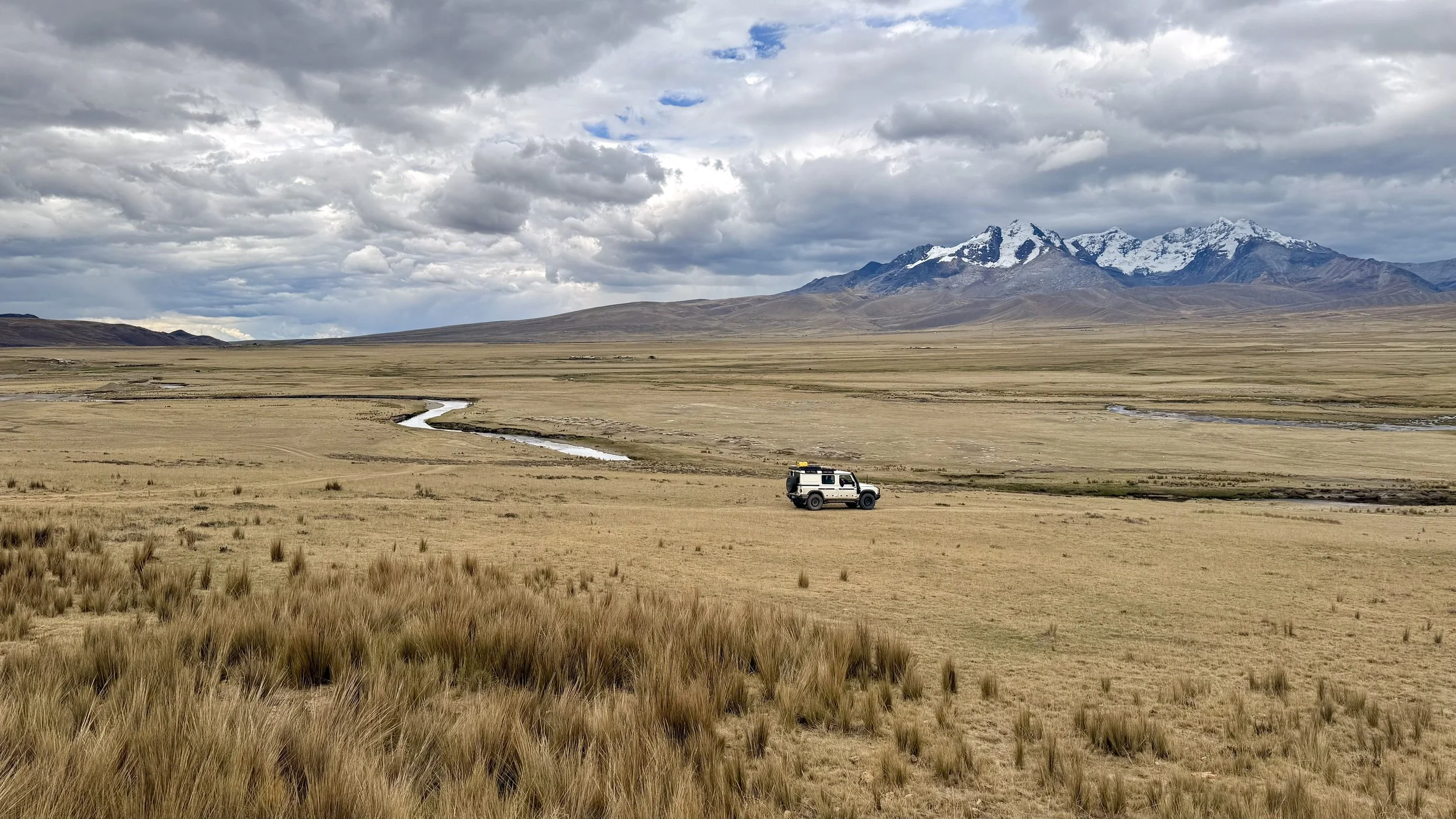
Aca ahora yo soy un hijo del altiplano (Here now I am a son of the highlands)
