Deception Island, part of the South Shetland Islands north of the Antarctic Peninsula, has one of the longest records of sustained human activity in Antarctica. Its flooded volcanic caldera forms a large, sheltered harbour accessed through a narrow entrance known as Neptune’s Bellows. This geography made it unusually attractive to early sealing and whaling vessels at a time when most of the Antarctic coastline remained difficult to approach.
The first phase of exploitation was sealing. Following the discovery of the South Shetland Islands in 1819, sealing vessels moved rapidly into the region. Antarctic fur seals were targeted for their pelts, and operations were intense but short-lived. Crews worked from shore, taking advantage of dense and previously unexploited colonies. Within a few seasons, sealing pressure drove local fur seal populations close to collapse. Peak season was 1821-22, when 90,000-100,000 seals were processed in one summer. By the mid-1820s, commercial sealing in the South Shetlands had largely ceased, not due to regulation, but because viable populations no longer remained.
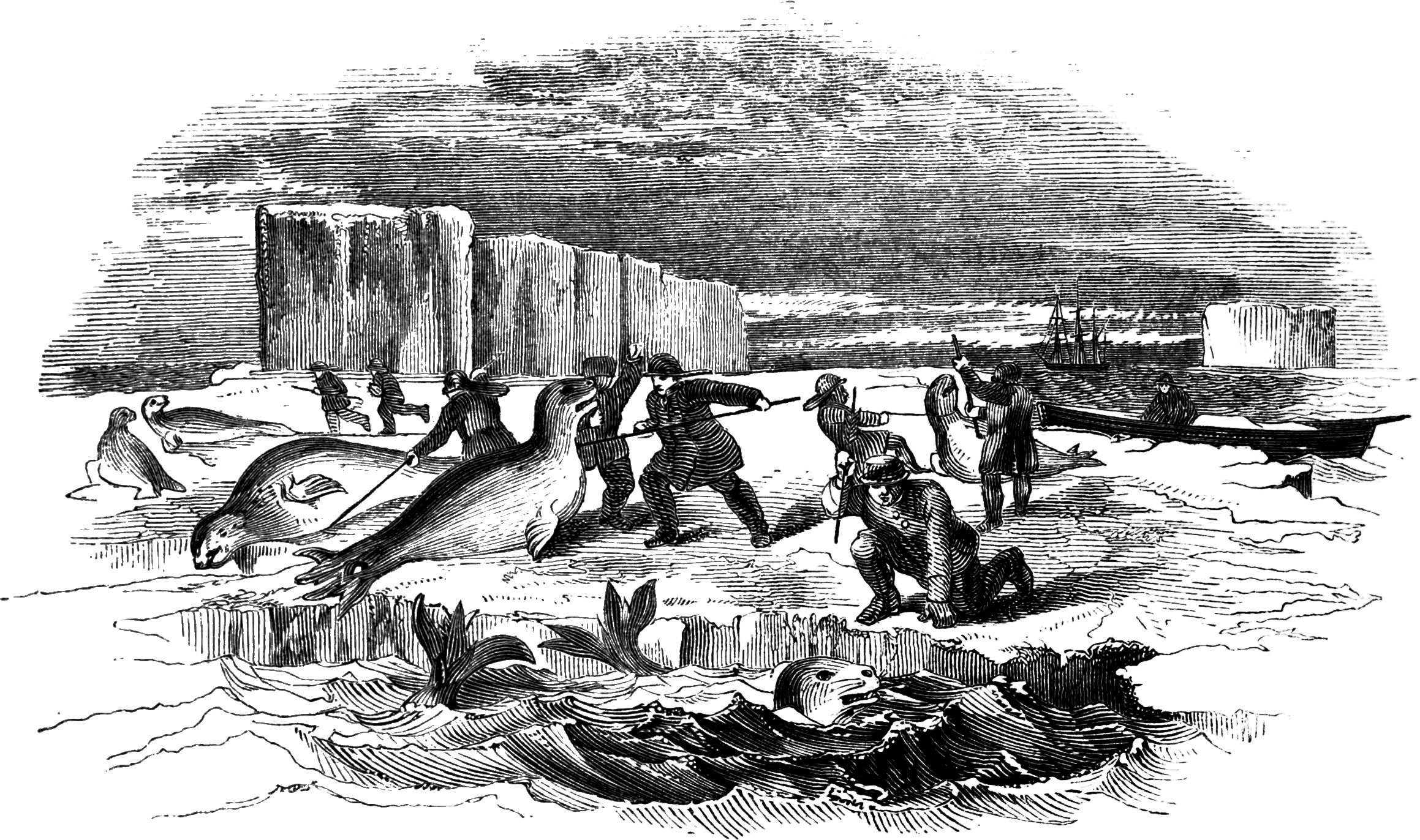
Seal Hunting on the Pack Ice. from A voyage of discovery and research in the southern and Antarctic regions, during the years 1839-43
The ecological impact was severe but not uniform. While fur seals were effectively eliminated from many sites, remnant populations survived in more remote areas. Recovery took more than a century. Today, Antarctic fur seals are again common throughout the South Shetlands and along the Antarctic Peninsula. Their rebound is often cited as a clear example of population recovery following the cessation of exploitation, although growth rates have slowed in some regions and local pressures remain.
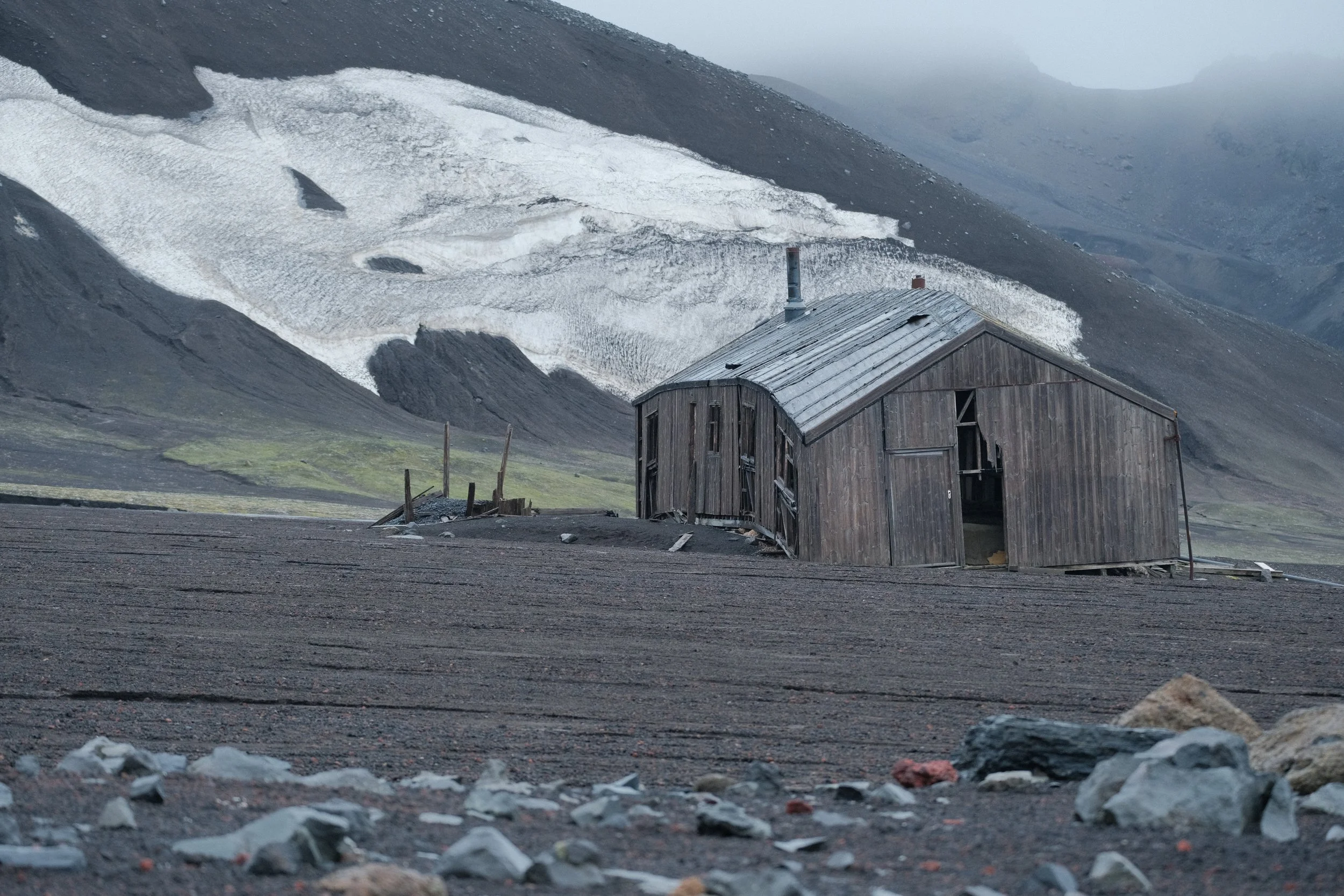
A second and more industrial phase followed with the expansion of commercial whaling into Antarctic waters in the early twentieth century. Technological advances, including steam-powered catcher boats and explosive harpoons, made it possible to hunt large baleen whales at scale. The Southern Ocean, a major feeding ground, became central to global whaling activity.
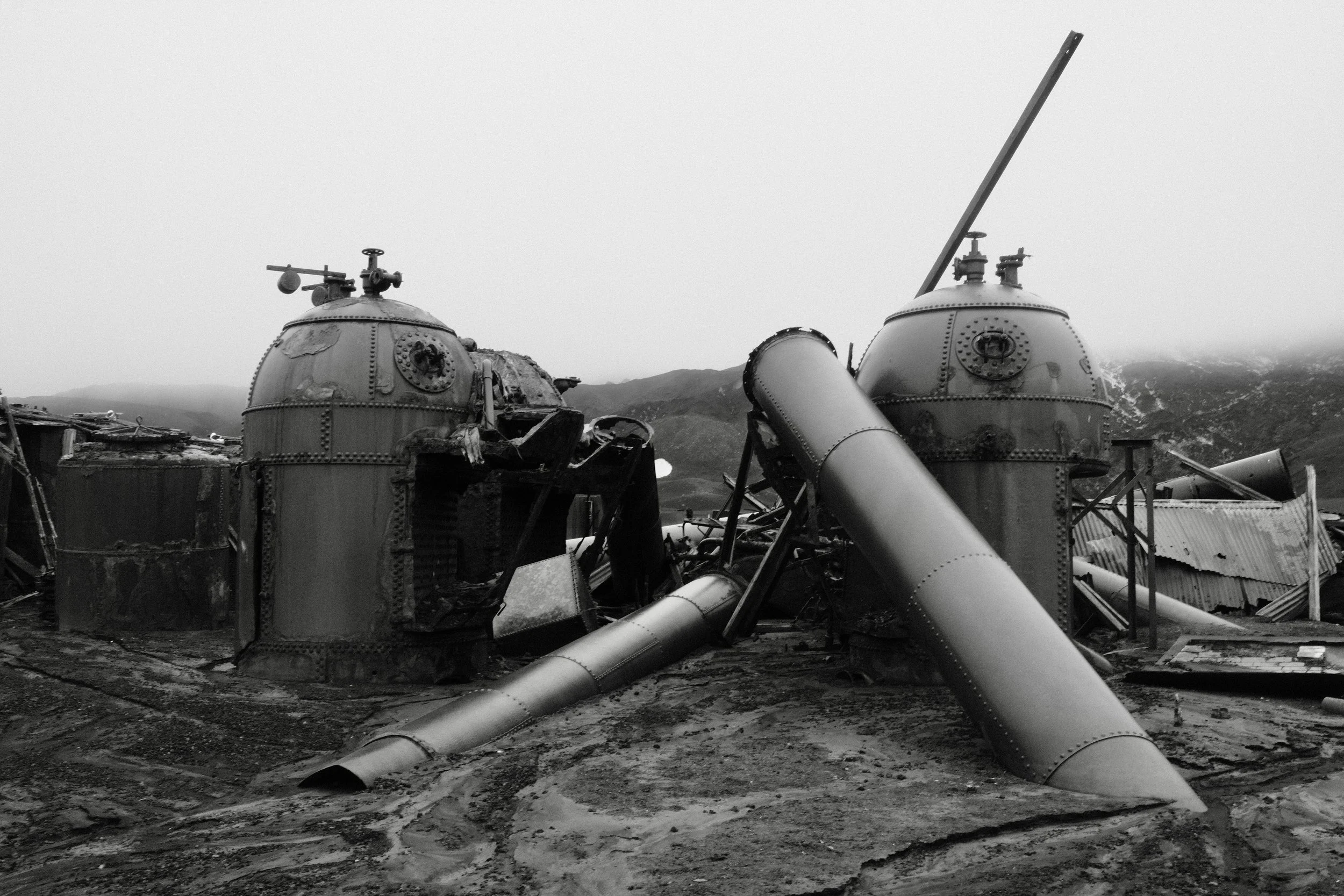
Pressure cookers were used to render whale oil.
At Deception Island, operations concentrated at Whalers Bay. Beginning in the early 1900s, shore-based facilities were established to process whales taken in surrounding waters. The most significant was the Hektor whaling station, built in 1912 and operating until 1931. It was the only shore-based whaling station in Antarctica to operate successfully over an extended period. Whales were towed into the harbour and processed on land, with oil extracted from blubber, bone, and other tissues. The remains of tanks, boilers, and machinery still line the shore, along with a small cemetery marking the deaths of workers during the station’s operation.
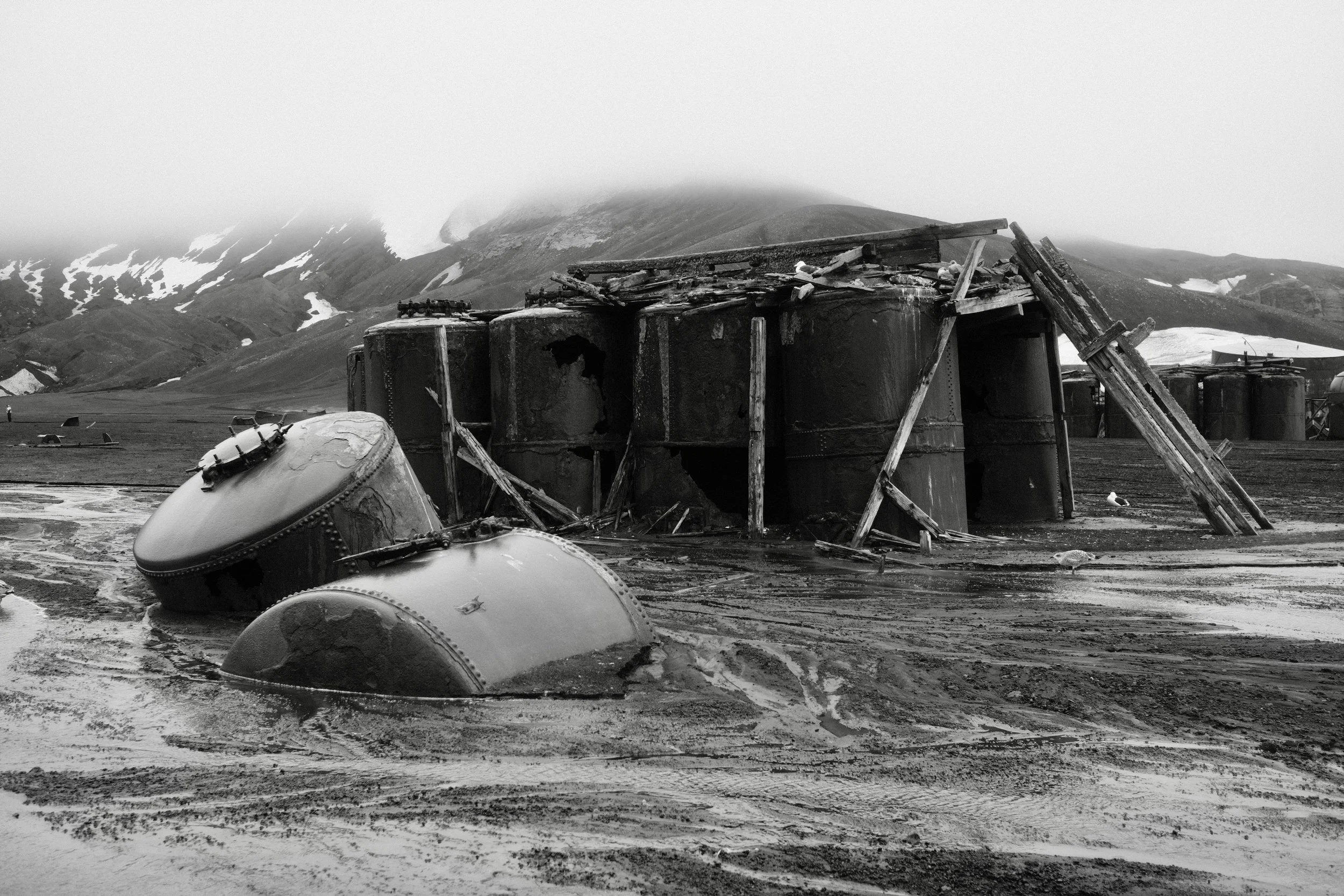
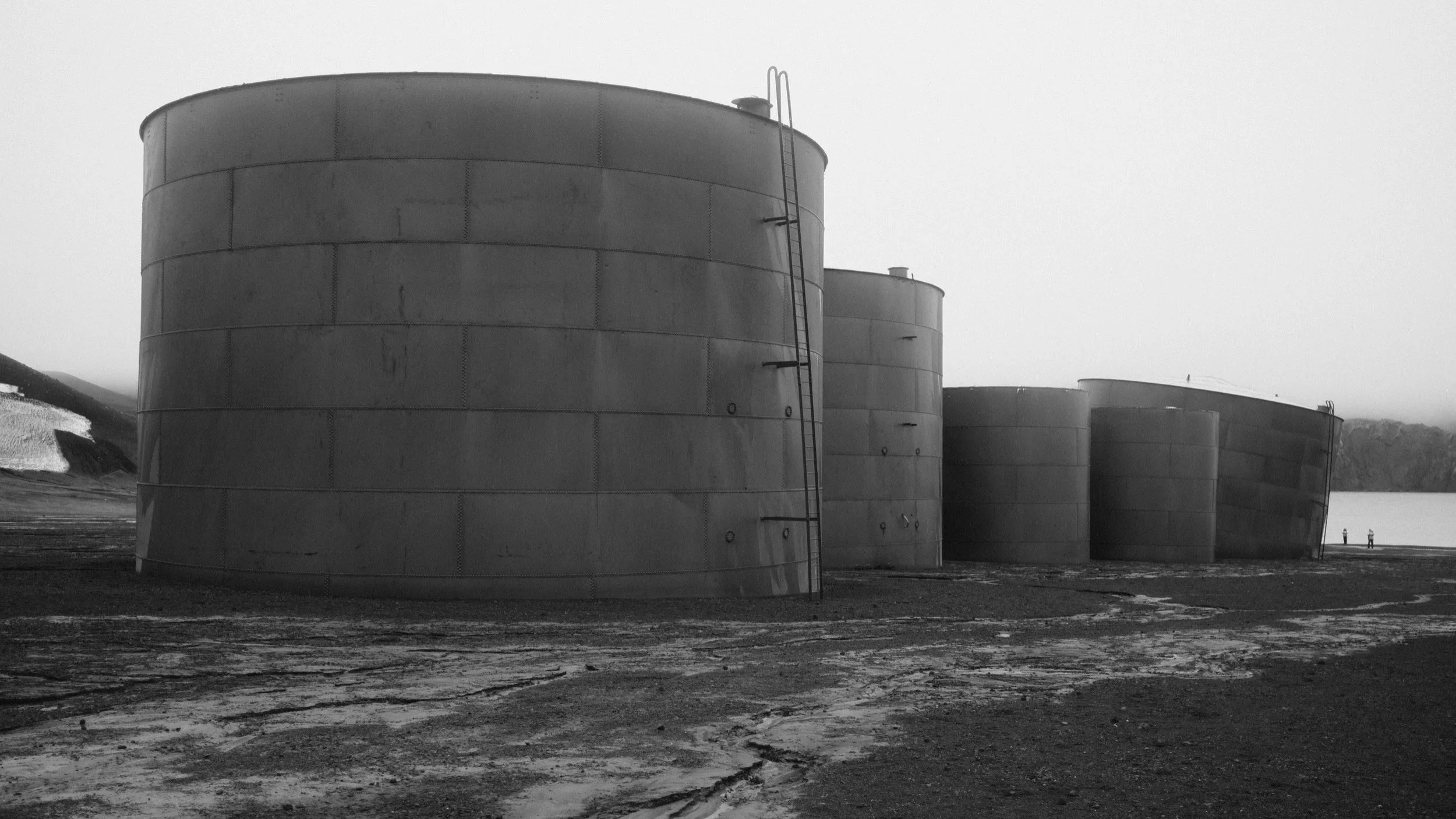
At it’s peak, the facility produced 140,000 barrels of oil per year. In 1912 alone, 5,000 whales were harvested and processed.
The primary targets of Antarctic whaling were large baleen species, including blue, fin, humpback, and southern right whales. Antarctic minke whales were also taken, particularly as larger species became depleted. Industrial whaling removed more than a million large whales from Southern Ocean populations during the twentieth century. Antarctic blue whales were reduced to a small fraction of their pre-exploitation numbers.
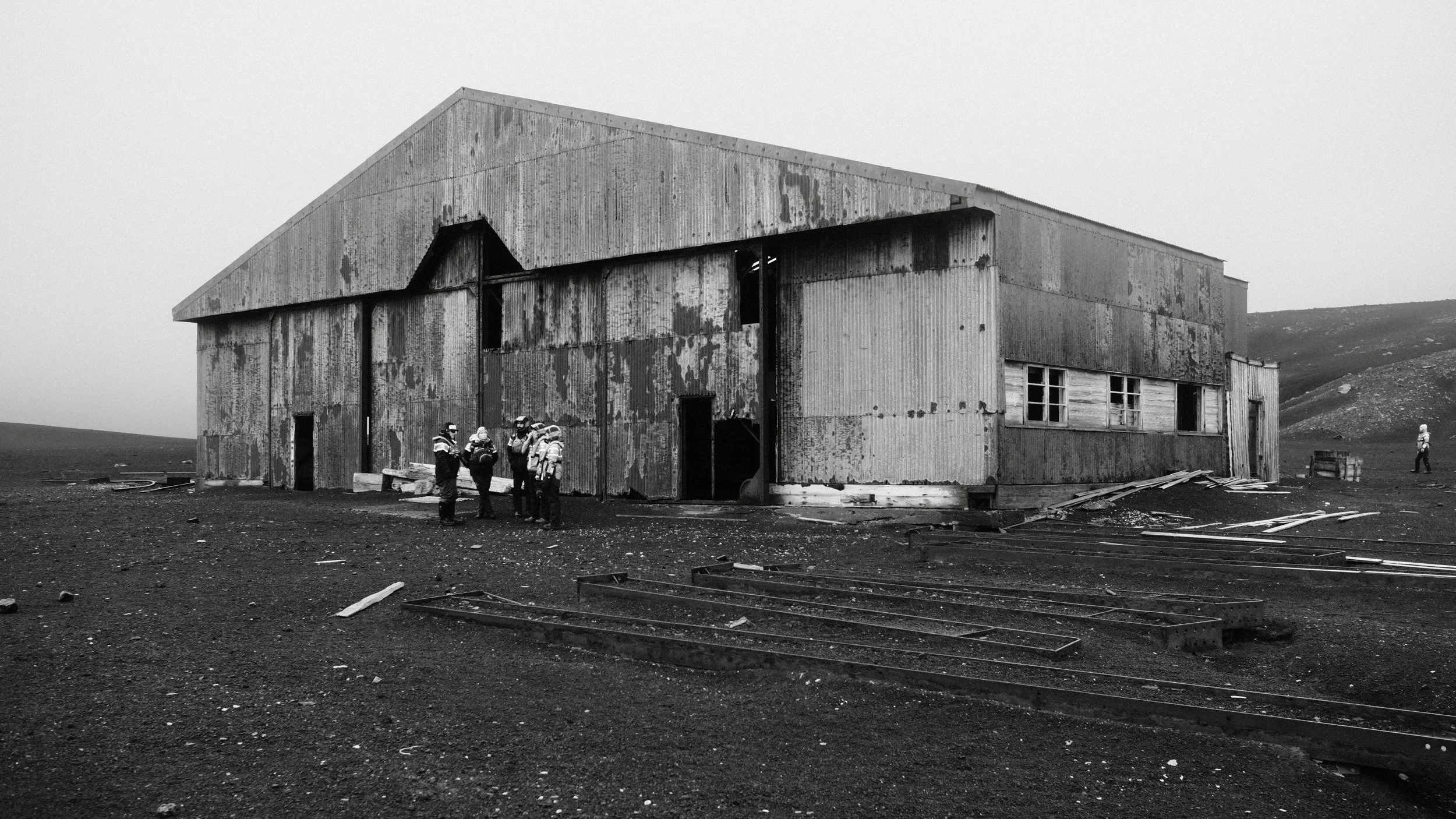
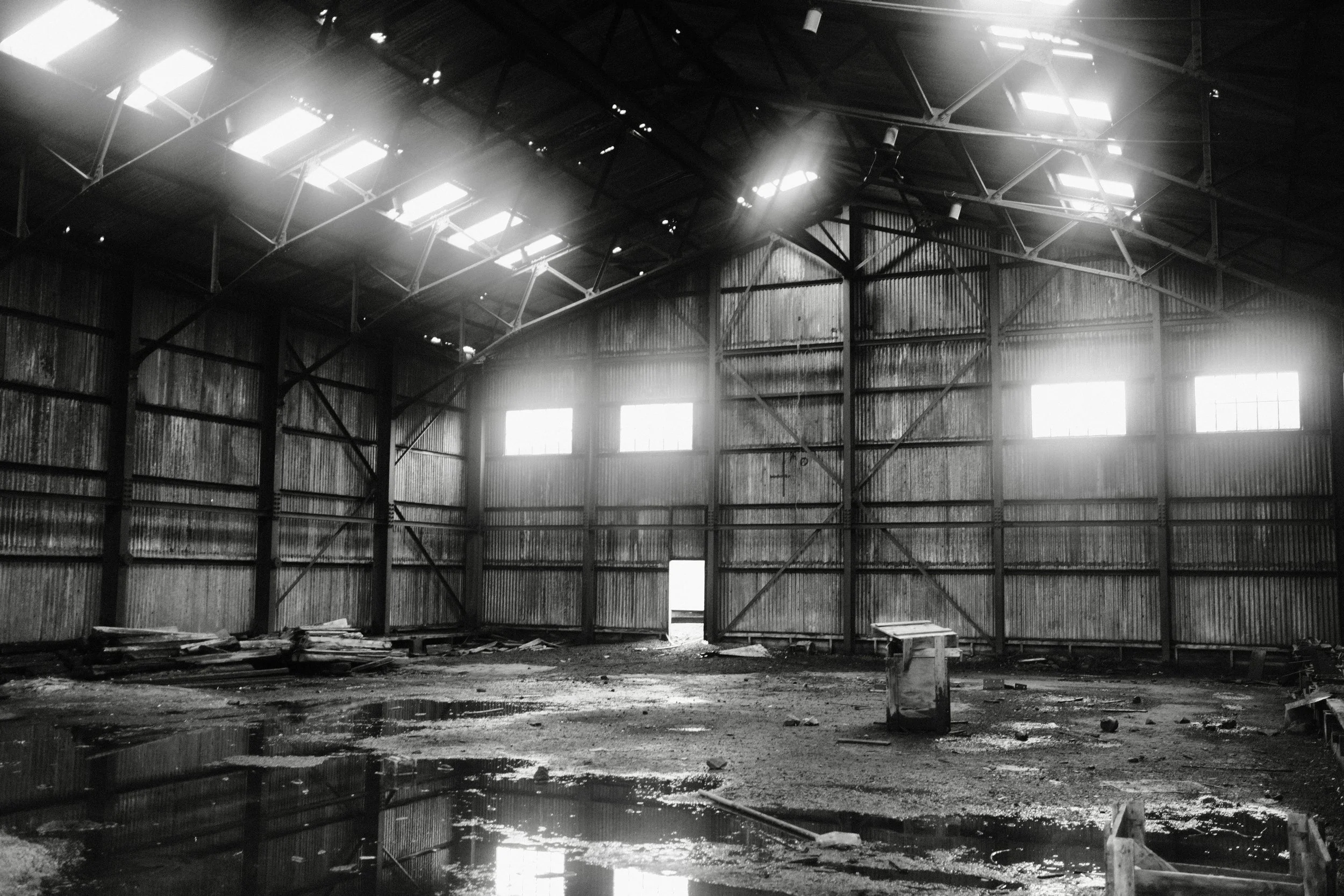
The derelict aircraft hangar, remains of British Antarctic Survey Base B.
Shore-based whaling at Deception Island ended in 1931 as pelagic factory ships became dominant. These vessels could process whales entirely at sea, making fixed infrastructure unnecessary. Whaling pressure elsewhere in the Southern Ocean continued for several decades before international regulation and the eventual commercial whaling moratorium.
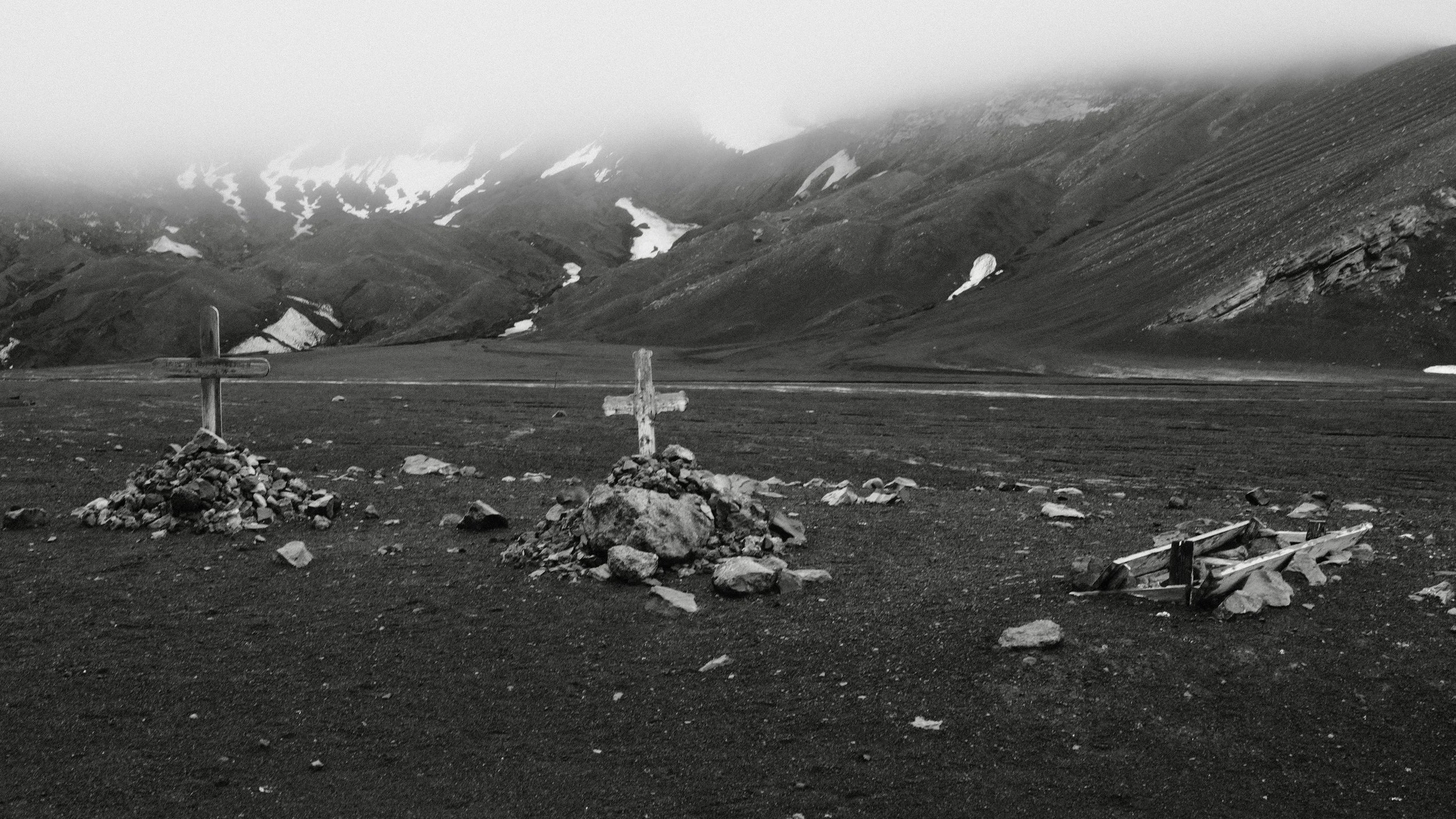
Norwegian whalers’ graves from the early 20th Century. The rest of the cemetry was destroyed in volcanic eruptions.
Recovery since then has been uneven. Humpback whales have shown strong population growth and are now commonly observed around the Antarctic Peninsula. Fin whales also show signs of recovery, though abundance estimates remain uncertain. Antarctic minke whales appear relatively stable. Antarctic blue whales are increasing slowly but remain endangered, with current numbers far below historical levels.
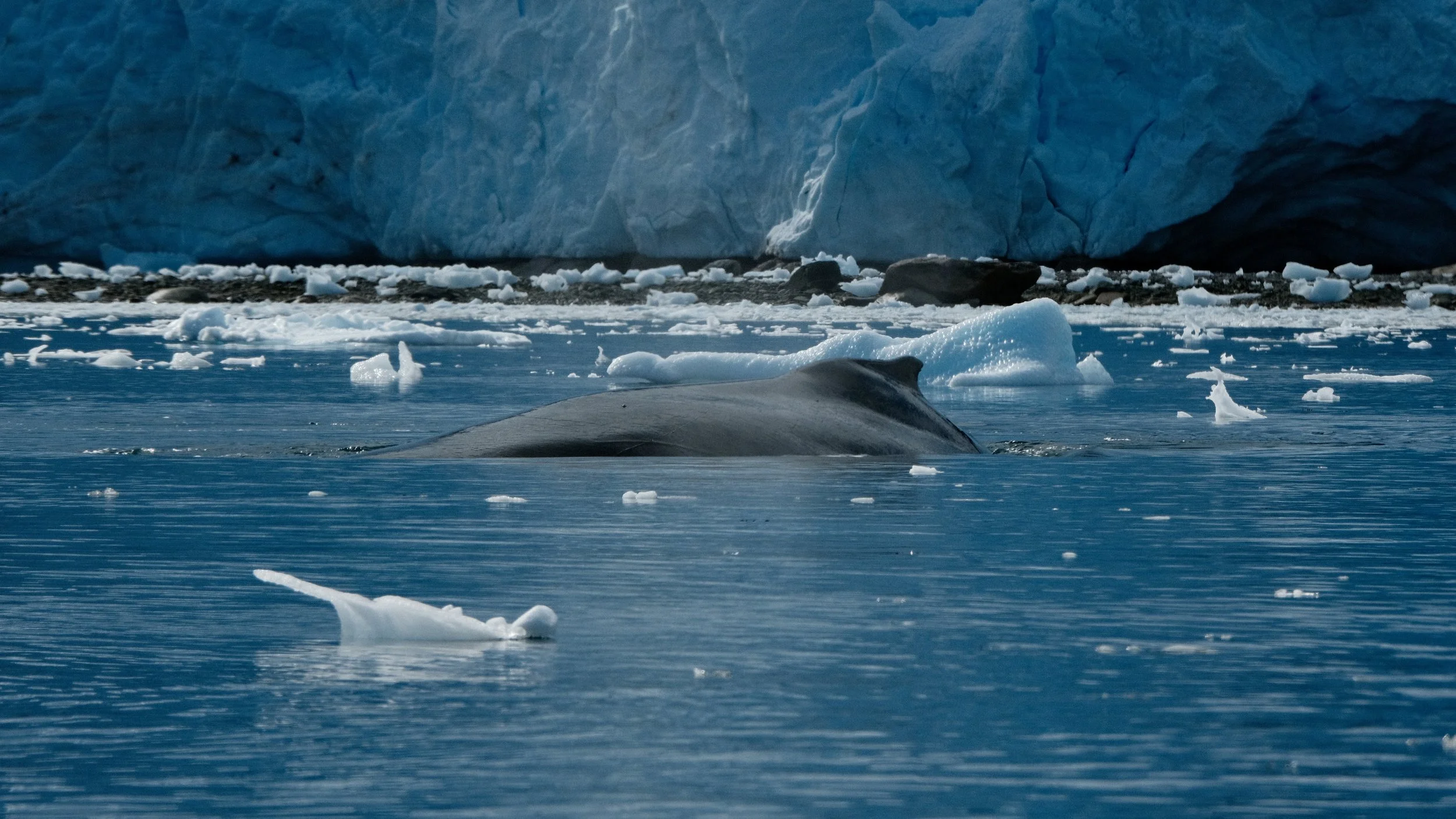
The distinctive ‘hump’ that the Humpback whale is named for.
Modern monitoring relies on non-lethal methods. Photo-identification and citizen science now play a significant role, with platforms such as HappyWhale.com allowing individual whales to be tracked across regions and years. Sightings from the Antarctic Peninsula contribute to a growing global dataset, improving understanding of migration, population structure, and recovery trends.
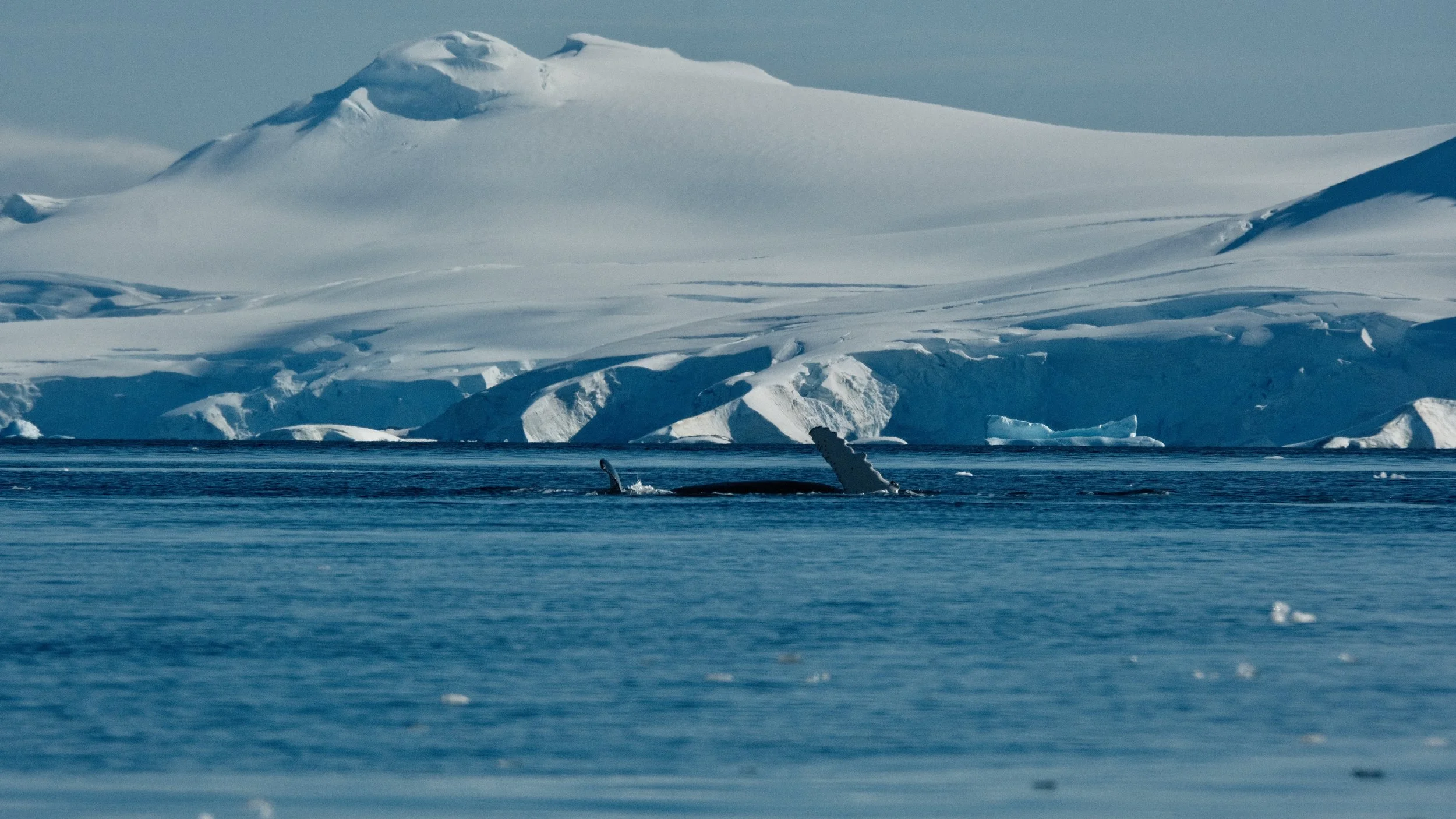
Humpbacks summer in Antarctic waters feeding primarily on krill.
Today, Deception Island is uninhabited. Its sealing beaches and whaling infrastructure are protected as Historic Sites under the Antarctic Treaty. The remains document how rapidly Antarctica was once absorbed into global commercial systems, and how completely that model has since been abandoned.
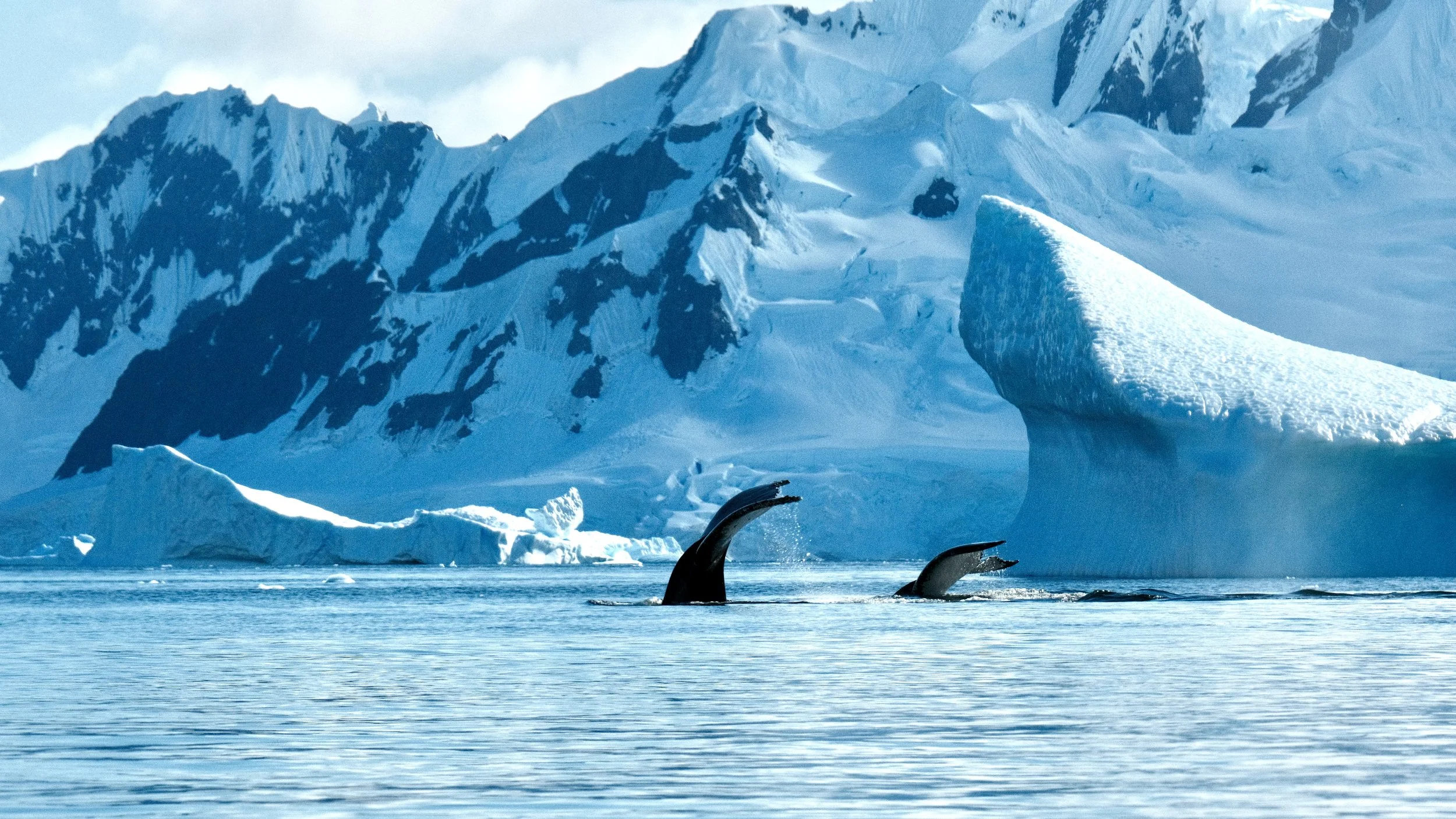
While Humpback whale populations are bouncing back from whaling, other species such as Blue, Right and Sperm whales remain depleted.
From Deception Island, British Antarctic activity shifted away from industry and toward permanent scientific occupation. That transition is recorded most clearly a few hundred kilometres south, in a small timber hut on Winter Island.
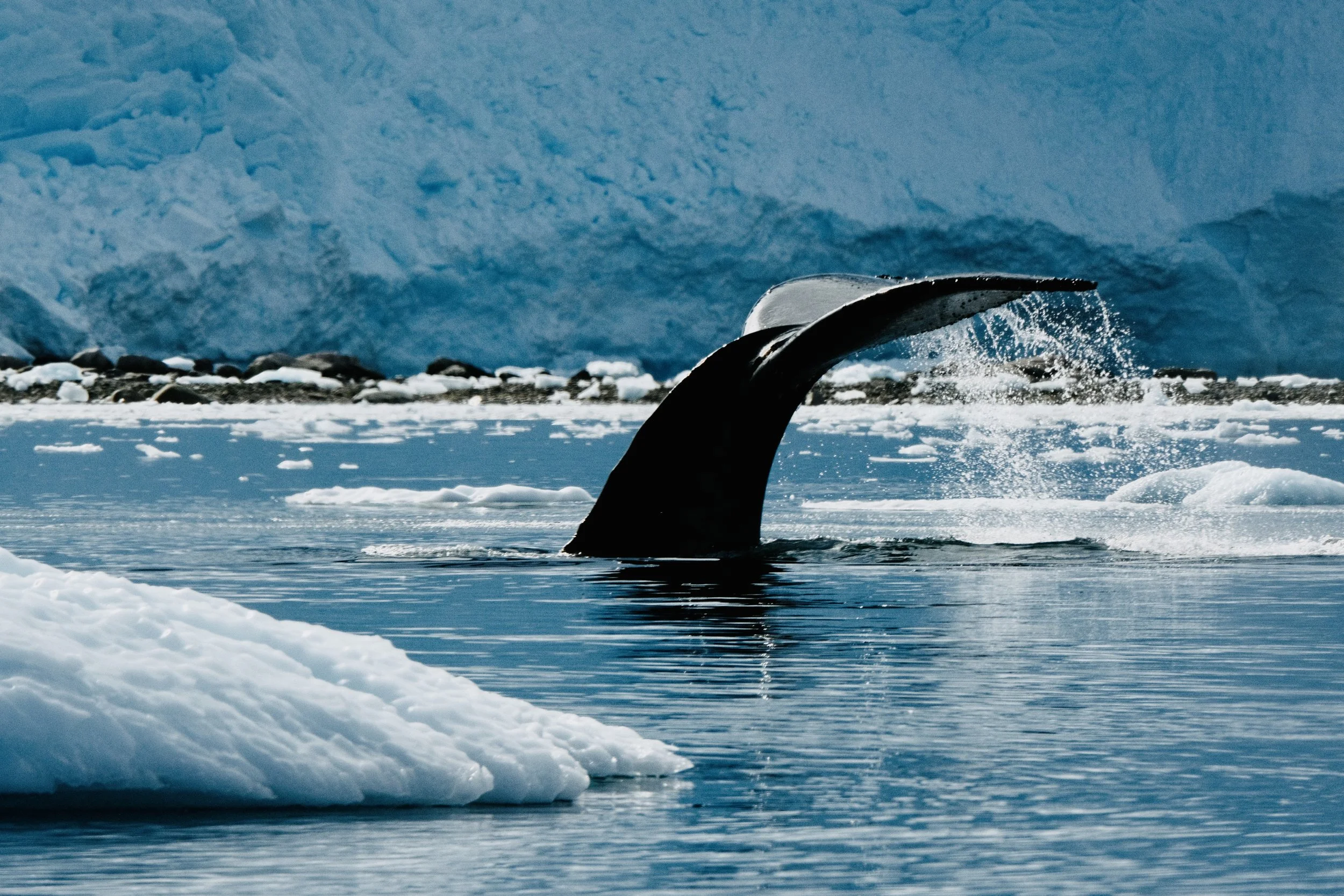
Get involved in protecting and preserving Antarctic habitats via the Antarctic and Southern Ocean Coalition.
