South to the end of the world
The Patagonian steppe features one of the world’s great fossil records and one of its great living wildlife reserves, and the same geological conditions that exposed the bones of the largest land animals ever to have lived also shaped the coastal geography that makes Atlantic Argentina exceptional for marine life today. The route south is Ruta 3 — alongside Ruta 40 as the second of Argentina’s epic road trips.
Ruta 3 south
Ruta 3 runs 3,045 kilometres from Buenos Aires to Bahía Lapataia in Tierra del Fuego National Park. It is the southernmost paved road in the Western Hemisphere and the final leg of the Pan-American Highway system. The drive south from Santiago and Mendoza via the crossing into Argentina is long and largely unadorned: the Patagonian steppe is flat, pale, and empty of almost everything except wind and the occasional guanaco crossing the road. Puerto San Julián, Comodoro Rivadavia, Río Gallegos — the towns arrive at intervals, functional and weathered, and provide fuel and a reminder that people actually live here. The steppe does not become more hospitable as you head south, it is wide, flat and whipped by a bleak wind.
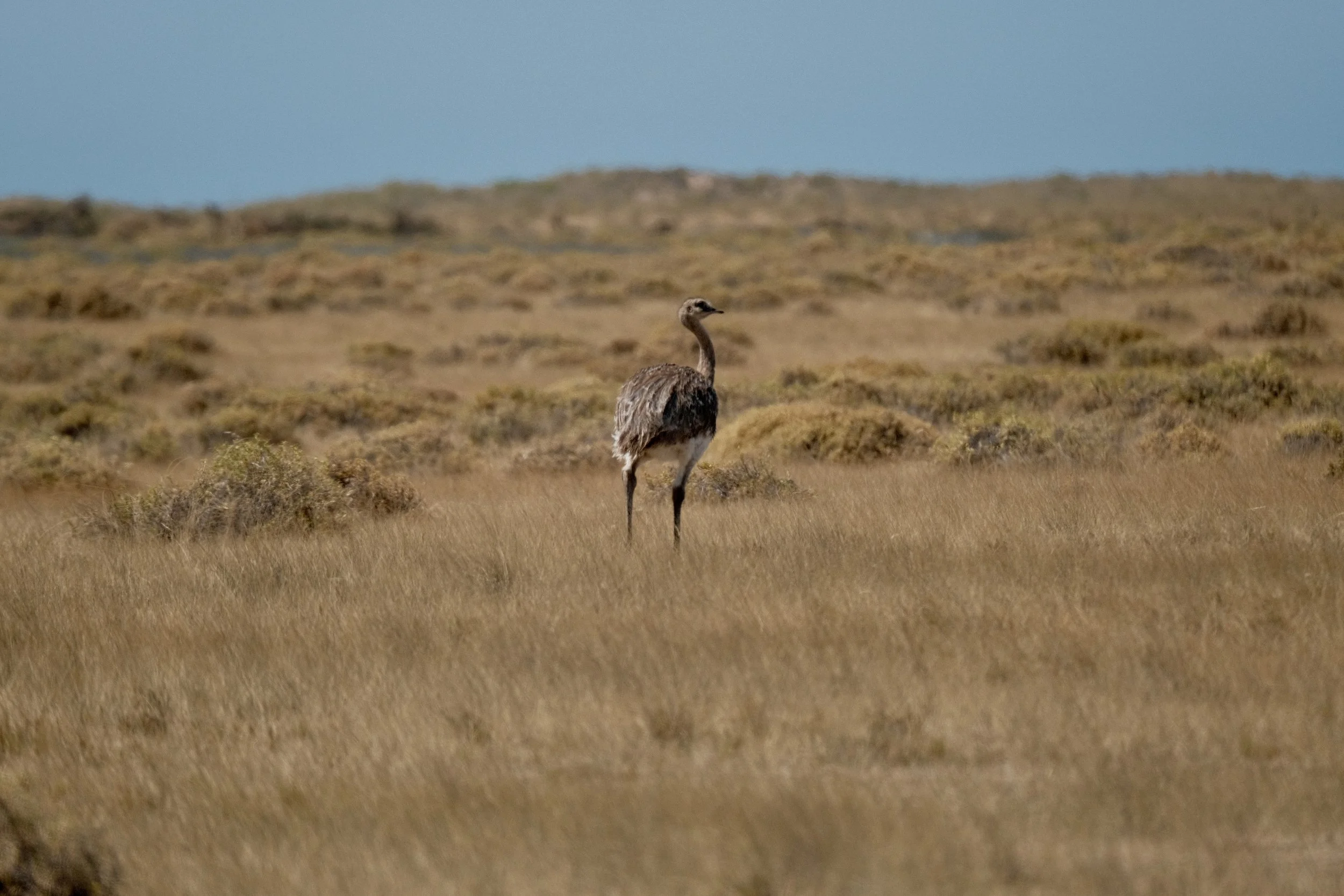
Lesser Rhea, a common site on the Patagonian steppe alongside Ruta 3
Trelew and the Patagonian fossil record
The Museo Paleontológico Egidio Feruglio in Trelew is one of the more important natural history museums in the world, though it carries that distinction without much fanfare. The reason Patagonia produces the largest dinosaurs on record is geological: natural uplift and erosion have exposed Cretaceous-period sediment at the surface across the desert badlands, making fossilised bones easier to spot and excavate than almost anywhere else on earth. South America spent most of the Cretaceous as an isolated continent, and its isolation appears to have driven titanosaur sauropods to grow larger than those found on other landmasses. The headline find from this region is the Patagotitan mayorum, confirmed as the largest land animal ever to have lived. It was discovered in 2014 when a farm worker near Trelew noticed an unusual bone while tending sheep. The femur alone was as tall as a person. Excavation by MEF palaeontologists recovered seven specimens. A cast now occupies the fourth floor of the American Museum of Natural History in New York, its neck extending beyond the exhibition hall into the corridor. The original is here, in Trelew.
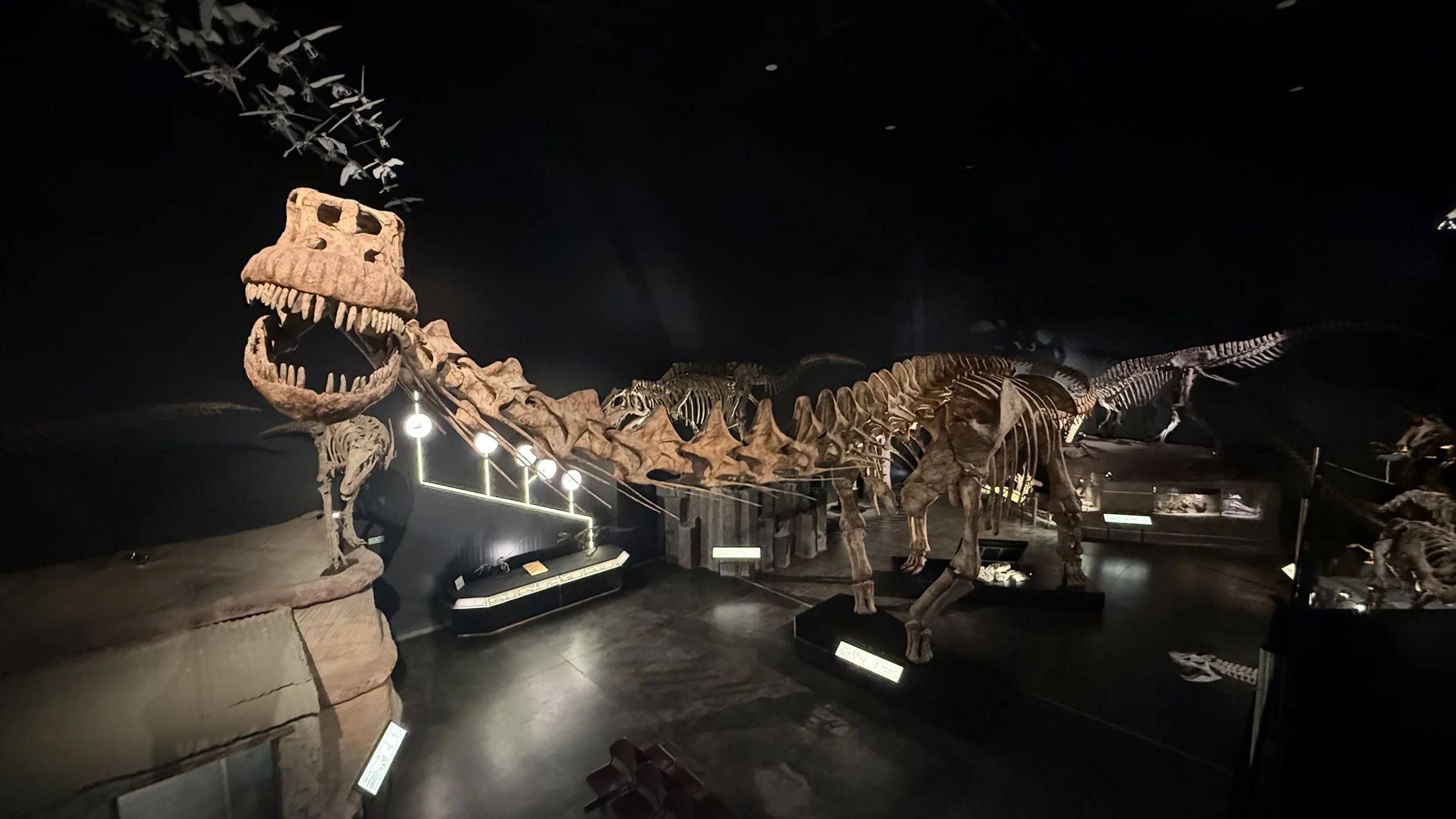
The extraordinary, massive Patagotitan mayorum
The broader significance is that much of the Patagonian rock remains unexplored. Palaeontologists describe it as among the most productive regions on earth for future discovery — a landscape still giving up its dead, a hundred million years after the fact.
Península Valdés
Peninsula Valdés is a UNESCO World Heritage Site and one of South America’s most important marine wildlife reserves. The peninsula juts into the South Atlantic connected to the mainland only by a narrow isthmus; its sheltered gulfs provide calm, protected water that makes it a critical breeding and nursing ground for southern right whales, elephant seals, sea lions, and orca. The orca here have developed a hunting technique found nowhere else in the world at this scale: they beach themselves deliberately to catch sea lion pups at Punta Norte, a behaviour documented by BBC camera crews for the Blue Planet series and still performed by the same local pod today.
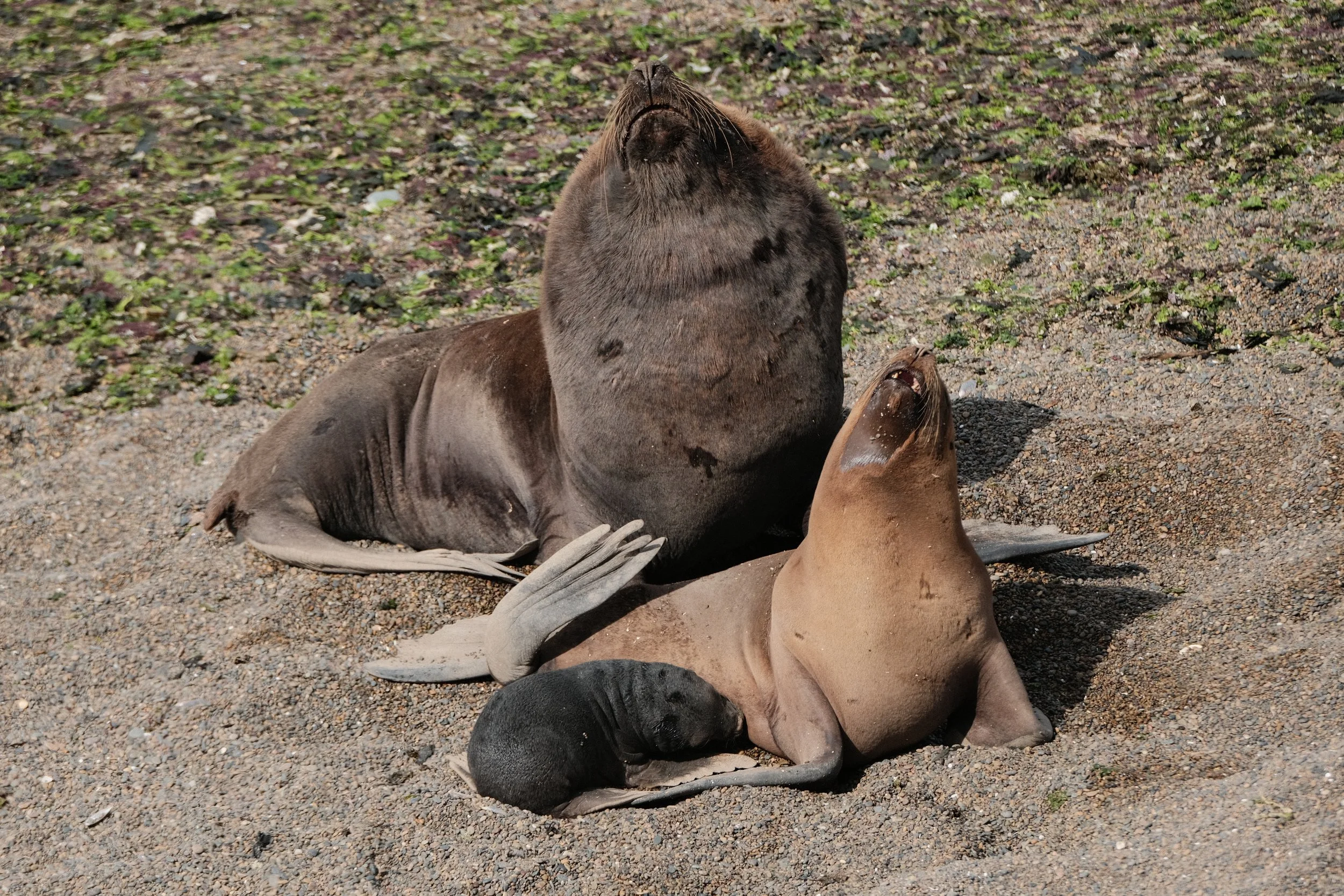
A sea lion family, pups are energetically and spectacularly predated on this shoreline by the local orca pod
We visited in January, between the peak seasons for both whales (June to December) and orca (March to April). What the peninsula offered at that time of year was no less impressive: elephant seal colonies basking on cliff-edged beaches, sea lions hauled out at Punta Pirámides, Commerson’s dolphins in the gulf, guanacos crossing the gravel road at intervals, and the Patagonian steppe rolling flat and pale to the horizon in every direction.
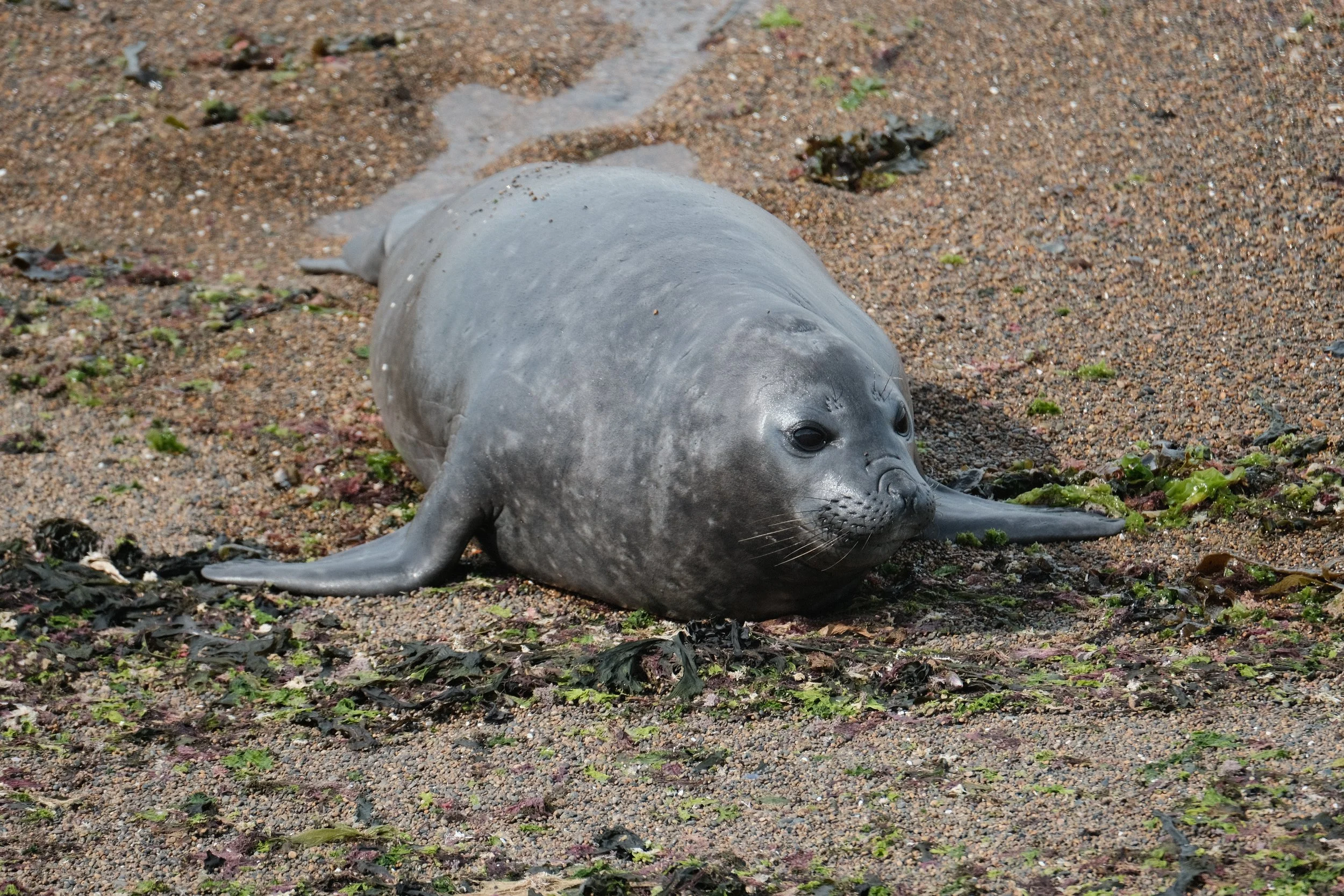
Elephant seal at Punte Norte
The centrepiece was Estancia San Lorenzo, on the northern coast of the peninsula. The estancia has been in the Machinea family since 1906 — originally cattle, then sea lion hunting from 1918 to 1960, then sheep farming, now Australian merino wool production alongside conservation and tourism. The coexistence is specific and deliberate: the working sheep station and the penguin colony operate across the same 5,000 hectares of coastline on the San Matías Gulf.
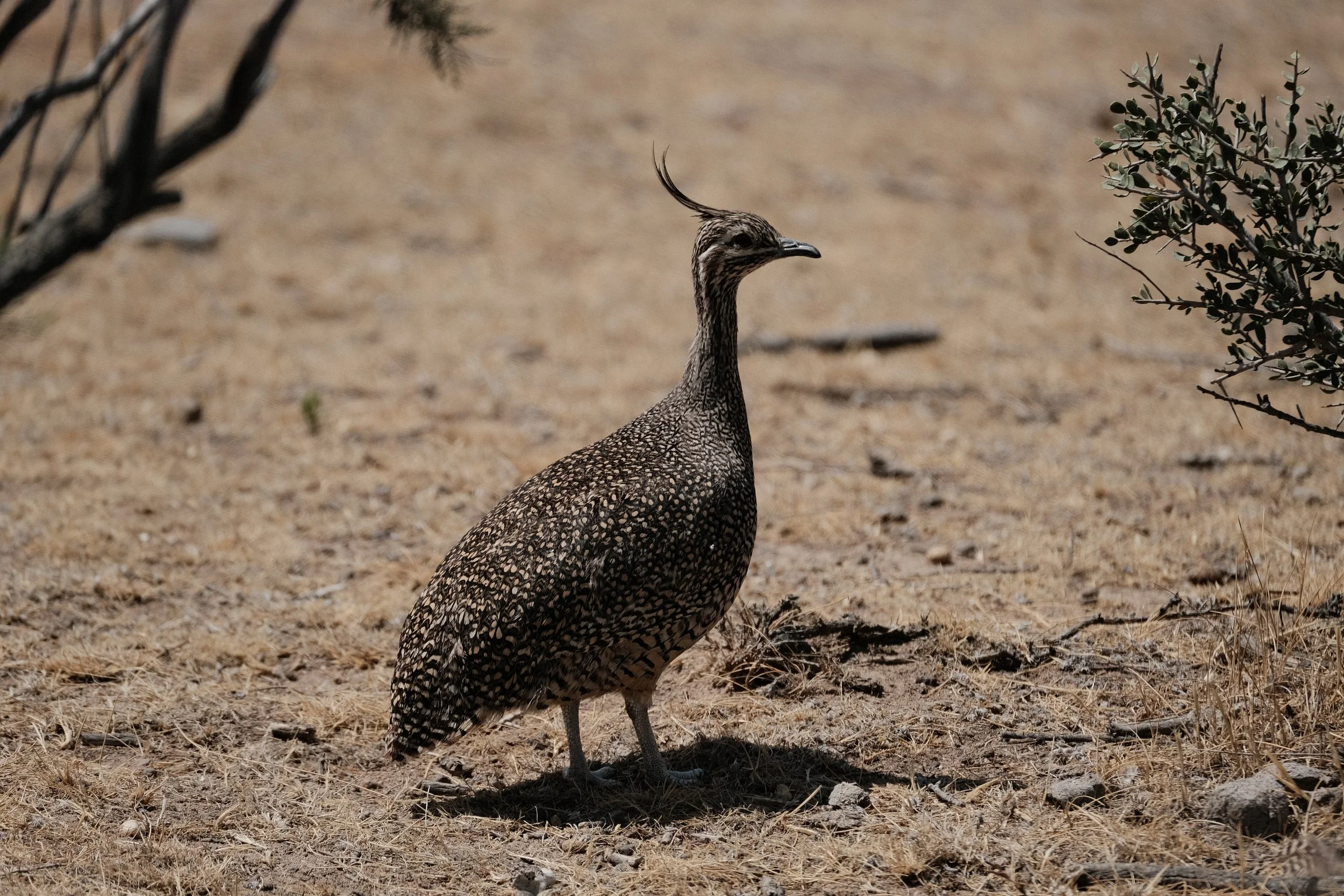
Elegant Crested-Tinamou at Estancia San Lorenzo
The colony numbers around 600,000 Magellanic penguins during the breeding season, making it the largest continental colony in the world. Walking the trail through it in January — the chicks well-grown, beginning their moult toward adult plumage before heading to sea in February — the overwhelming impression is of incongruity. The setting is arid: sparse coastal scrub, dry sandy soil, the pale light of the Patagonian steppe. The penguins nest in burrows dug directly into the ground beside the trail, close enough to observe without disturbing. They are largely indifferent to the visitor’s presence, continuing to call, shuffle, and squabble with complete self-possession. Half a million of them, in what looks like a semi-desert, each one apparently certain it is in exactly the right place.
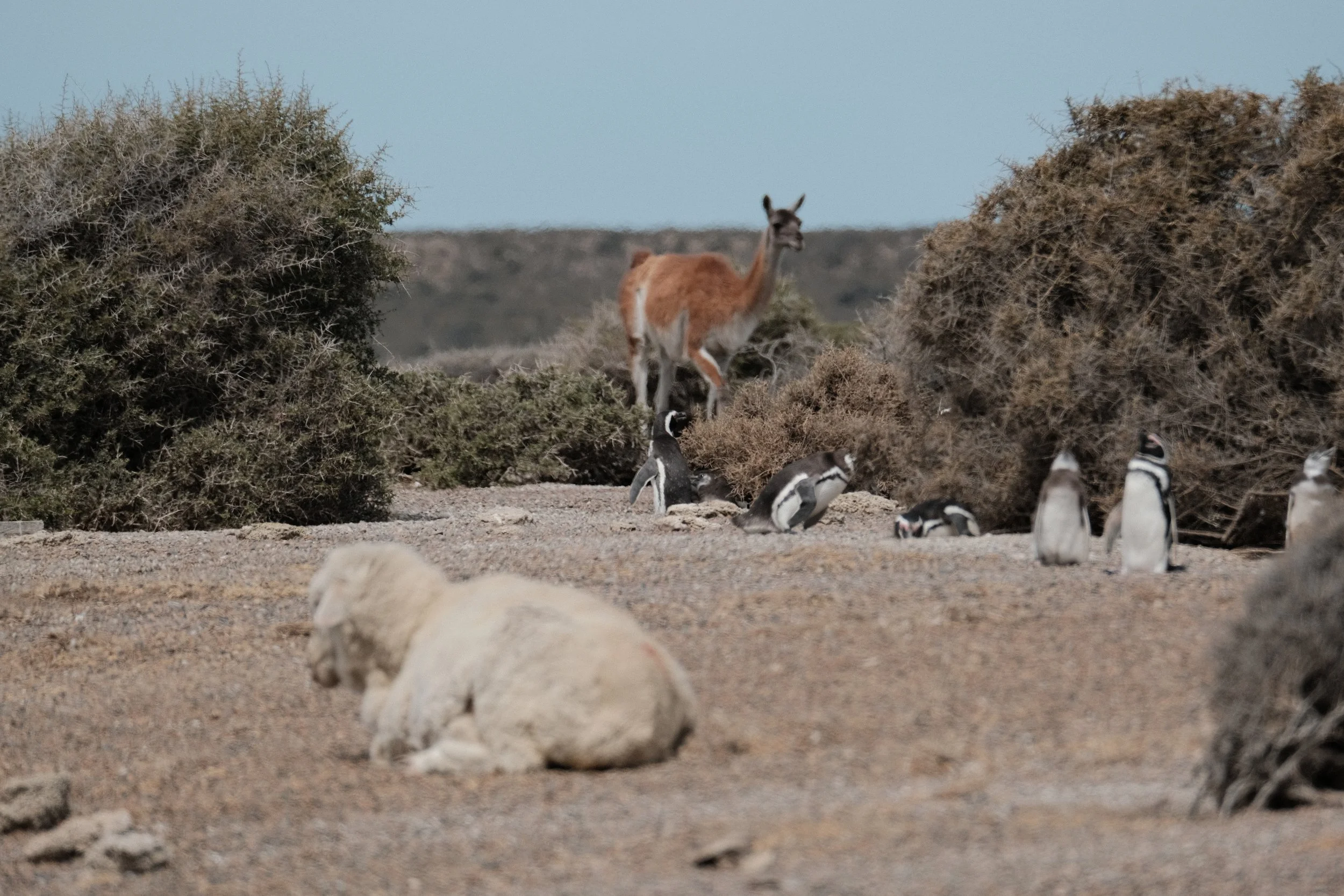
Magellanic penguins nest alongside sheep and guanacos
It is a peculiarity of the Magellanic penguin that it breeds on land but belongs entirely to the sea. The colony exists at this coastal margin — choosing aridity over predator exposure — and the birds commute daily to the Atlantic to feed on anchovies and squid at depths of up to fifty metres. The steppe has nothing to offer them except its dryness and its soil. They require both, and they take nothing else.
Ruta del Fin del Mundo
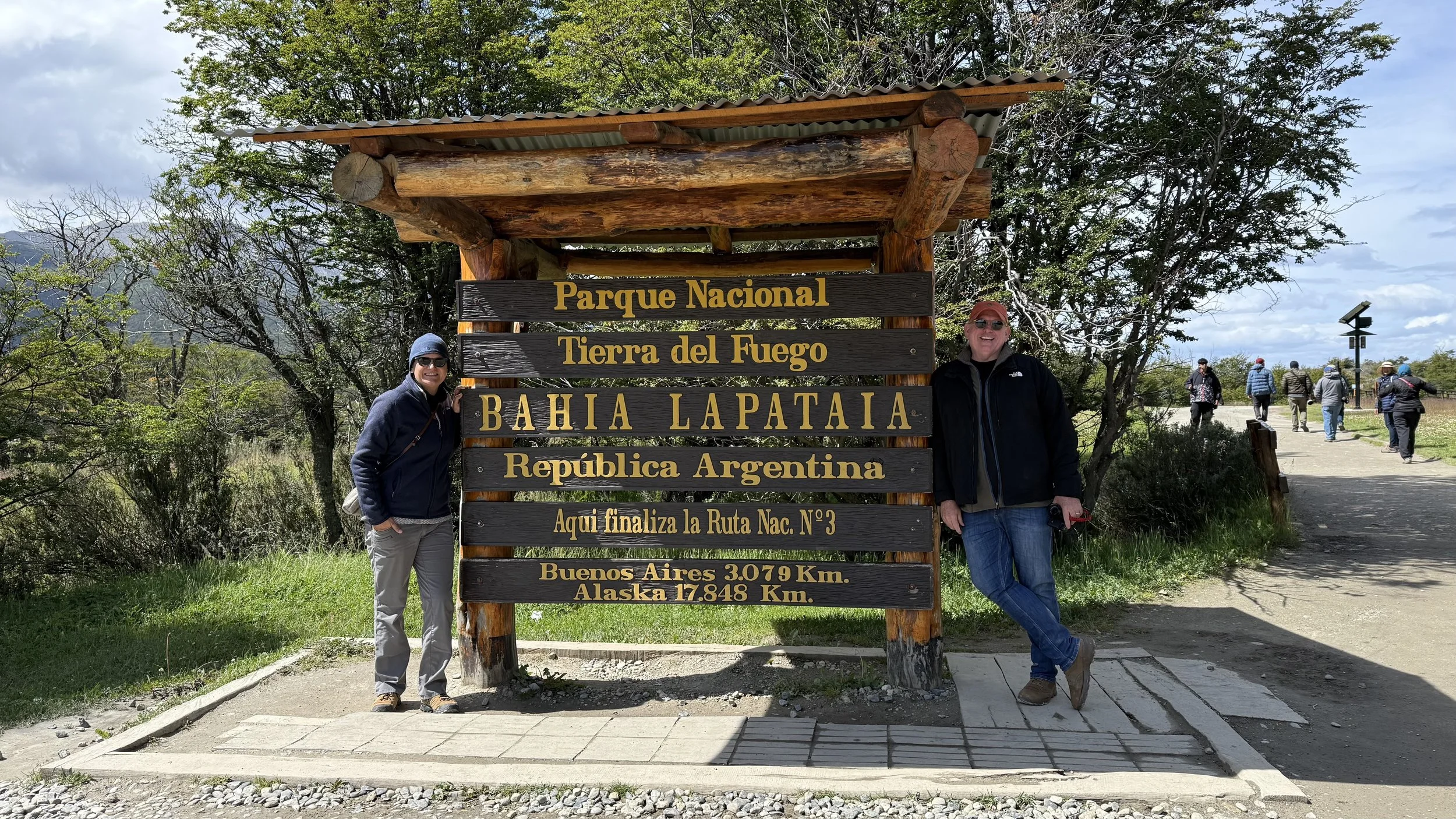
From Valdés we continued south on Ruta 3: Río Gallegos, the Magellan Strait ferry, and the crossing into Tierra del Fuego. The king penguin colony at Bahía Inútil came first — described in the Southern Patagonia post — and then Ushuaia, where we had a week before the Antarctic embarkation. In the summer of 2024 we had stood at Tuktoyaktuk, on the shore of the Arctic Ocean in Canada’s Northwest Territories, at the northern terminus of the Dempster Highway. The intention from that moment was to drive the length of the Americas to its southern conclusion. Eighteen months and roughly 50,000 kilometres later, we walked the end of Ruta 3 at Bahía Lapataia, stood beside the sign — which gives the distance to Alaska as 17,848 kilometres, though we had started further north still — and photographed Iggy at the marker. The span from the Beaufort Sea to the Beagle Channel had been completed by road. Then we turned our attention to the Drake Passage. The journey south by land was done. What followed was something else entirely.