Echoes of a tragic miscalculation
In the shadow of a recess, in the corner of a military hospital ward in Asunción, a wife in tearless agony is supporting the head of her ailing husband. The chill hue of death is whitening his pinched features; it needs no practised eye to tell there is little hope now. The gift of chèpa and cigars she has brought has fallen to the ground, and she is praying frantically while trying to force a piece of orange between his clenched teeth. But she cannot anchor his flagging spirit, and the tired child who has fallen to sleep beside him will wake an orphan.
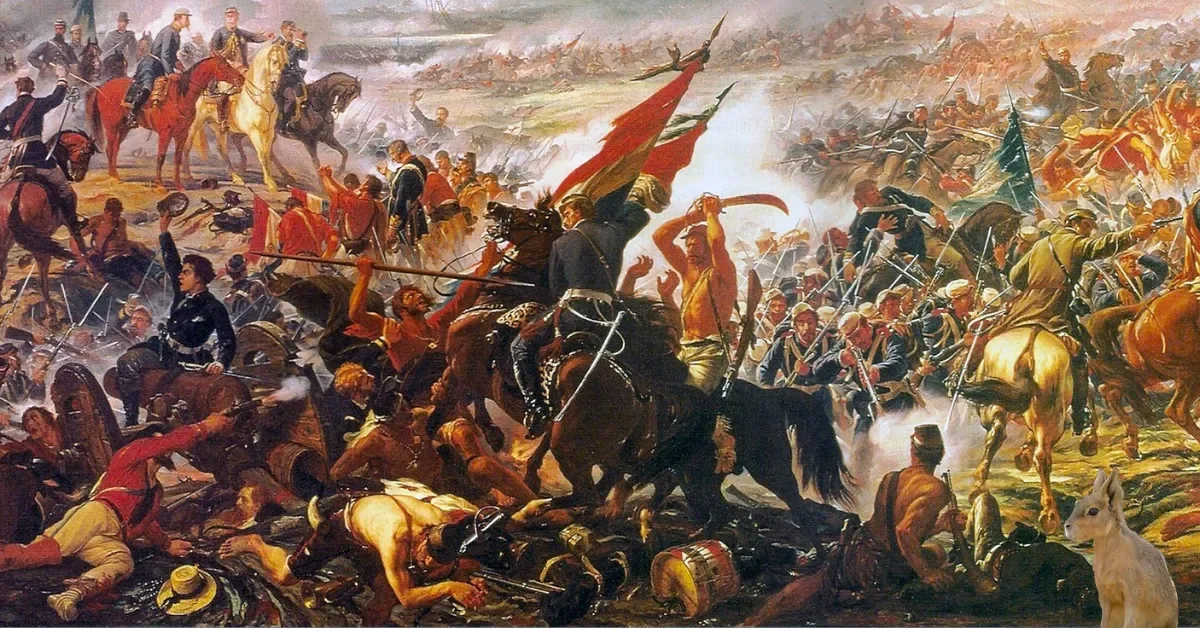
Batalha do Avaí by Brazilian artist Pedro Américo (1877).
“I picture no imaginary scene,” the man watching writes. “Day after day the actors changed, some few restored to health, some to a life of crippled helplessness, others, and they more numerous than all, passed to the bare cemetery on the hill; but the same sad drama went on: not a bed was untenanted for many hours.”
The man witnessing this scene was George Frederick Masterman, a British army surgeon who arrived in Paraguay on Christmas Eve 1861 as Chief Military Apothecary to the republic, and left it seven years later having been imprisoned, tortured, and very nearly shot by the same government he had served. His book, Seven Eventful Years in Paraguay, published in London in 1870, is the closest thing in English to a ground-level account of what the War of the Triple Alliance did to Paraguay. He wrote it with the marks of his own suffering still fresh upon him, and with an indignant pity for the people he watched die that he makes no attempt to conceal.
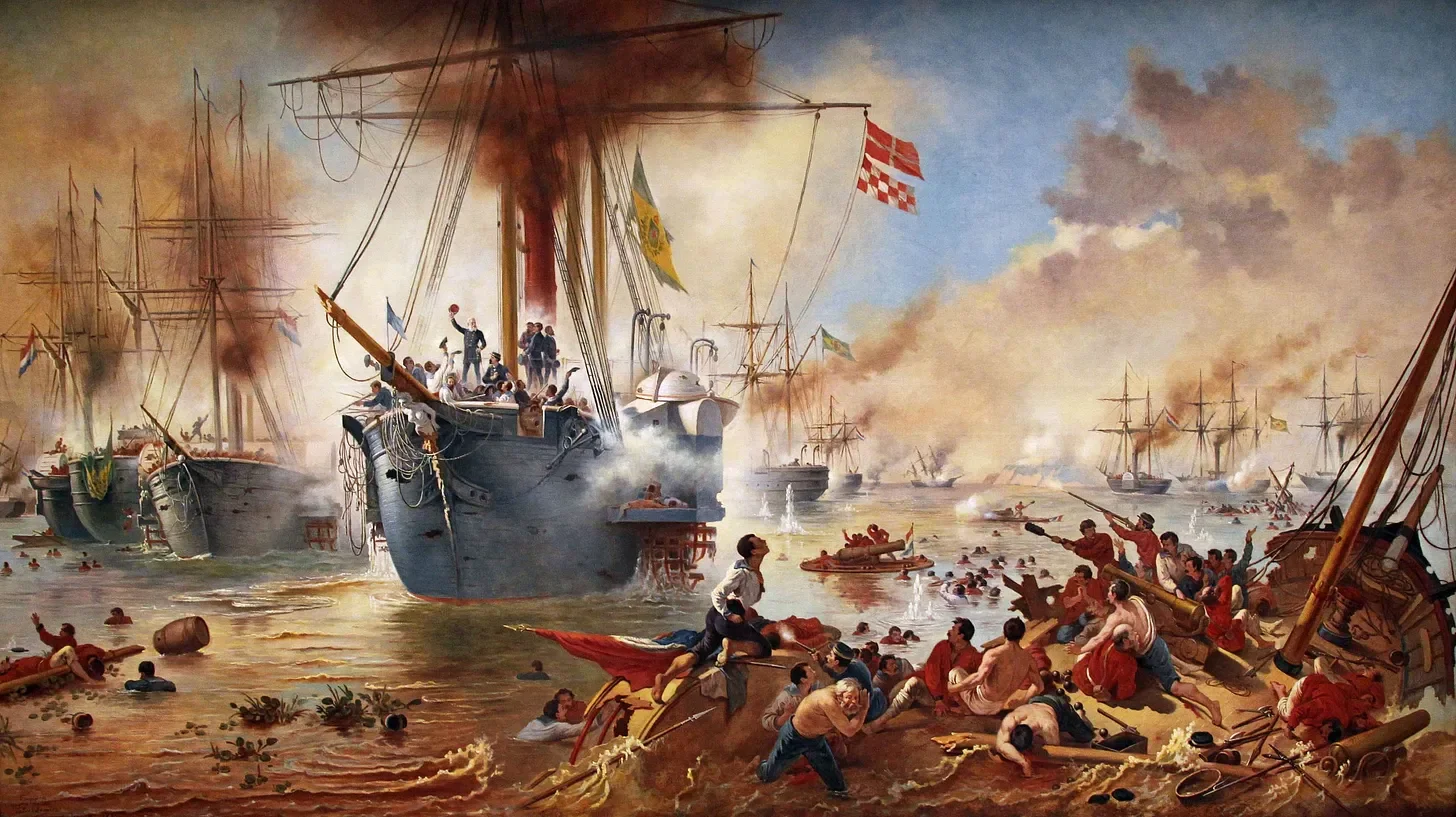
Naval confrontation at the Battle of Riachuelo.
He had arrived in peacetime. The war began in 1864, when Francisco Solano López, Paraguay’s dictator, decided to check Brazilian expansion into the Río de la Plata basin by force. It was a catastrophic miscalculation. Brazil, Argentina, and Uruguay formed the Triple Alliance and turned on Paraguay together. By the time López was run to ground and killed in the presence of his own family in 1870, the country had lost somewhere between half and two-thirds of its entire population. The estimates for adult men approach ninety percent. Masterman, with a medical officer’s eye for the ledger, had watched it happen ward by ward. Before a single serious land battle was fought, fifty thousand Paraguayan men had already died in the hospitals, mostly of disease and starvation. After the battle of Tuyutí in May 1866, he counted nearly fifteen thousand dead and dying on the plain. That engagement, he wrote, “may be said to have annihilated the Spanish race in Paraguay.” Hundreds of families in the capital had not a husband, father, son, or brother left.
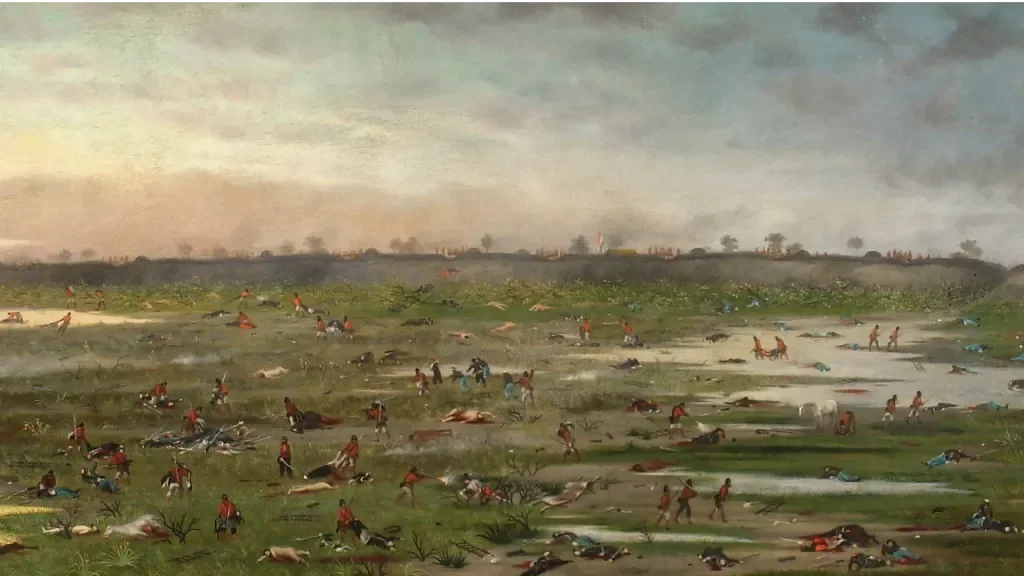
The aftermath of the Battle of Tuyuti.
Paraguayan conscription eventually extended to every male between the ages of ten and sixty. Masterman’s French colleague Mons. Cochelet described its progress with a phrase Masterman quotes with evident respect for its precision: the teeth of the rake, he said, were set closer at every sweep. Of the nearly two hundred thousand men drawn from a population of less than a million, scarcely twenty-five thousand remained alive by 1870.
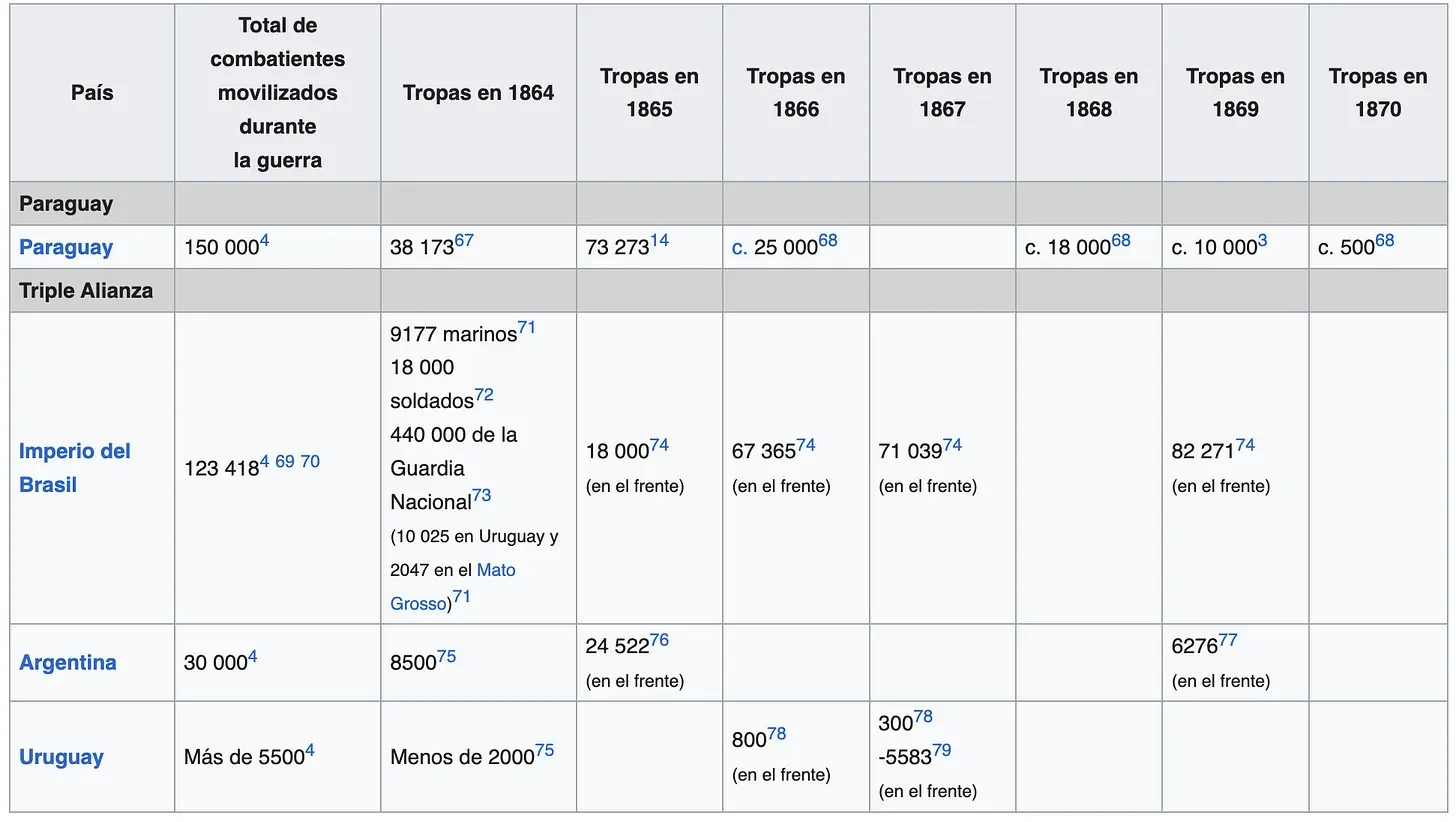
The mobilisation by year per belligerent charts the horrifying rundown of Paraguayan manpower, that ended with 10 year olds manning trenches.
The country that emerged from the war was a demographic ruin. Its educated class was gone, its land seized by foreign creditors, its workforce overwhelmingly female. Brazil occupied Paraguay for six years after López’s death. The border it drew when it finally left pushed significantly into what had been Paraguayan territory. The power asymmetry written in blood between 1864 and 1870 was then formalised in the peace, and in every treaty that followed.
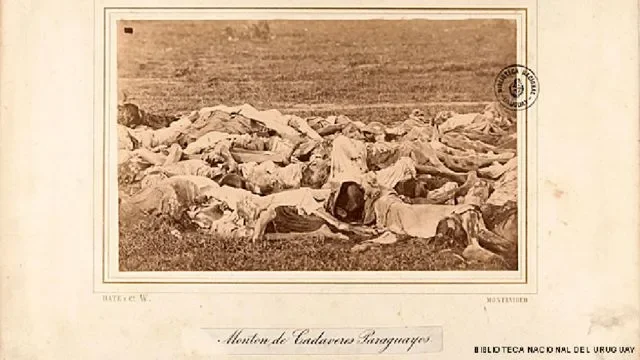
The War of the Triple Alliance was only the third photographed conflict.
To understand why the Río Paraná was worth fighting over, it helps to consider what a navigable river means to Paraguay. The country’s western half is the Gran Chaco, a vast semi-arid plain of extreme heat and seasonal drought that covers more than half the national territory. The Paraná running along its eastern border was therefore not incidental to Paraguayan sovereignty — it was the condition of it. The river was the only corridor to the Atlantic and therefore to trade, to arms, to the outside world. Without it Paraguay was landlocked in every sense that mattered. López understood this, which is why the prospect of Brazilian dominance over the river basin was not mere geopolitical anxiety but an existential threat. What neither he nor anyone else could have known was that the river they were fighting over would, a century later, be worth something entirely different. The Paraná descends from the Brazilian highlands with enough hydraulic pressure to generate, at this one point on the border, around 83,800 gigawatt-hours of electricity in a single year. At current market rates that output is worth somewhere between four and five billion dollars annually. Paraguay, which owns half of it, is the fifth largest energy exporter in the world. It is also one of the poorest countries in South America.
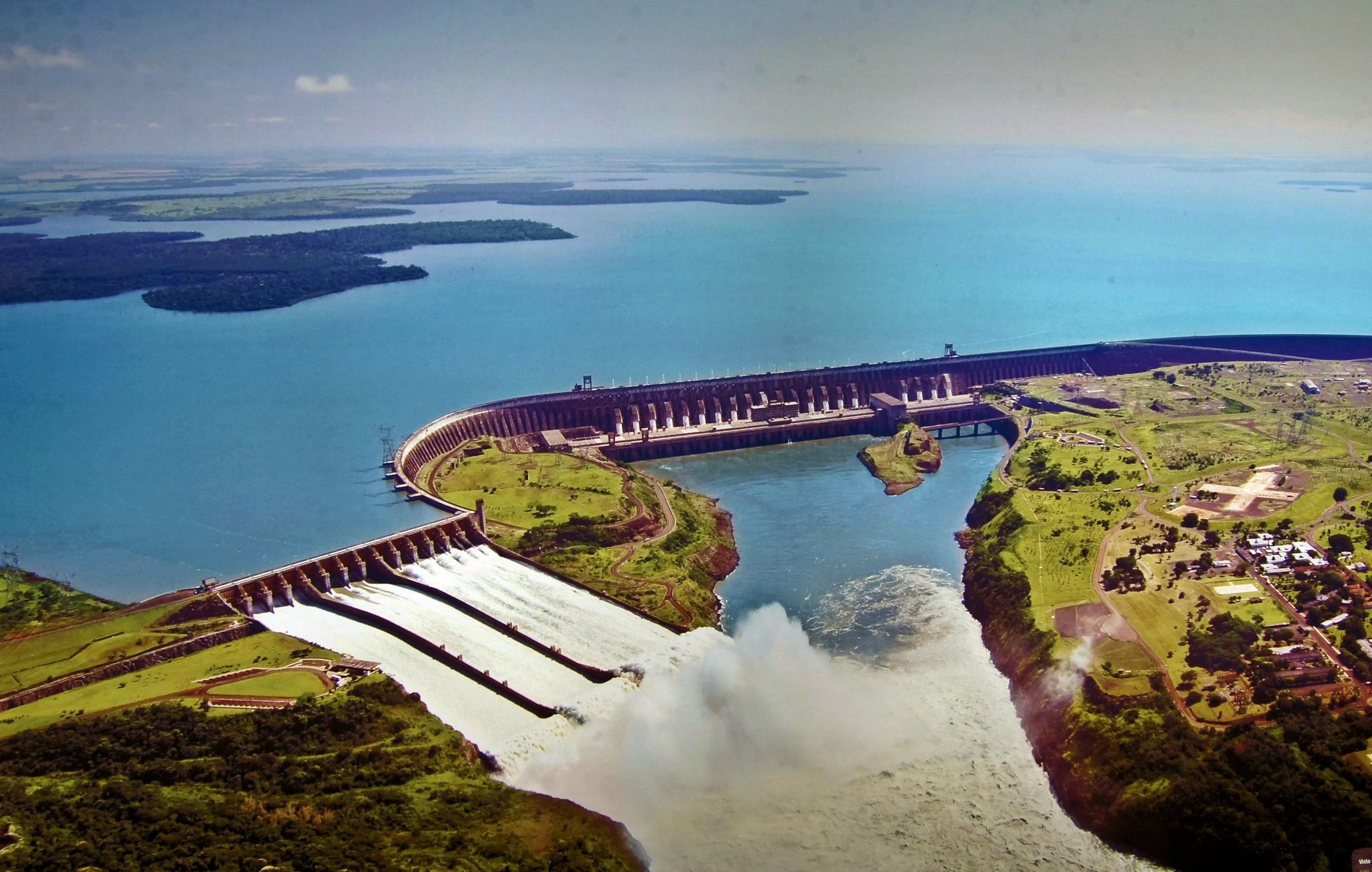
The Itaupu Dam in a rare bypass.
Which is one way to understand what you are looking at when you stand in front of the Itaipu Dam.
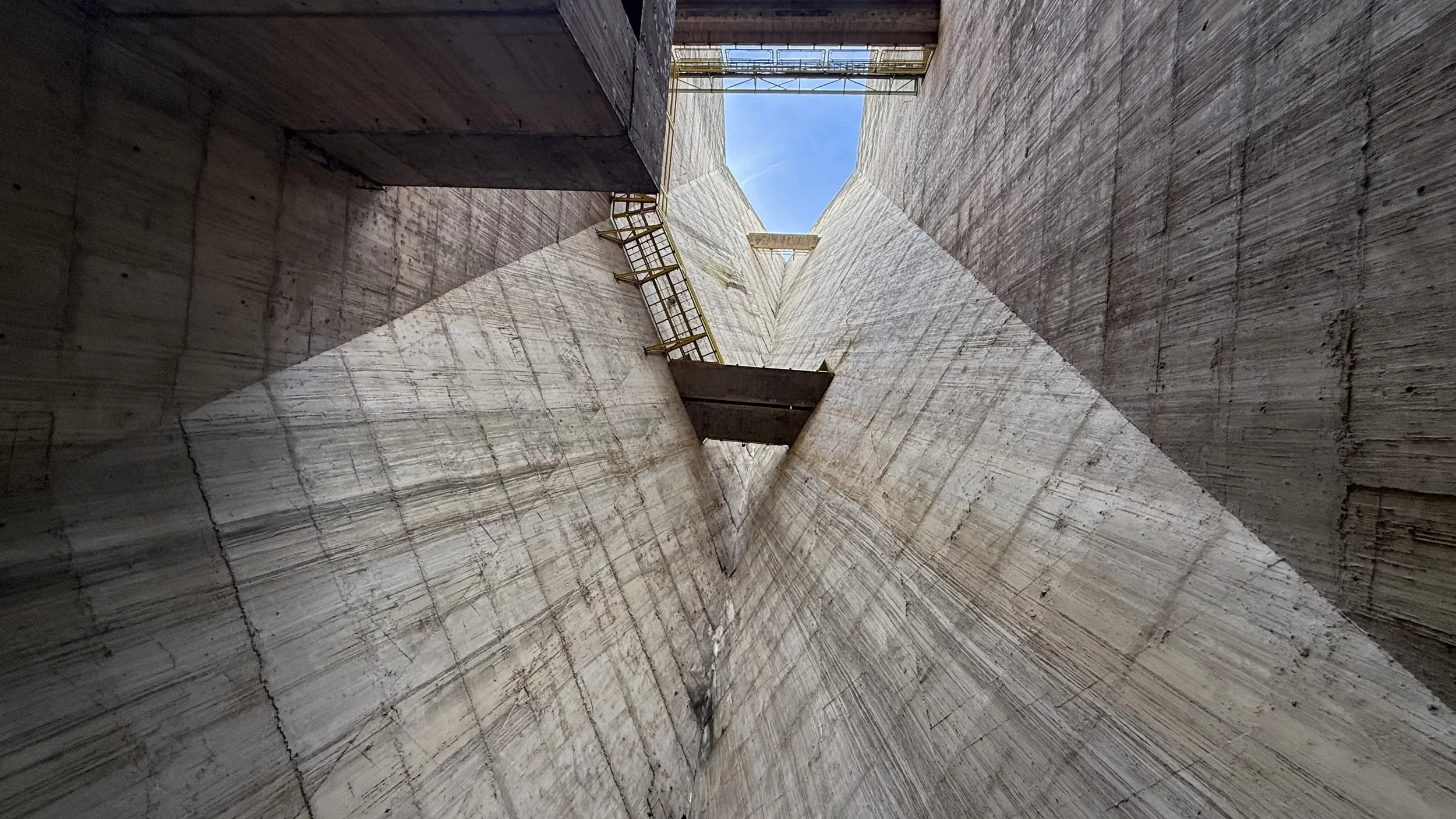
The first thing we saw from the viewing area below the dam face was that the concrete runs so far in each direction that the ends are not quite in the same picture. The wall is dark with age and moisture, its surface marked with the vertical striations of the formwork used to pour it fifty years ago. Where the turbine discharge meets the river below, water mists up from the rocks in a permanent low cloud. The scale is simply overwhelming.
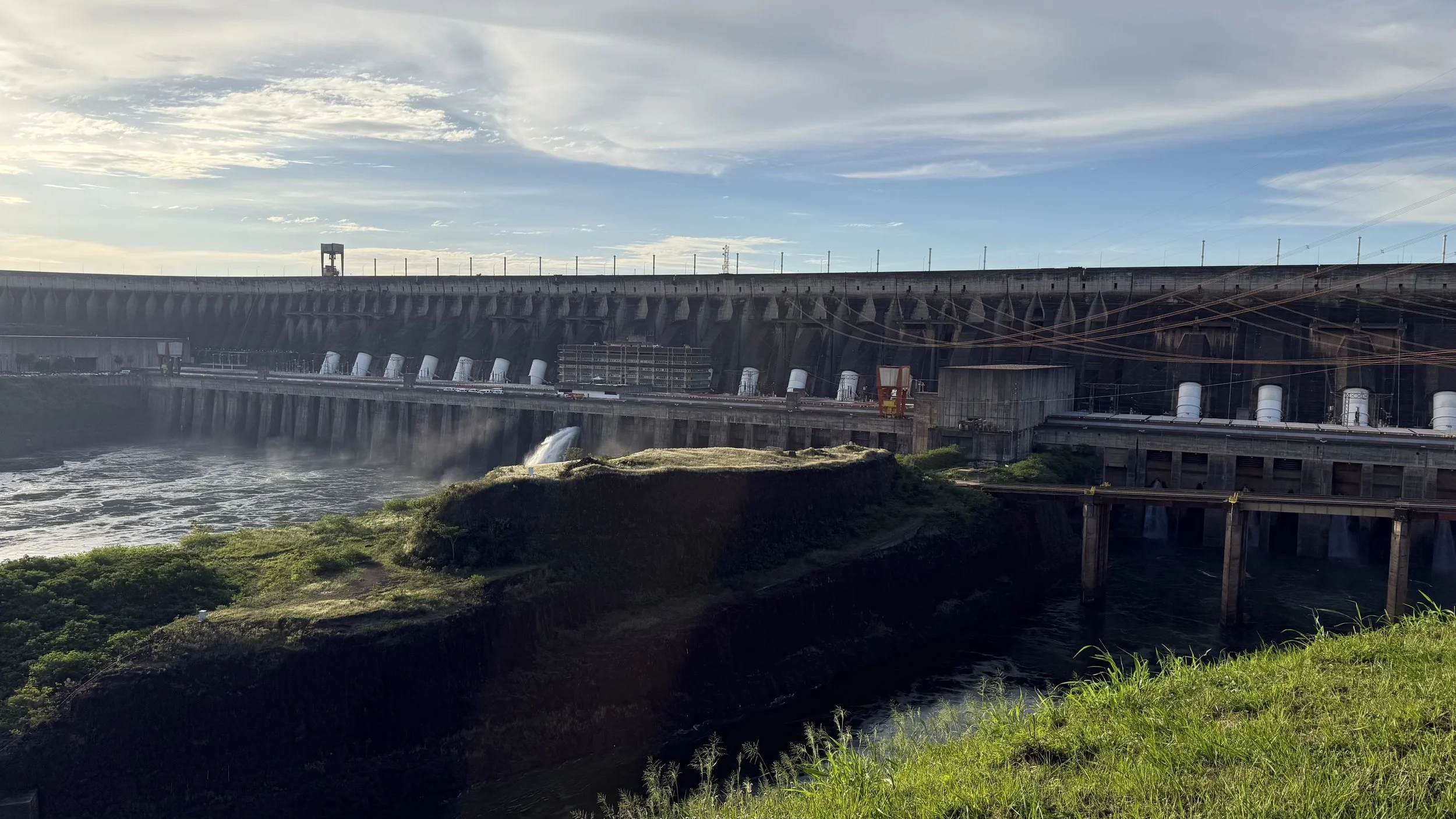
We walked the crest road along the top, where a line of white hydraulic actuators receded toward the reservoir in both directions until they vanished. Each contains 7,000 litres of oil held under pressure, operating the gate that controls water entry to one of the twenty turbines below. It is the mechanism by which the entire output of the plant is governed: twenty columns of pressurised oil, spaced along seven kilometres of concrete, each one the master switch for 700 megawatts. The road is wide enough for a truck. On our left the water stretched flat to the horizon, 170 kilometres of it, an inland sea. On our right the valley dropped away to the river far below. The transmission pylons begin here and march northeast toward São Paulo in a line that disappears over the curve of the earth. Everything we could see was part of one machine.
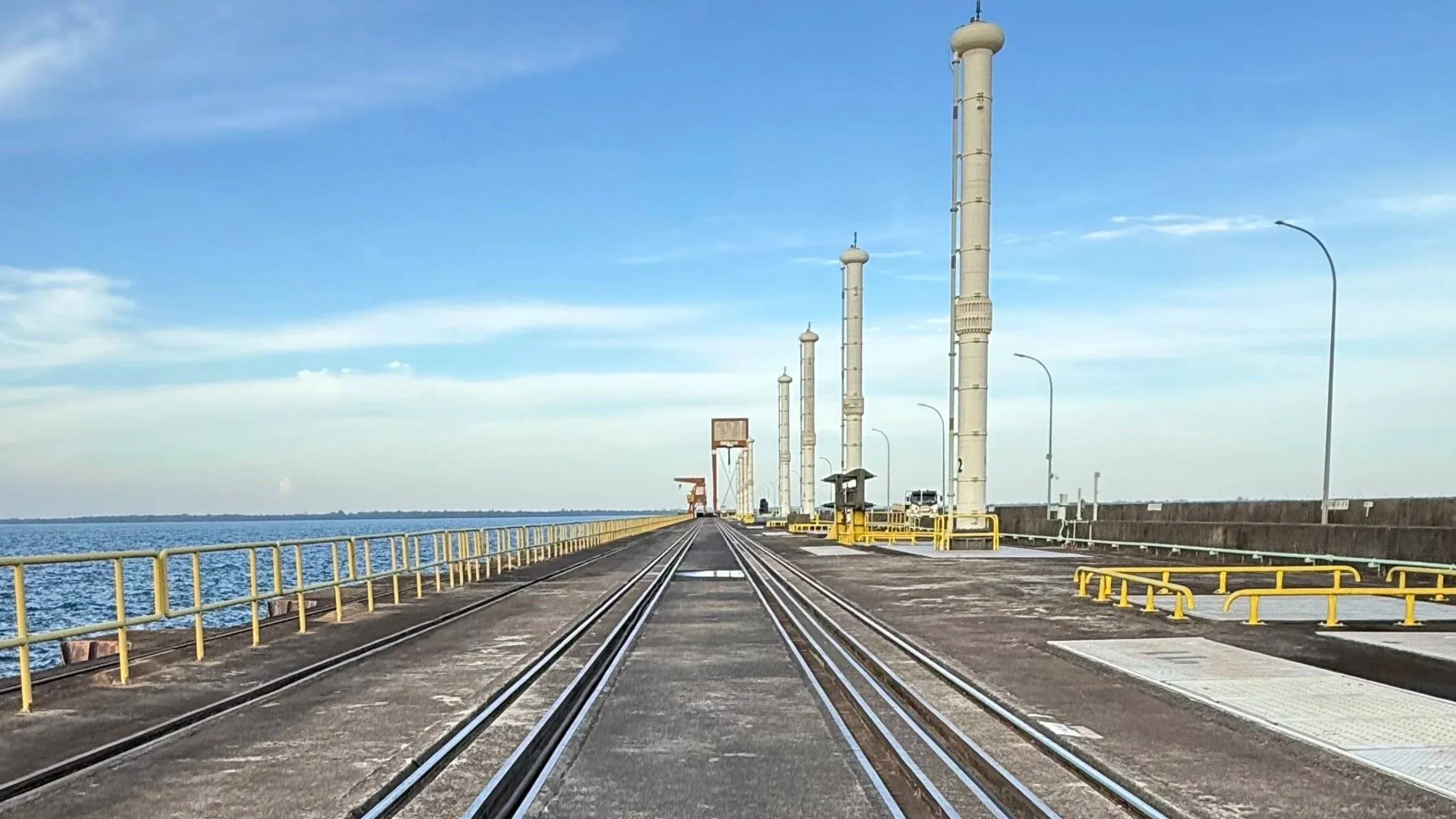
The numbers resist comprehension in the way that all very large numbers do, but they are worth stating plainly. The dam is 196 metres high, the equivalent of a sixty-five storey building, and seven kilometres long. It is not one structure but four joined together: an earthfill dam, a rockfill dam, a concrete buttress main dam, and a concrete wing dam, running in sequence across the Paraná valley. Its twenty Francis turbines, each weighing 3,360 tonnes, generate 14,000 megawatts of installed capacity. In record years it has outproduced the Three Gorges Dam in China. The spillway, when opened, discharges water at a rate forty times the average flow of Iguazú Falls. The volume of concrete poured during construction would build 210 Maracanã stadiums. It required 40,000 workers at its peak. A hundred and forty-nine of them died building it.
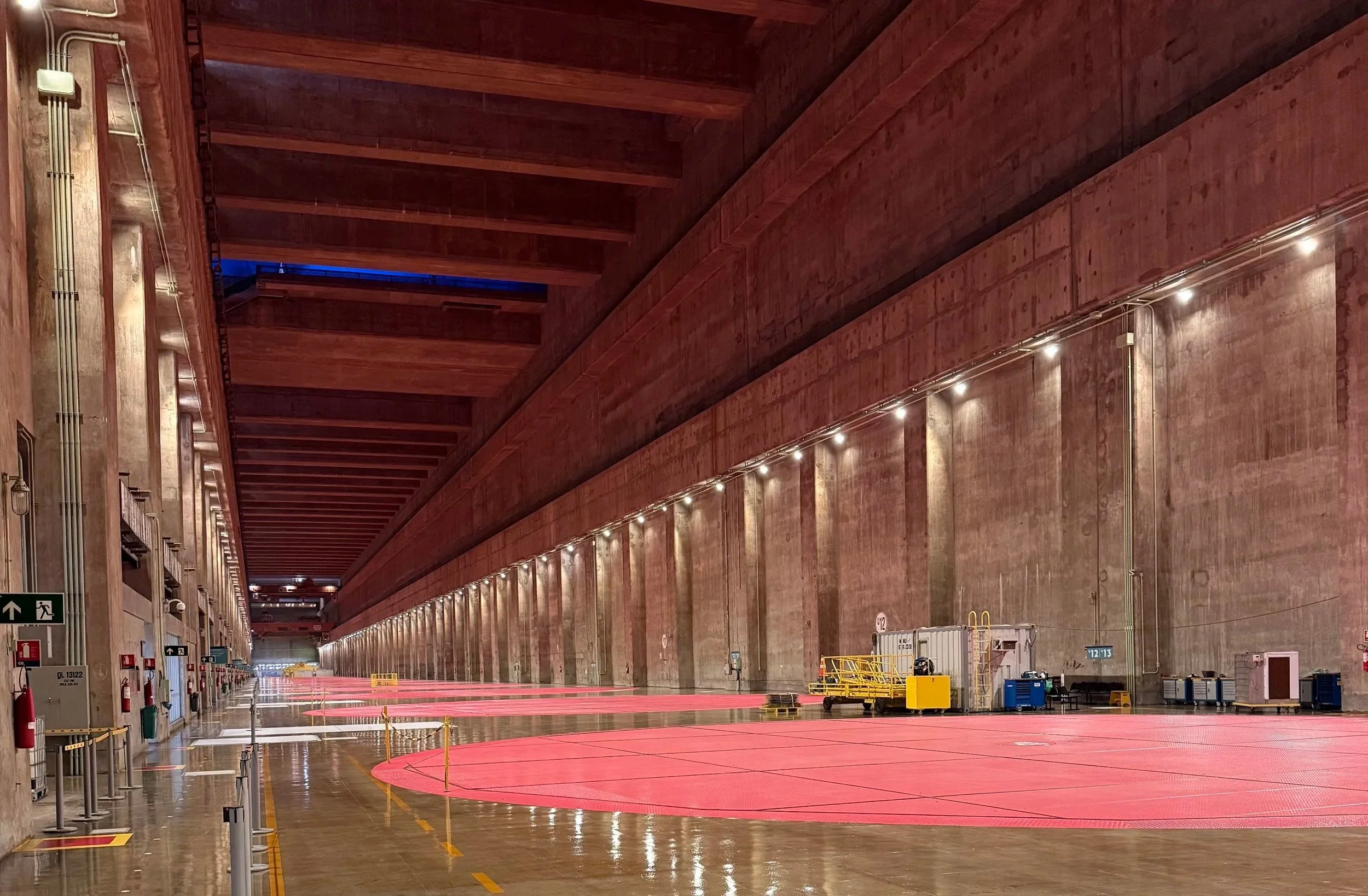
We entered the turbine hall, a cavern of reinforced concrete half a kilometre long, lit by wall-mounted floods that reflect off the polished floor. What we saw at floor level, evenly spaced down the length of the hall, were the generator covers: large red circles, perhaps fifteen metres across, flush with the ground. Each one is the top of a machine that runs sixty metres below through the dam and into the bedrock. Marked U11, U12, U13 in sequence, they looked from the gallery above like coins laid on a table.
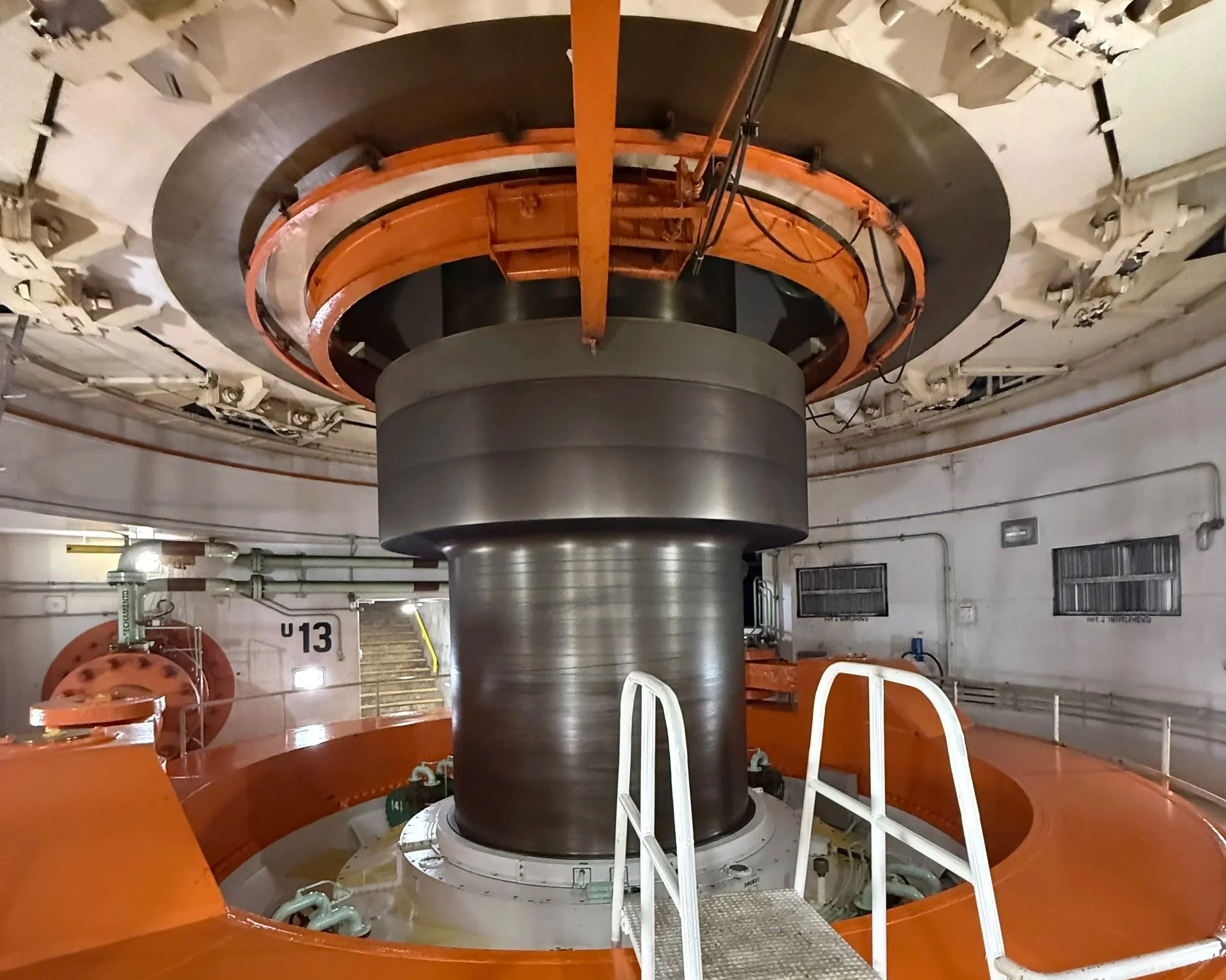
We took the elevator down to a lower level where the generator shaft of one unit was visible. Above us, inside the generator housing, the rotor — 2,060 tonnes, sixteen metres in diameter — was turning at just over ninety revolutions per minute. What we could see was the upper shaft: a polished steel column emerging from the base of the housing, transmitting that rotation downward to the turbine runner below. Standing beside it in the relative quiet of the lower level, 700 megawatts moving through it without drama or sound beyond a low hum the concrete walls seemed to absorb, I kept thinking of something that had struck me in turbine halls in Korea: the gap between the scale of what is happening and the quietness with which it happens. But Itaipu is larger than any of those by a significant measure, and the shaft made that fact physical in a way the statistics on the wall had not.
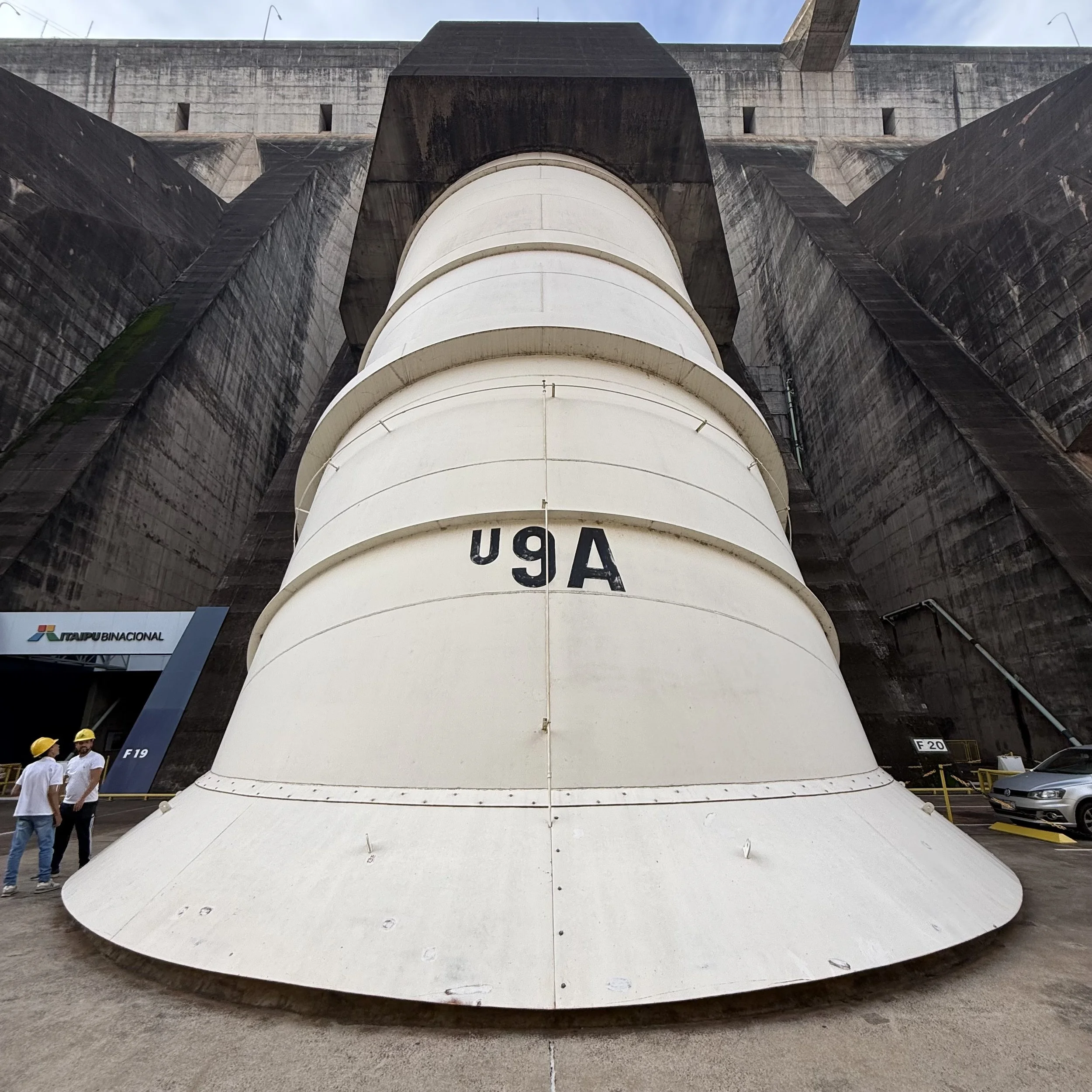
Outside, in the slot between the powerhouse building and the dam face proper, we came upon a draft tube. This is the concrete-and-steel bell that guides water from the turbine back into the river. Unit 9A was out of service for maintenance, its tube standing exposed in the open air. It is approximately the size of a five-storey building.
Standing inside all of this, I kept returning to the same thought: that what this engineering represents is the formalisation of a relationship between Brazil and Paraguay that the war established and the peace encoded. The Itaipu Treaty was signed in April 1973, a century after López led his country to ruin. Paraguay and Brazil are equal partners on paper: each country owns fifty percent of the dam’s output. In practice the arrangement has always reflected the asymmetry that preceded it. Paraguay’s economy, still small and still recovering from what the war did to its population base, cannot absorb anything close to its share of the electricity. Under the original treaty, it was required to sell its entire surplus exclusively to Brazil at a price fixed well below the market rate, a price covering construction costs rather than commercial value. Over five decades, Paraguay forfeited an estimated $75.5 billion in income under those terms.
The debt for Itaipu’s construction, which Brazil largely guaranteed and largely controlled, was finally paid off in 2023. The financial annex of the treaty, known as Annex C, expired with it and had to be renegotiated. What happened next was instructive. It emerged that Brazil’s intelligence agency had been running a cyber-espionage operation against Paraguayan negotiators, accessing information related to the renegotiation of the very terms that governed how much Paraguay would be paid for its electricity. The operation had begun under one Brazilian president and continued into the early months of the next. Paraguay suspended negotiations, summoned Brazil’s ambassador, and demanded clarification. The talks eventually resumed. A new preliminary agreement, finalised in February 2025, raised the price Brazil pays for Paraguay’s surplus electricity — though to a rate still below what Paraguay had asked for.
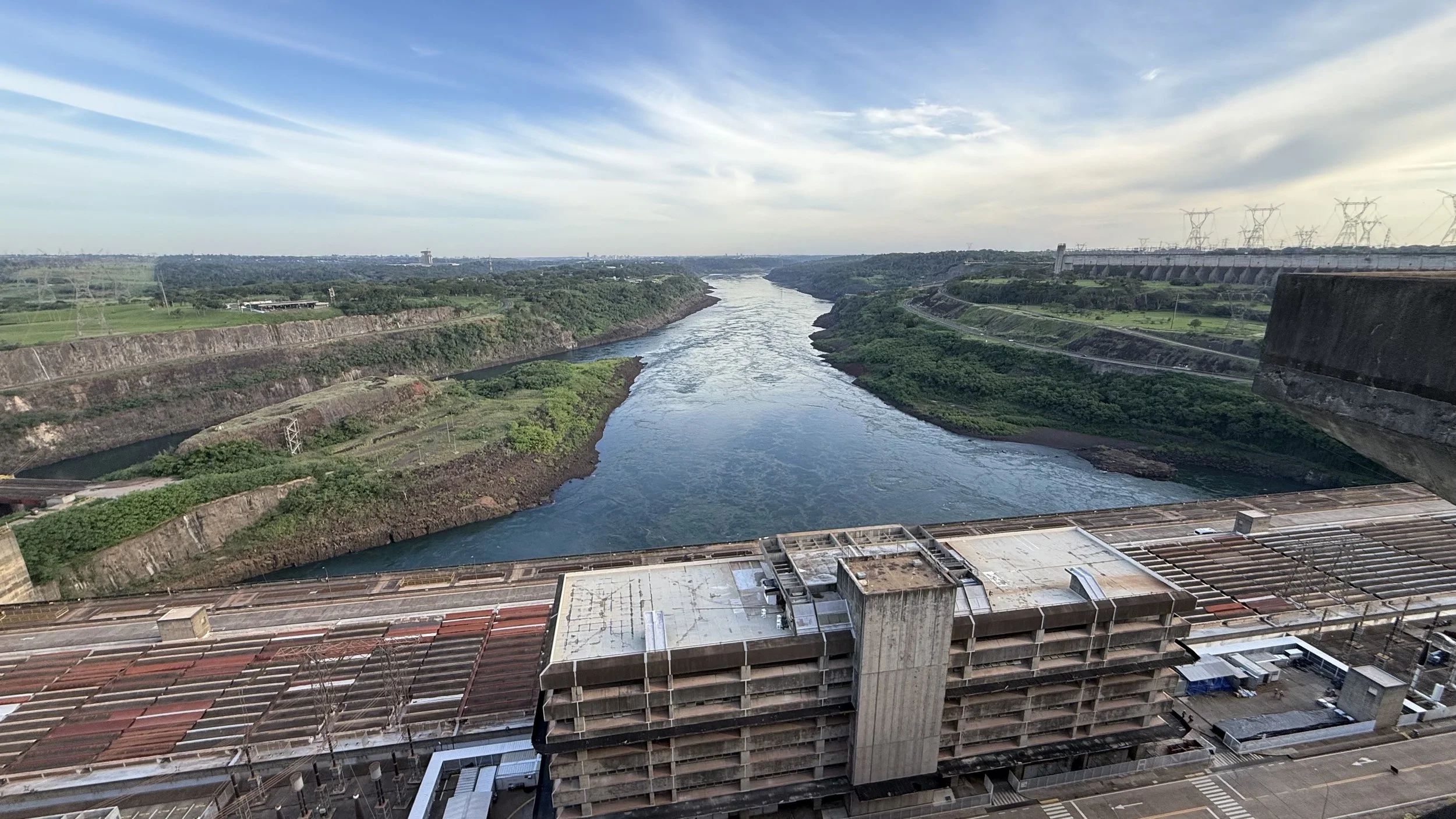
Itaipu’s name comes from a Guaraní word meaning the sounding stone, or the stone that sings. The island the name belonged to was submerged when the reservoir filled in 1982. Ten thousand families were displaced to make room for the water. The Paraná, the river the war was partly fought to control, now flows through twenty turbines and lights the cities of two countries. The irony is structural: Paraguay generates the power and Brazil consumes it, a relationship written in treaty language in 1973 and contested ever since. The dam did not resolve the history. It continued it, in a different register.
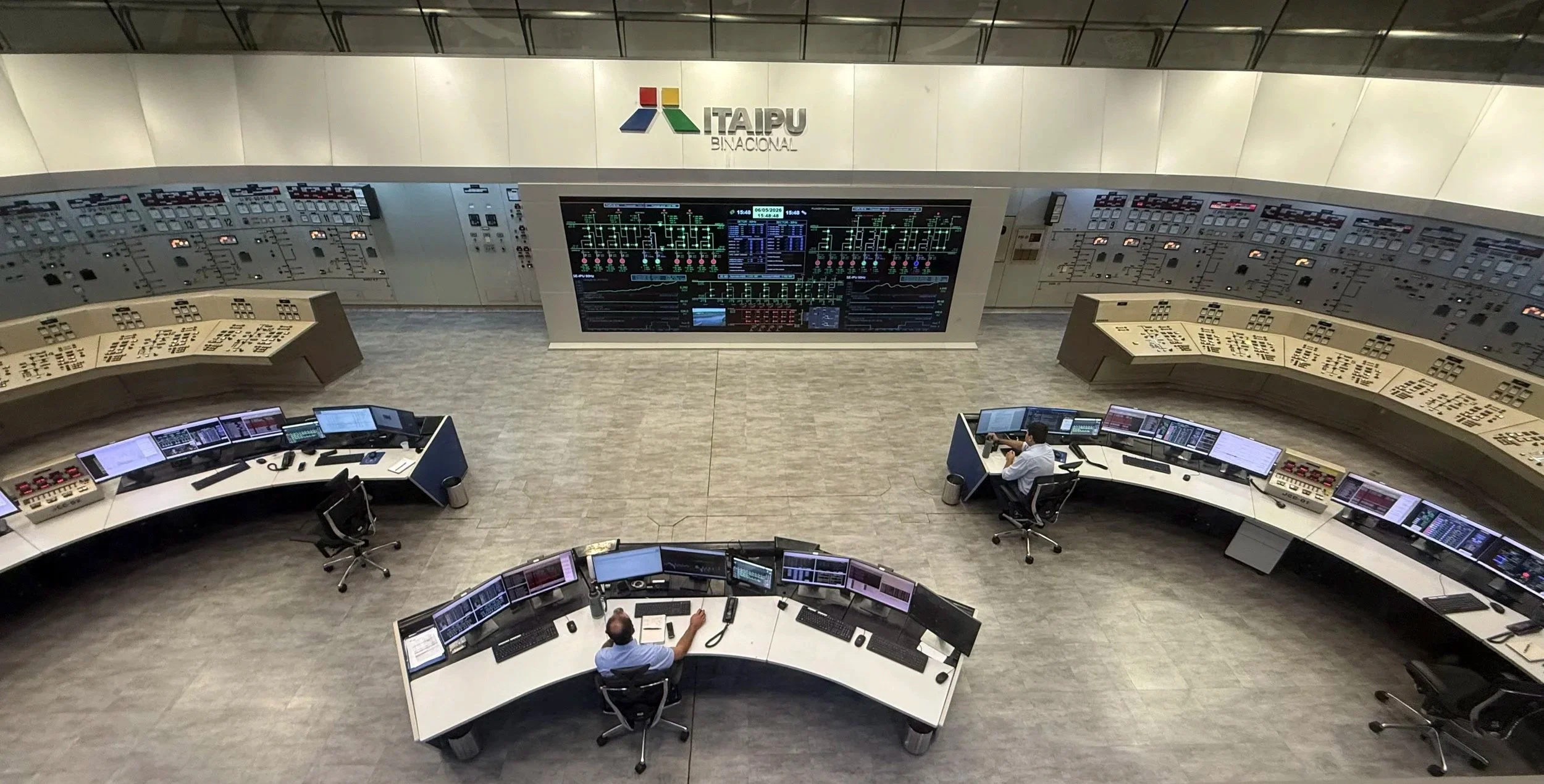
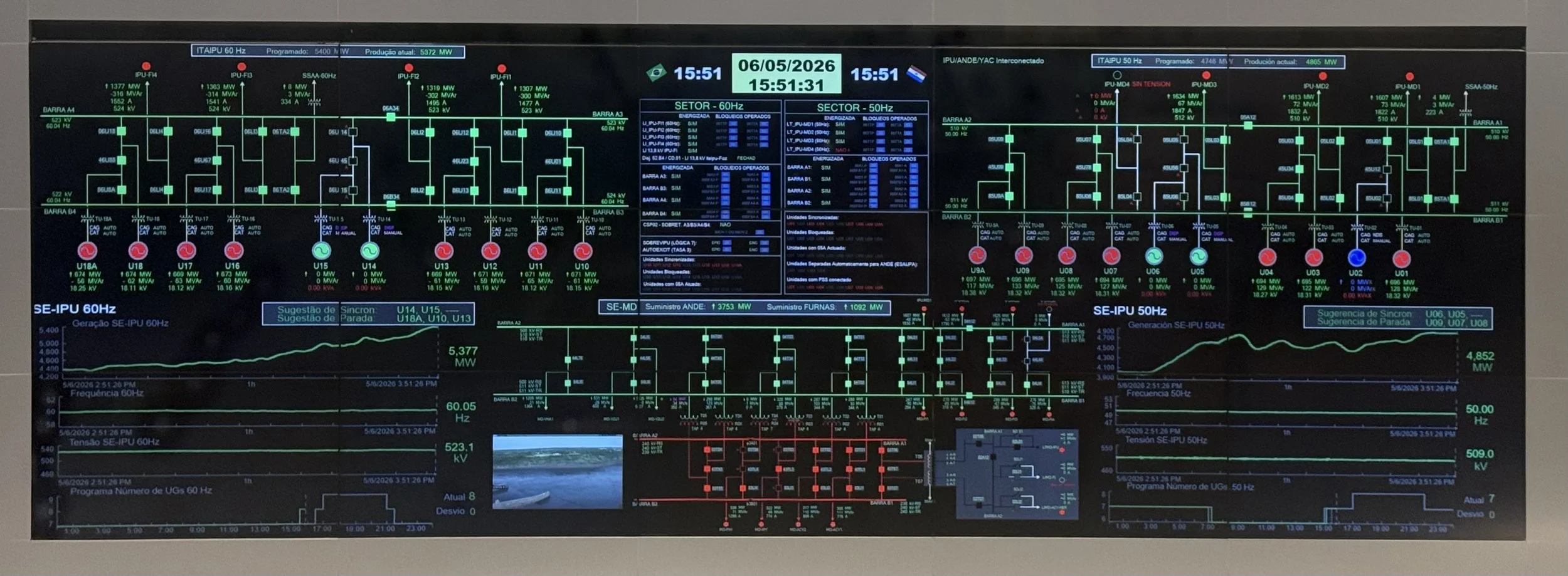
The control room was the last stop on the tour. It sits above the turbine hall, a curved room we looked down into from a viewing gallery, its consoles arranged in two arcs facing a wall of screens. The display running across the far wall shows the state of the entire plant in real time: generation figures, unit status, voltage, frequency, transmission loads. Supervision rotates on a six-hour basis between Paraguayan and Brazilian nationals, but the crews are otherwise dedicated to their own side of the plant, and all control room personnel are bilingual in Paraguayan Spanish and Portuguese. The screens show the plant divided into its two halves, one for each country, each running at its own grid frequency: 60 hertz for Brazil, 50 hertz for Paraguay. Paraguay’s surplus production — the share its own grid cannot absorb — is transmitted as high-voltage direct current to São Paulo, where it is converted to 60 hertz for Brazilian use. On the day we visited, the 60-hertz Brazilian side was producing 5,377 megawatts. The 50-hertz Paraguayan side was producing 4,852. The numbers update every few seconds. All of it flows out through those transmission lines and into the two countries in proportions set not by need or negotiation but by a treaty signed in 1973.