Journey to the End of the Word
Somewhere in the jungle of the Petén, in the pre-dawn dark before the howler monkeys begin, the ruins of Tikal emerge from the canopy like something dreamed rather than built. The temples do not look constructed. They look discovered, as though the forest had always contained them and merely consented, temporarily, to their visibility. By the time Temple I is visible at the end of the Gran Plaza, grey and enormous in the early light, the howlers are already in full voice: a deep roar that has nothing mammalian about it. You stand at the base of the temple in that sound and feel, before you think anything specific, that you are in the presence of something trying to communicate. The Maya left the means to do so. The stelae in the plaza, the carved lintels at Yaxchilán, the stucco inscriptions at Palenque carry the names of rulers, the dates of their accessions, the records of their wars and alliances, in a script that remained undeciphered for centuries and is now, painstakingly, legible. The Classic Maya are among the very few pre-Columbian peoples who can speak to us in something approaching their own voice. This makes them the exception. It makes almost everything else on this journey the rule.
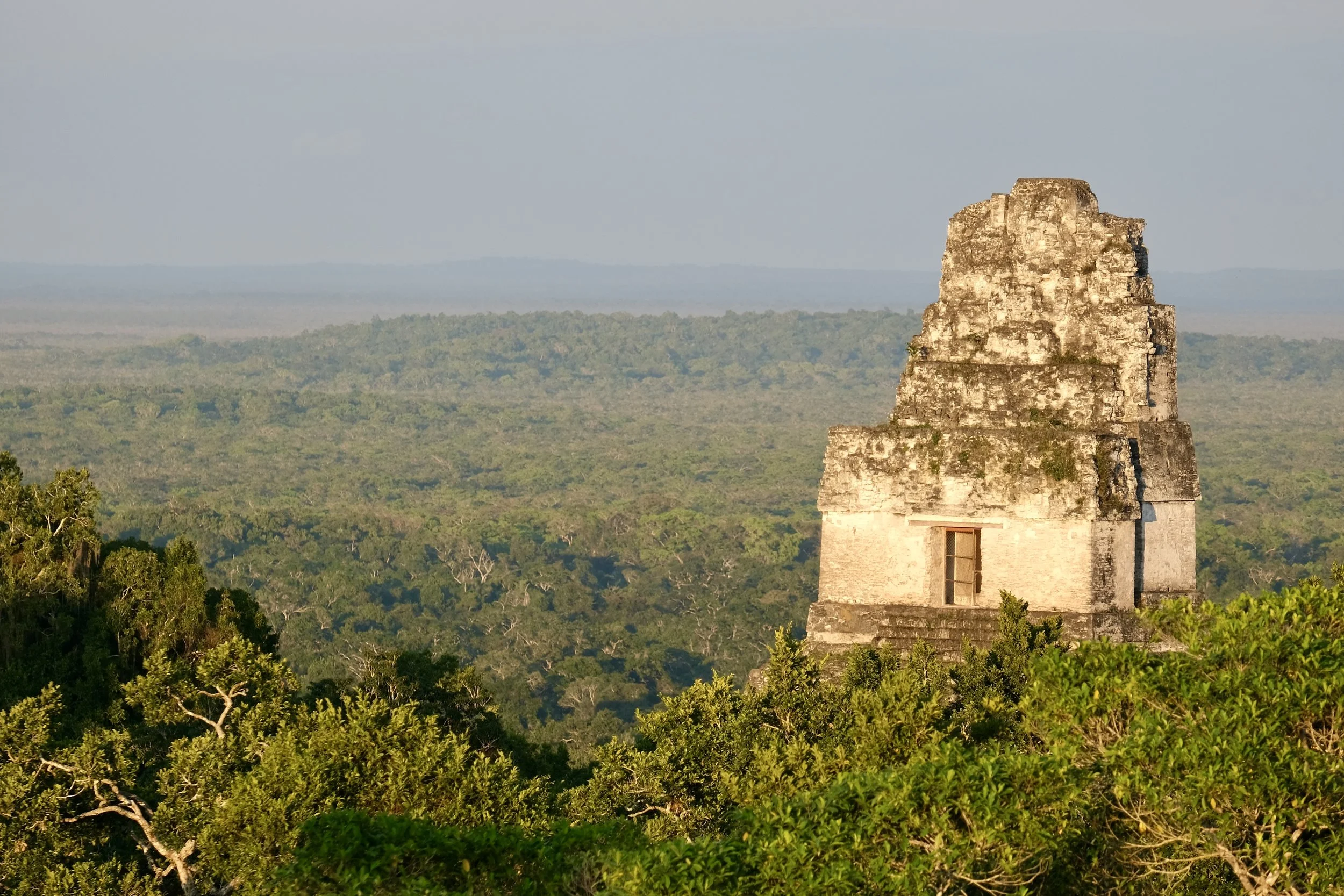
At Tikal, in modern Guatemala, the temples carry texts in Classical Ch’olti’, a language with living descendants
We have been on the road for nearly two years. The arc runs from the Arctic Ocean to the southern tip of a continent, and along its South American reach it passes through the ruins of civilisations that between them spoke perhaps a hundred languages. At the moment of European contact, western Europe had two language families and between forty and seventy languages. South America alone had more than five hundred, representing dozens of unrelated families and a significant number of complete isolates - languages with no known relatives anywhere on earth, each one the sole expression of a distinct way of inhabiting the world. This journey has been, among other things, a transit through that diversity and through the long silence that has followed most of it.
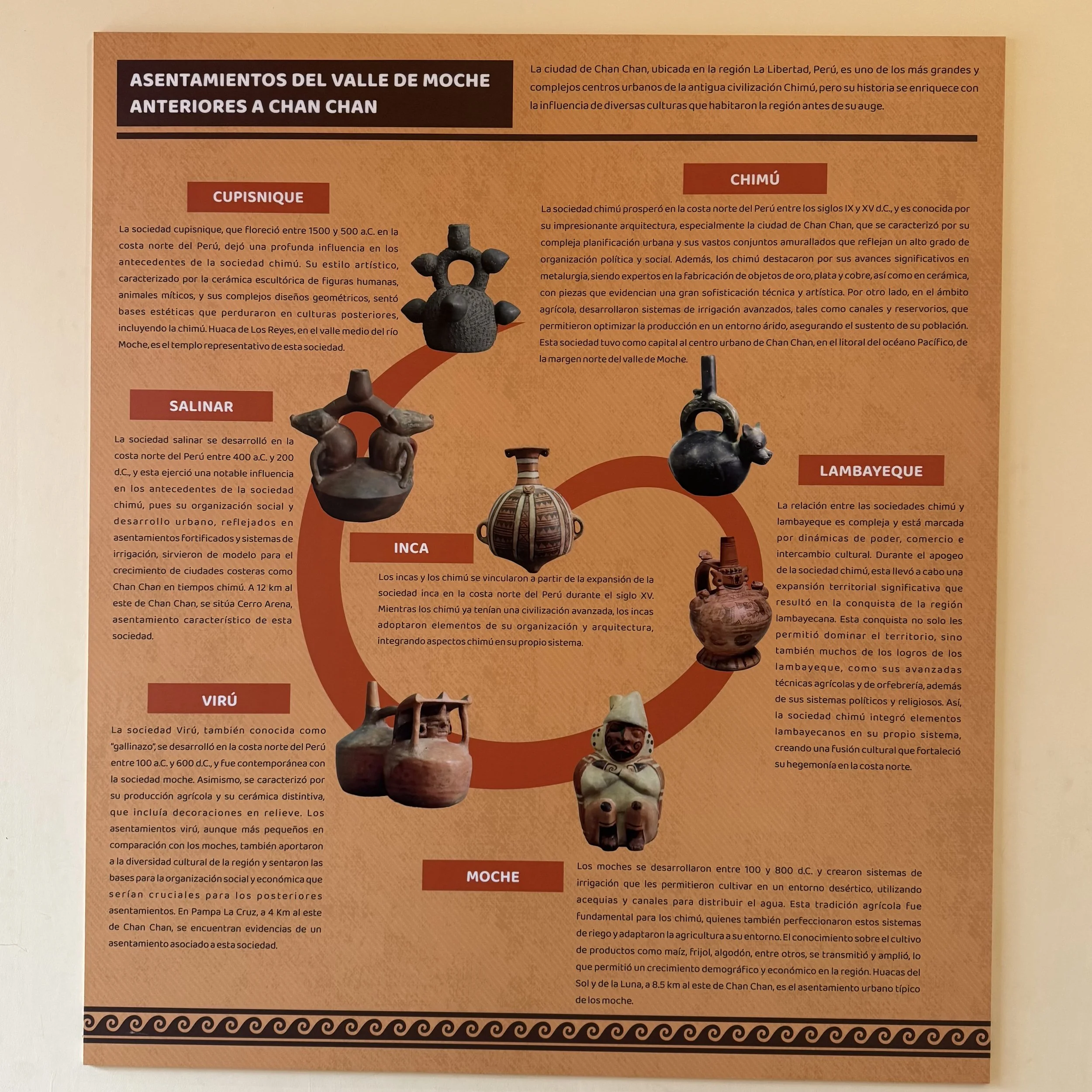
Chan Chan, Peru, one city-state that alone can trace back seven distinct cultural and/or linguistic traditions
The ruins of Chan Chan sit on the Pacific coast just outside Trujillo, in the dry northern desert of Peru. At its height in the 15th century it was the largest city in pre-Columbian South America, featuring nine royal compounds, each built by a successive Chimú king, each abandoned at his death and sealed as his mausoleum, the whole complex housing perhaps 40,000 people in a city of adobe walls carved into geometric friezes of fish and birds and abstract pattern. The Chimú spoke Mochica. It was documented in 1644 by a Franciscan friar named Fernando de la Carrera, who produced a grammar and dictionary of a language he described as bearing no resemblance to any other he had encountered. Mochica survived in isolated coastal communities for nearly three more centuries before the last fluent speaker died sometime in the early 20th century. The language had no known relatives — a complete family, alone, unconnected to Quechua or Aymara or the Amazonian families or anything else. What the Chimú architects who designed the friezes at Chan Chan called their craft, what obligations were encoded in their word for debt or gratitude… these things are, in any recoverable sense, gone.
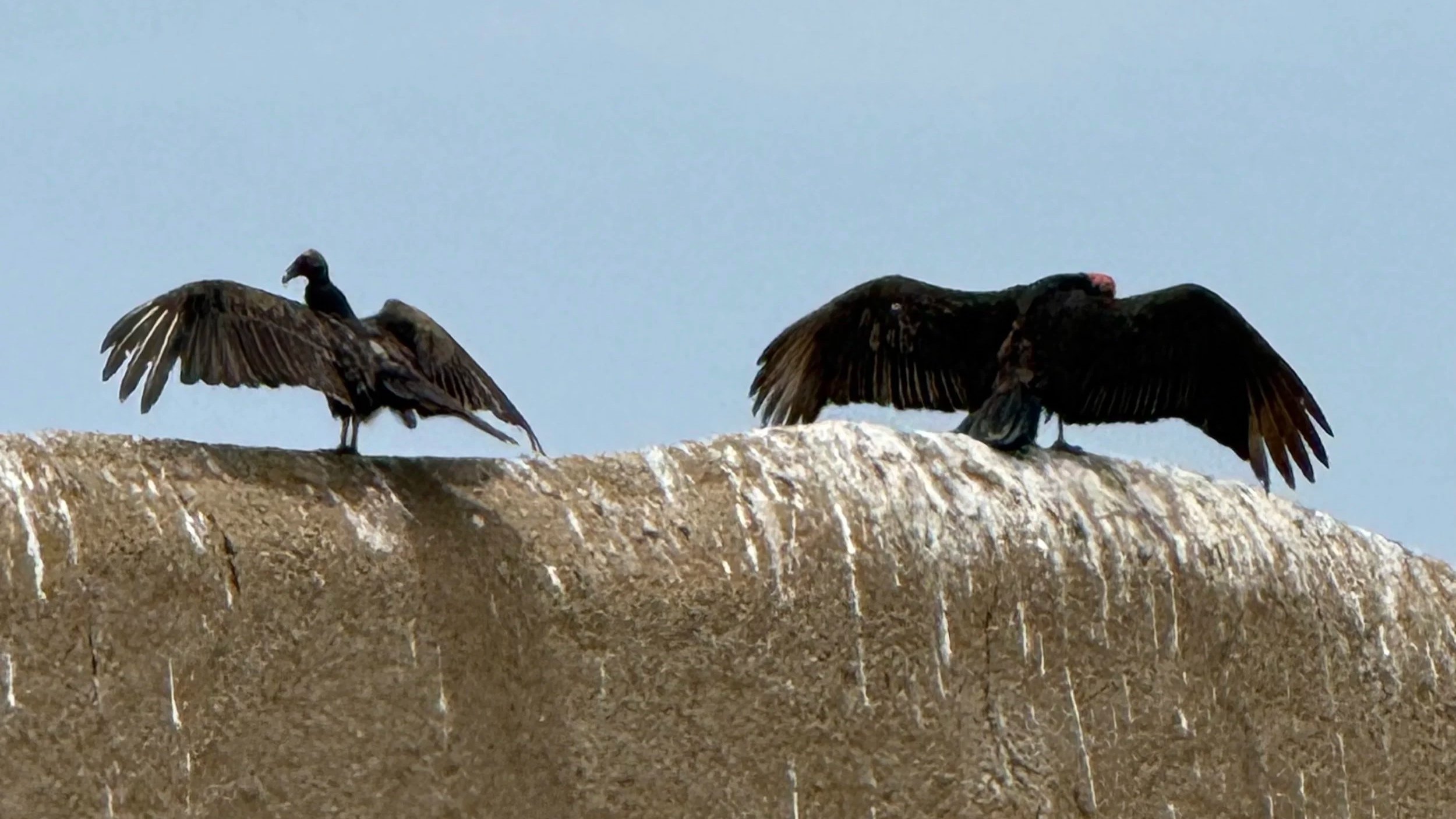
What name did the Chimú give the vultures that linger to this day on the walls of ancient Chan Chan?
Caral is older still. We visited its pyramids on the central Peruvian coast in early November, their low, broad structures rising from a sunbaked plain above the Supe Valley, the oldest monumental architecture in the Americas, constructed around 2,600 BCE, contemporaneous with the Old Kingdom of Egypt. A city of several thousand people, trading with the coast and the highland interior, building ceremonial centres whose astronomical alignments suggest a sophisticated cosmological programme, sustaining a complex society for a thousand years - all without writing, without ceramics, without any material record that preserves language. We do not know what the people of Caral called themselves. We do not know what language they spoke, what family it belonged to, whether it survived in any form. Five thousand years of silence on a windy plain above the Pacific, with a small museum at the entrance and school groups on a Wednesday afternoon.
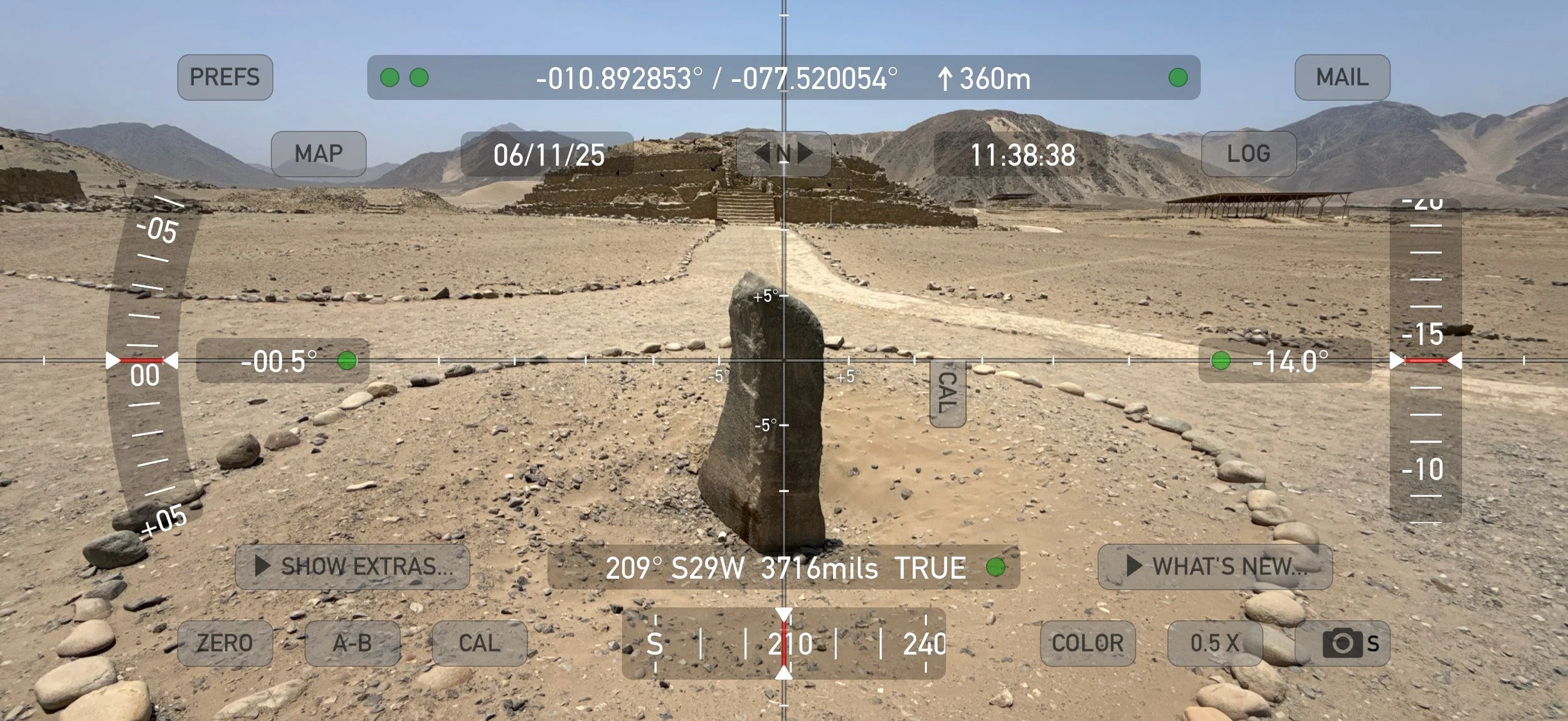
A huanca (standing stone) at Caral. We don’t know the name this people gave to the solar equinox that it marks, to the sun, seasons, to themselves
Wittgenstein, in his later work, proposes that language is not primarily a code for representing a pre-existing reality but a form of life (Lebensform), which carries more weight than the English translation suggests. To imagine a language, he wrote, is to imagine a form of life. Language is not separable from the practices, relationships, obligations and orientations of the community that speaks it; it is the medium in which that form of life becomes possible and coherent and transmissible across generations. Wittgenstein reckoning that if a lion could speak we could not understand him is not a joke about vocabulary. A fully translated lion, with a dictionary in hand, would still be opaque, because the form of life that gives the words their purchase is not accessible through the words alone. Understanding a language is not decoding it. It is sharing enough of the form of life that the words have sufficient grip on you to permit empathy with the speaker.
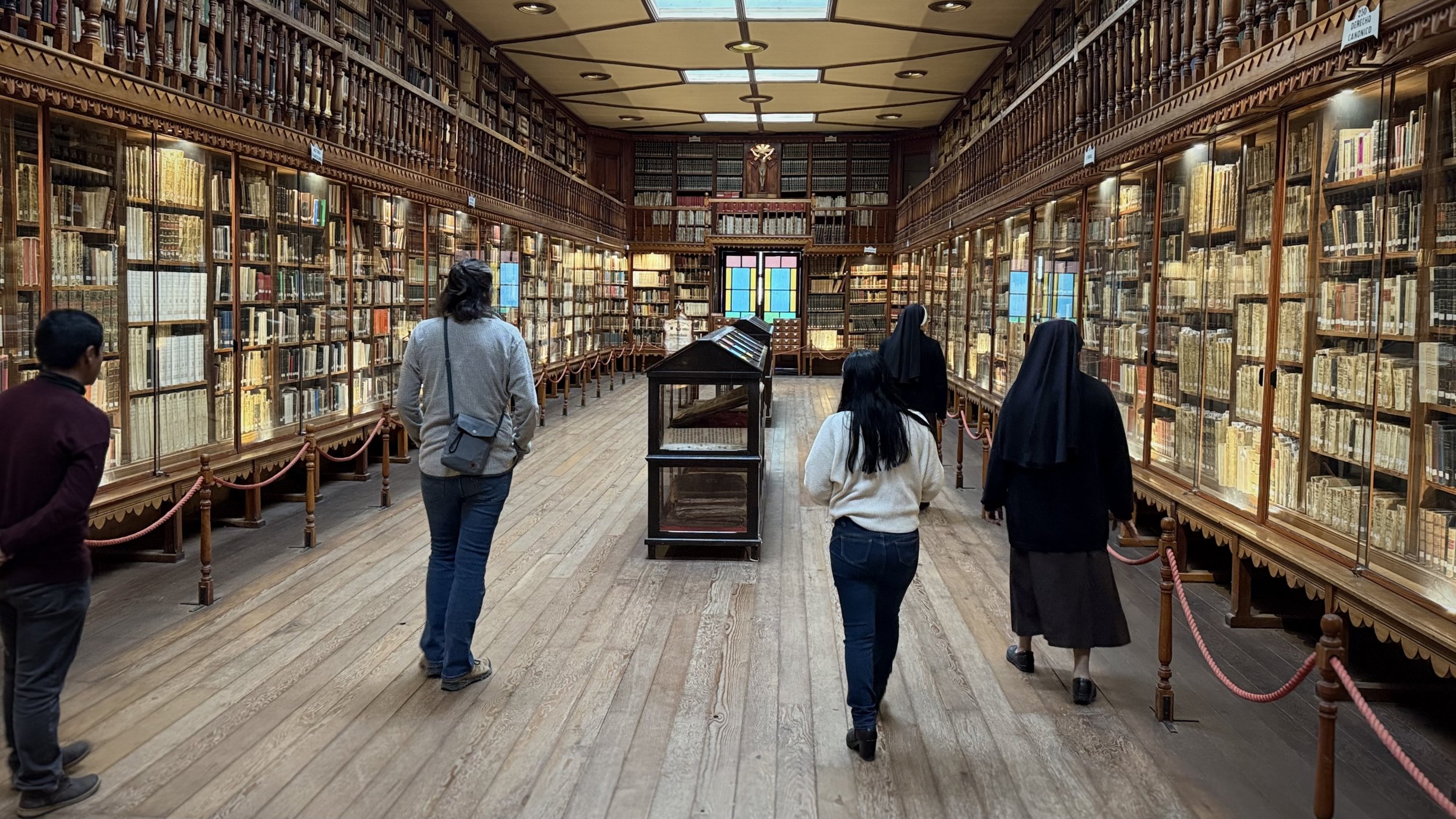
The library of Convento de Santa Rosa de Ocopa in Junin, Peru holds the grammars and vocabularies priests compiled of Amazonian languages before entering the jungle. Some of those languages are now known only from those documents.
When a language dies, what dies is the form of life. Dictionaries can preserve vocabulary, which colonial priests sometimes did. What disappears is the grammar of the world: the structures of perception and obligation and relationship that were not written down because they did not need to be, because they were the water everyone swam in. Quechua, the language that outlasted nearly everything else in the Andes, the one you hear in the markets of Cusco and the villages of the altiplano, has built into its grammar a system of evidential markers that English and Spanish lack entirely. Every assertion in Quechua requires the speaker to mark how they know what they are claiming: a suffix for direct witness, a different suffix for hearsay, another for inference. You cannot make a statement in Quechua without grammatically committing to your epistemic relationship to it. That is not a stylistic feature, it is a form of life for a community that built into the very structure of its speech an obligation of honesty about the basis of knowledge, a requirement to distinguish what you saw from what you were told. The languages that died around this journey carried similar structures, different structures, structures we cannot now even describe because we have nothing to describe them from.
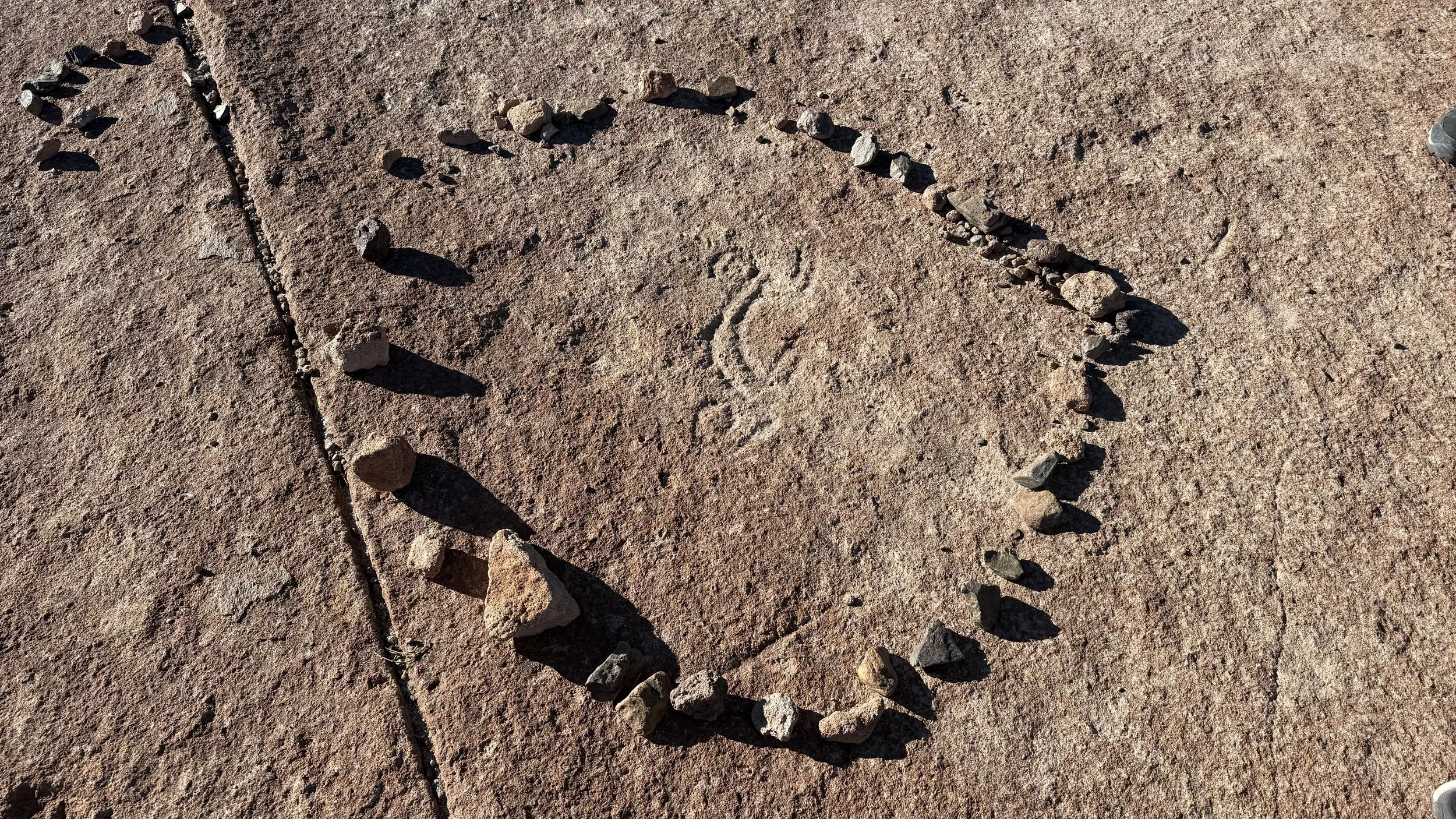
Rupestres (rock art) at Volcano Galán, but created by whom? Clearly a monkey, but what did they know of these, here at 4,500m altitude in the treeless Puna?
In the Quebrada de Humahuaca in the province of Jujuy, the towns of Tilcara and Humahuaca bear the names of the Omaguaca people who built and inhabited this valley for centuries before the Inca arrived and before the Spanish came after them. The Omaguaca language is extinct. In the Calchaquí Valleys further south, the ruins at Quilmes, once a city of 3,000 people on a rocky hillside above the valley, mark the territory of the Diaguita, whose language, Cacán, died with their defeat. The Diaguita were the last indigenous people in Argentina to resist Spanish conquest, holding out in the Calchaquí Valleys until 1667, more than a century after the fall of the Inca. When they were finally broken, the survivors were forcibly relocated to Buenos Aires and the valley was resettled. Cacán is known only from a handful of colonial-era wordlists. No grammar was ever written. No text survives. The Diaguita fought for a century and lost, and the language they fought in is gone.
In the high puna above Salta, the Atacameño people built Tastil, a city of up to five thousand inhabitants with workshops, plazas, an integrated economy connected to the long-distance caravan networks we wrote about in an earlier post. They spoke Kunza, a language in the same family as the language still spoken, barely, by a few hundred people in the Atacama desert of northern Chile. The Inca emptied Tastil using the mitmaq system, dispersing its population as labour. What remains is the walls. In Cartagena, where we waited weeks for Iggy to clear customs, the street names are Spanish and the colonial architecture is Spanish and the language of the street is Spanish and there is almost no surface trace of the Zenú and Sinú peoples who lived along this coast before any of that, whose language is known only from a few colonial records and whose world is accessible to us in no other form.
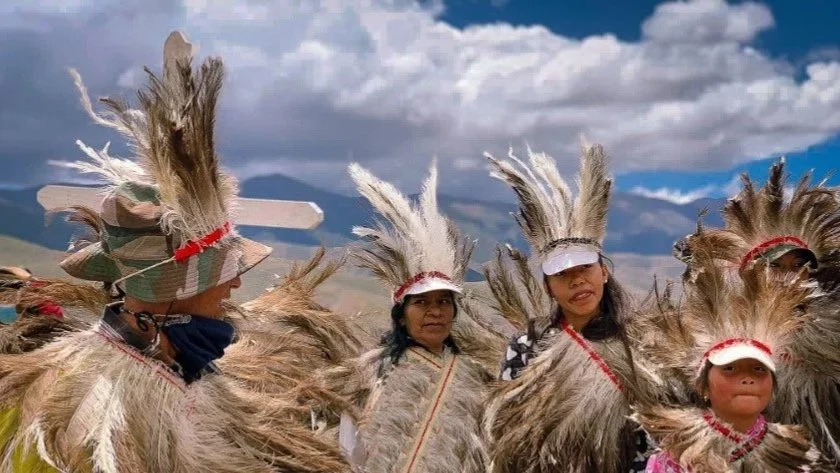
The people of Tastil perform the pre-Colombian Baile de Suri (Dance of the Rhea) on Catholic feast days, echoing a pre-Incan form of life.
And then there is Puquina. The language of Tiwanaku - the great altiplano civilisation centred on Lake Titicaca that preceded the Inca by five centuries and whose road networks and exchange systems the Inca incorporated - Puquina was spoken around the lake and into the Bolivian highlands, and was recognised by the Spanish in the 16th century as one of the three general languages of Peru alongside Quechua and Aymara. It is now extinct. Almost. In the village of Charazani in northern Bolivia, a community of traditional healers called the Kallawaya use a secret ritual language, known only to initiated men and transmitted only within the profession, in which the grammatical structure is Quechua but a significant portion of the vocabulary comes from Puquina. The dead language of a dead empire survives as a healer's argot, passed from father to son in a mountain village, carrying the ghost of Tiwanaku into the present in a form that nobody outside the community fully understands. It is the most extraordinary act of linguistic preservation on this journey, and it happened not through any institutional effort but through the decision of a group of men that their knowledge was worth protecting by any means available, including secrecy.
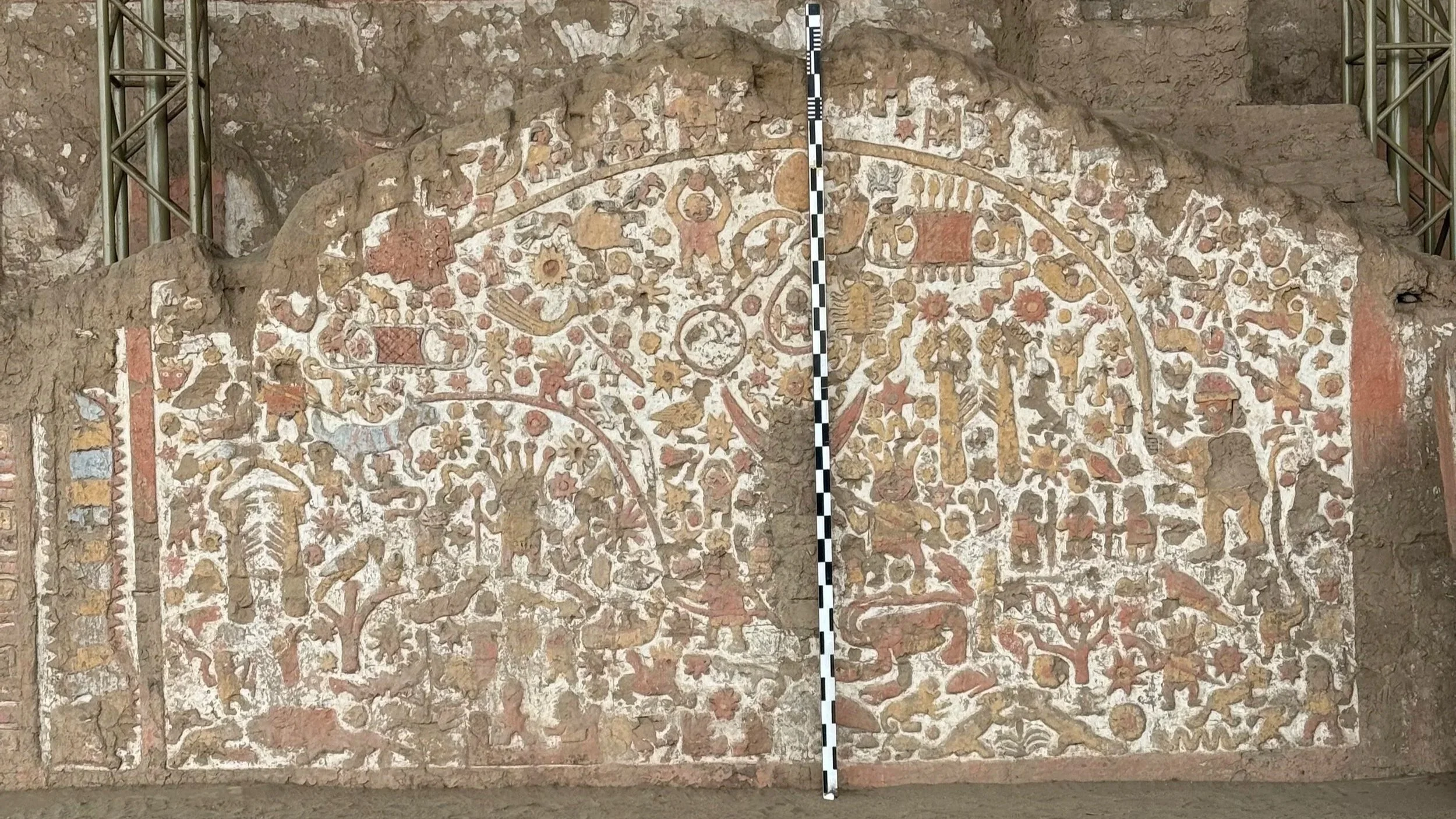
Mural of the Myths, Huaca de la Luna, Trujillo was painted between roughly 100 and 800 CE in Mochica, a language with no known relatives, documented by a single Franciscan friar in 1644 and extinct by the early 20th century. The mural encodes a complete cosmology, but the language that explained it is gone.
Against all of this, Paraguay. We spent a week in Asunción, and what struck us before the heat, before the extraordinary informality of the city, was the sound of Guaraní. Not in the market, not in indigenous communities, but everywhere: on the radio, in taxis, between people who looked entirely of European descent. Paraguay is the only country in the Americas where a pre-Columbian language is the majority tongue of the general population, spoken as a first or co-first language by roughly ninety percent of Paraguayans, most of whom have no purely indigenous ancestry. The reasons are complex and historically specific as the early Jesuit missions in the region used Guaraní as their primary language of evangelisation rather than suppressing it; the relative isolation of Paraguay from the main colonial trade routes reduced pressure toward Spanish; the demographic specifics of the colonial period left a population that was predominantly mixed rather than stratified. But something was also true about Guaraní itself: its hospitality to loanwords, its structural flexibility, its capacity to absorb Spanish vocabulary while maintaining its own grammatical architecture. The language adapted. It survived not by remaining pure but by remaining useful.
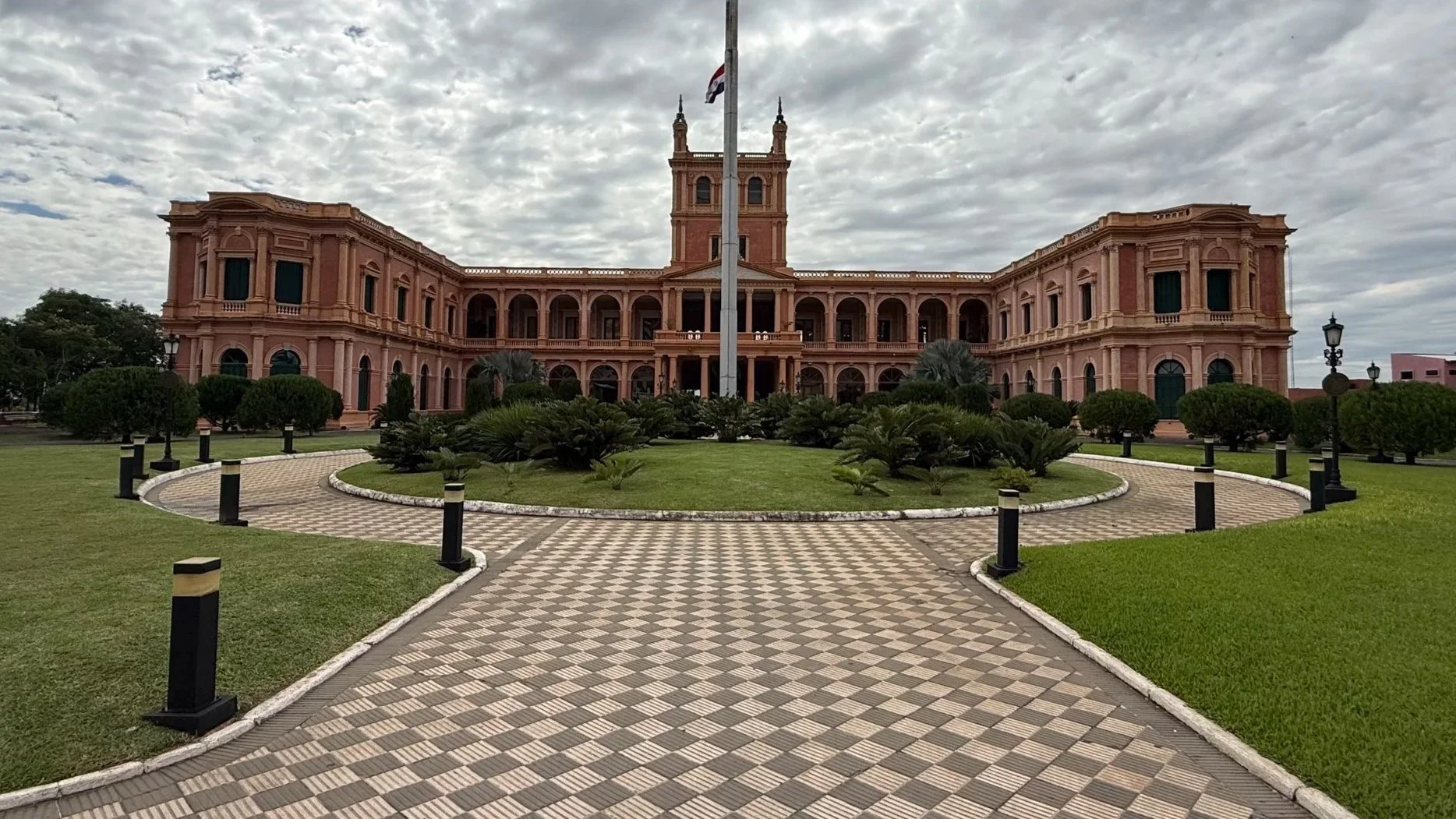
Palacio de López, the gubernatorial seat in Asuncíon,
Heidegger describes human existence as always being-toward-death. Not as a morbid preoccupation but as a structural fact. What gives a life its particular shape and urgency is precisely its finitude: bounded, unrepeatable, this form of life and not another. The same is true of a language and the form of life it sustains. Each of the worlds this journey has passed through was complete in itself… not a lesser version of something that came after it, not a failed attempt at something more developed, but itself, entire, with its own full range of possibility, its own grammar of obligation and perception, its own way of naming what the mountains demanded of the people who lived among them. And then it ended. Not diminished. Not defeated in any final sense. Ended, with the finitude that attends all particular forms of existence.
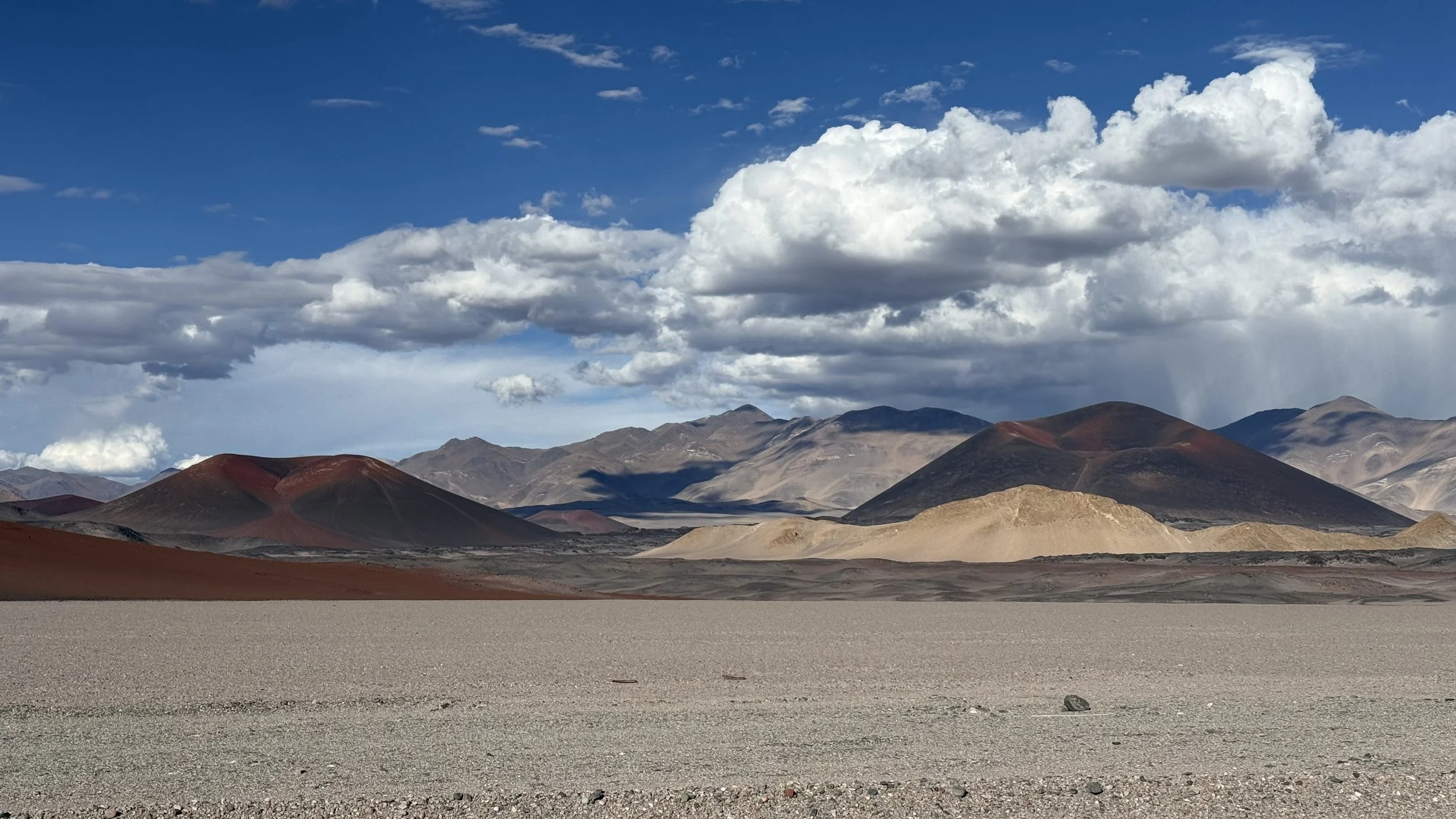
The volcanic landscape of the puna preserves an arch ambivalence, despite being as bound to change as all living things
Mourning positions the mourner at the centre, feeling the loss. What standing in these ruins discloses is something cooler and more precise: that all worlds are mortal, that the particular is always temporary, that the form of life one inhabits is finite in the same way, bounded by the same structural limit. Wittgenstein's proposition holds in both directions. The limits of the language are the limits of the world; and when the language reaches its limit, the world it sustained reaches its limit with it. The stones at Chan Chan remain. The friezes remain. The walls at Tastil remain, above the road in the Quebrada del Toro. But the world the walls belonged to is closed in the way that all finite things close: completely, without remainder, with a specificity that cannot be recovered because it was always and only itself.
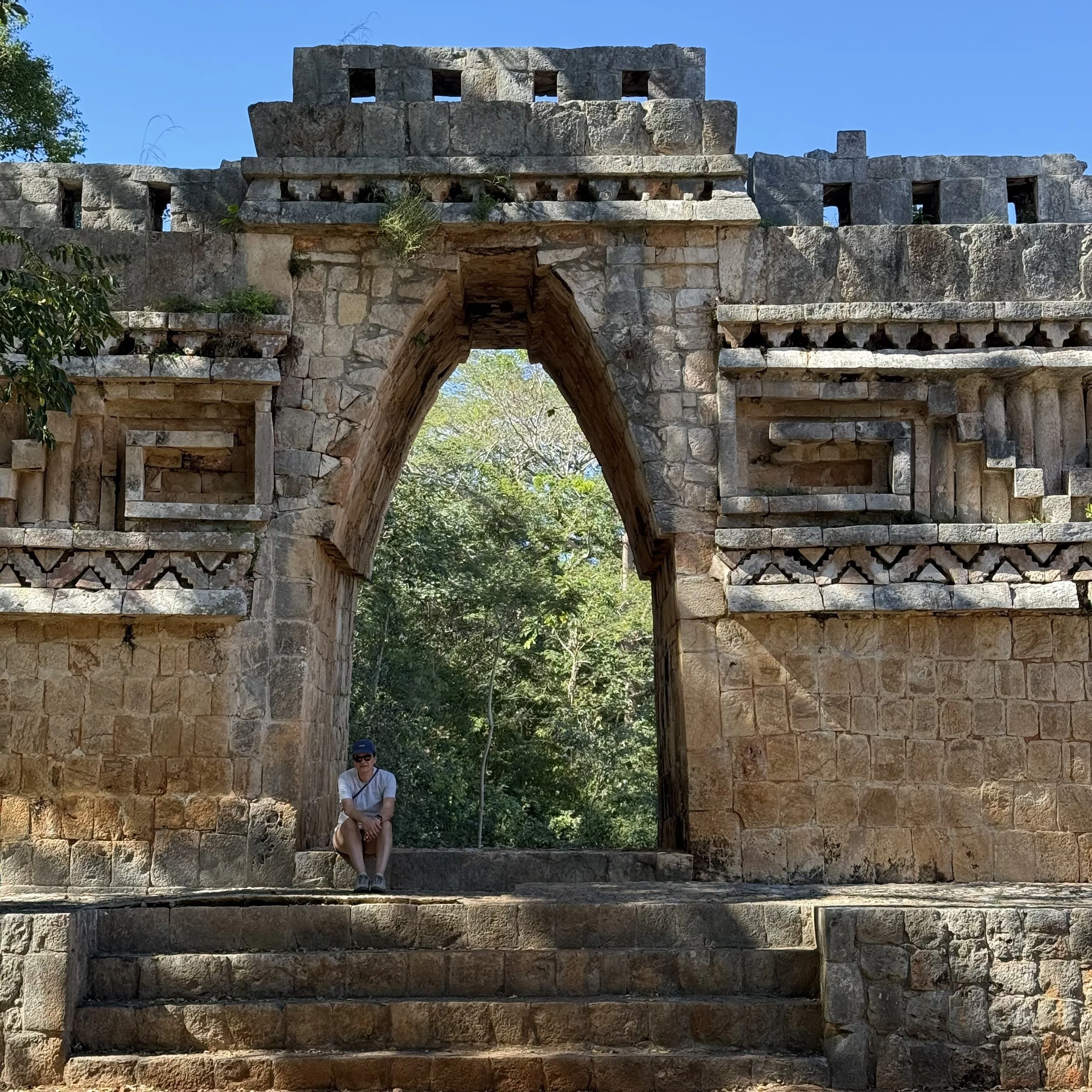
The road connects the ruins without translating them.
For two years we have driven through landscapes whose deepest grammar was spoken in languages no living person knows, along corridors of trade and connection conducted in words that left no echo. What the puna was called in Cacán, what the Moche word for the Pacific was, what language the pilgrims spoke in the galleries of Chavín de Huántar, what the Cañari called the hill at Ingapirca, what name the builders of Caral gave to the river valley they inhabited for a thousand years. We have been at the limit, repeatedly, standing in places that were once the centre of a world, feeling the particular quality of attention that finitude produces when you recognise it clearly: not grief, but a kind of clear-eyed stillness in the face of what was there and is no longer.
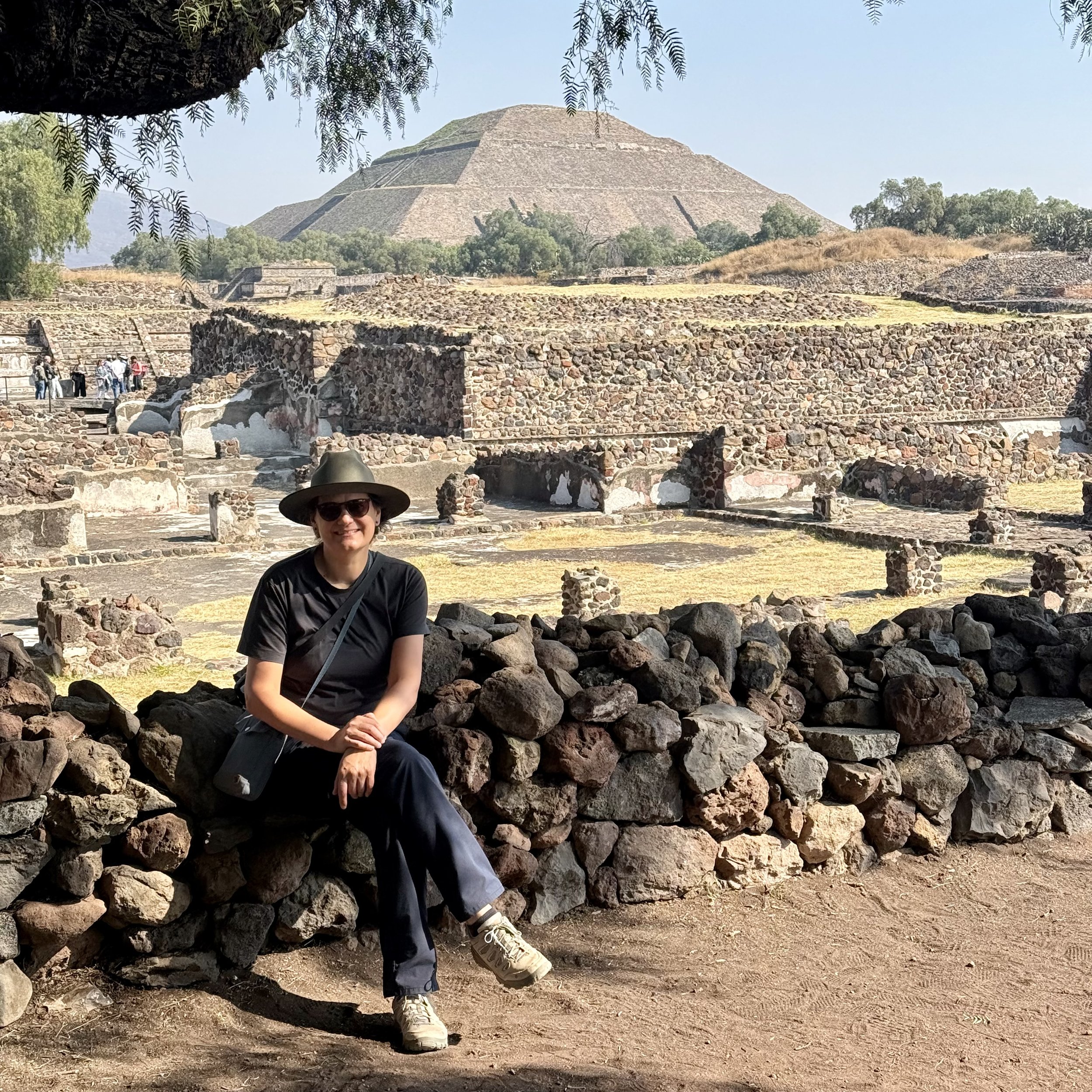
“Standing (sitting, in this case) in places that were once the centre of a world”.
Tonight somewhere in Asunción someone is telling a story in Guaraní, a language that was already old when the Spanish arrived, and the story is alive in the way that only a living language is alive and used, right now, to say something that matters to the people listening. That aliveness is also finite. All forms of life reach their limit. The appropriate response is not grief but attention: to what is here while it is here, to what was there before, to the fact that existence in any of its forms is always this particular shape and not another, always temporary, always already on its way to its own completion.
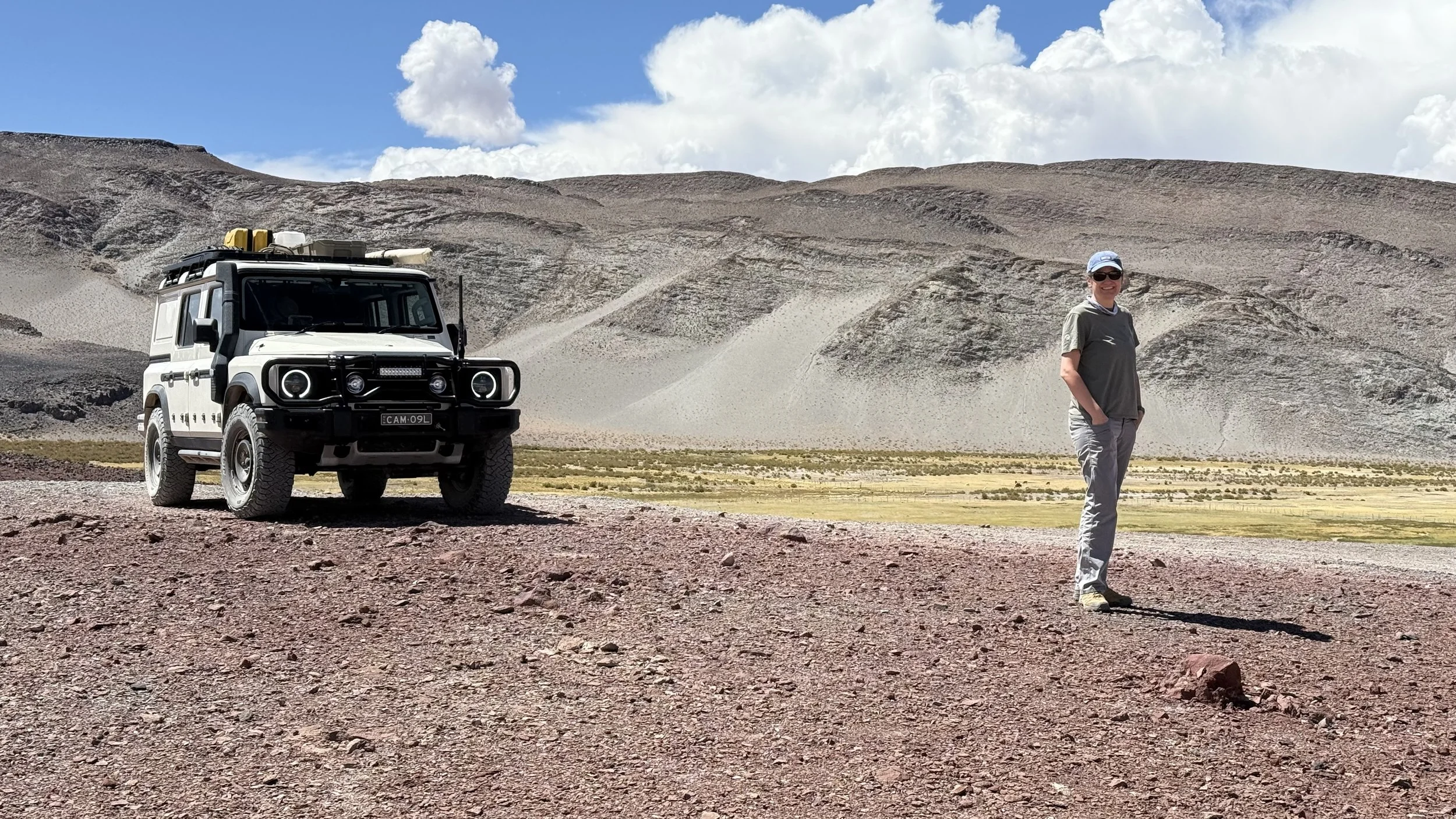
The peril is to proceed blind to the end of all possibility, to fail to at least feel the sand as it slips through one’s grasp.
Iggy ships in three weeks. This form of life, our two years of movement through the ruins and the living remnants of other forms of life, reaches its own limit shortly. It has been, among other things, an education in finitude. The road itself provided the curriculum.
