Holdouts — resistance, pride and a new Argentine identity
From the pukará (redoubt), the valley opens in both directions, north and south along the line of the Santa María River, and the view is the first thing you need to understand about what happened here. The approach is visible for kilometres. The terrain on every side is steep, rocky and broken. The city below held five thousand people at its height across thirty hectares of terraces and passages and storage buildings and ceremonial spaces. It sits at the foot of the slope like a fact the landscape had always intended. The Quilmes did not choose this site because it was beautiful. They chose it because it was theirs and because it could be held.
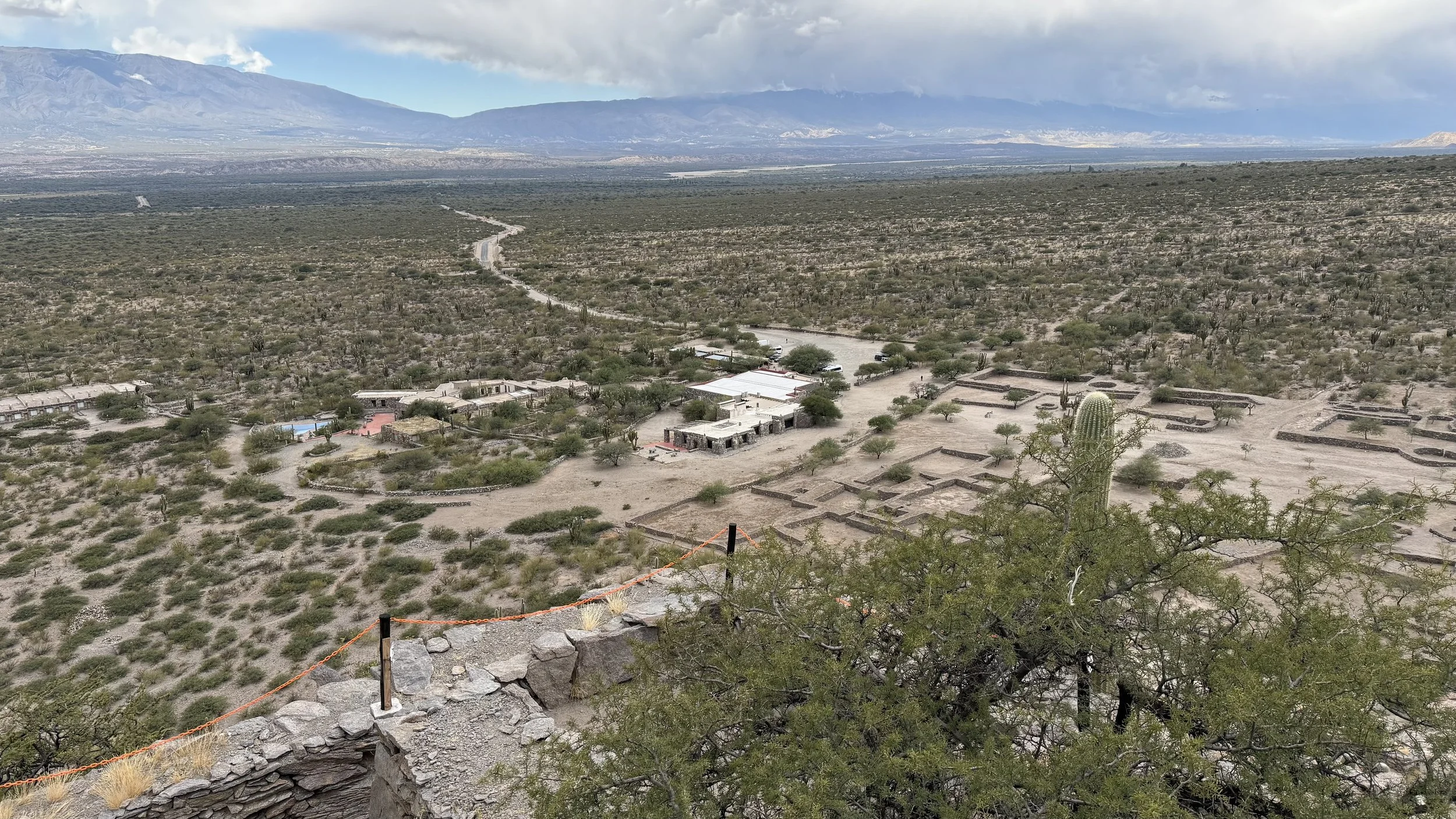
The north pukará at Quilmes offers a commanding view of the Calchaquí valley.
They had been here since roughly 850 CE, part of the broader Diaguita confederation of the Calchaquí Valleys, a group of politically independent but culturally linked peoples who shared a language called Cacán and a commitment to self-determination so deeply held it had already outlasted the Inca. The Inca had tried in the 1480s and achieved only partial, contested incorporation. The Spanish arrived in 1535 and found the same thing. The Quilmes and their neighbouring confederates resisted Spanish control for 130 years across three distinct wars, and in doing so became the longest sustained indigenous resistance to European colonisation in South America.
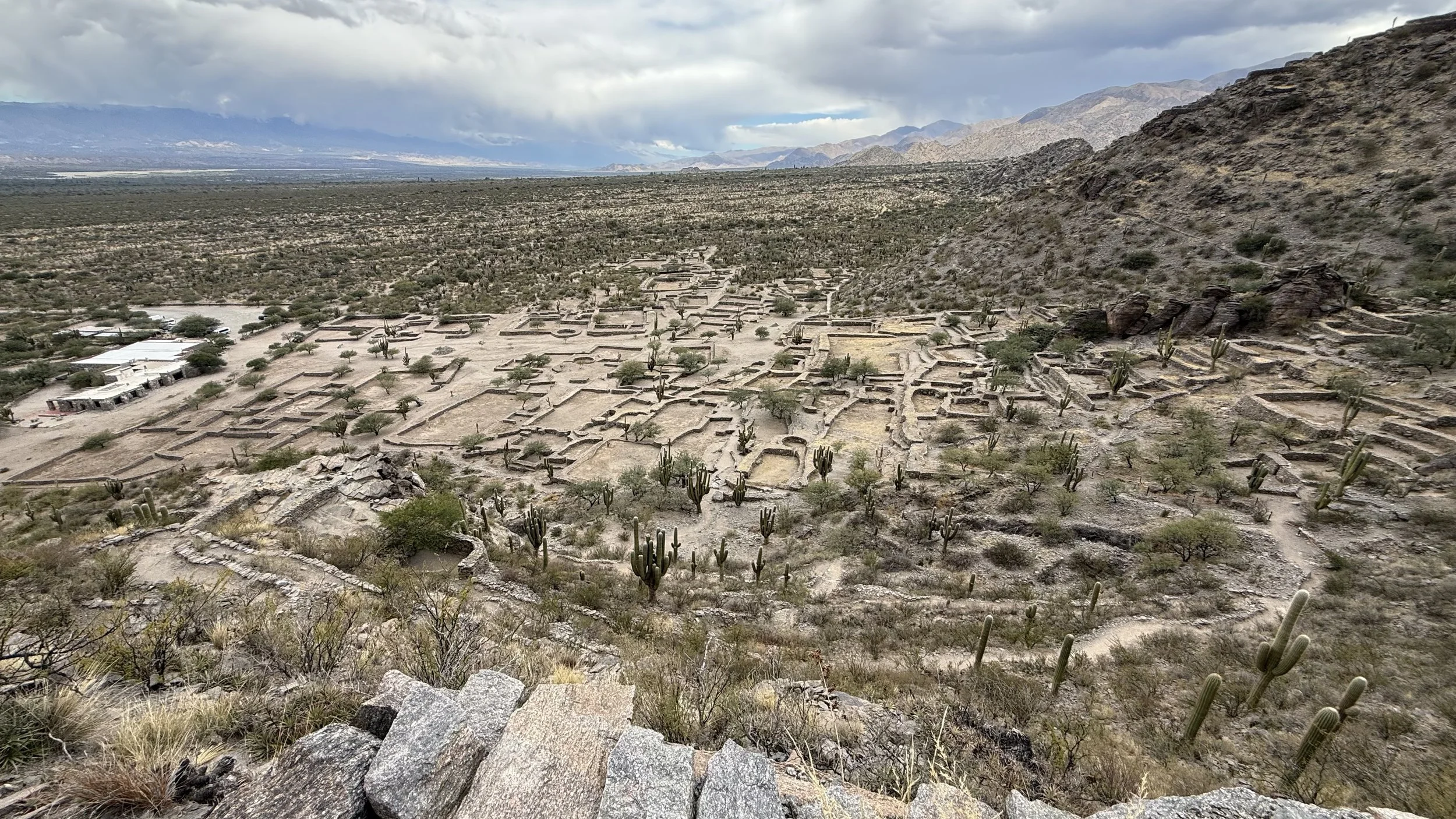
The sprawling lower town of Quilmes, the ‘city of peace’.
The standard explanation for this, that they were outnumbered, outgunned, outarmed in every way that should have mattered, reaches for terrain, and terrain is the right answer, but not in the way it is usually stated. What the Calchaquí achieved was a systematic inversion of every Spanish military advantage. The mountains became fortresses: every valley approach was a choke point that a small force could hold against numbers, every ridge a defensive position, every narrow defile a killing ground for anyone trying to force a passage. Height became firepower: a fighter on the heights above a column moving through the valley below does not need steel or gunpowder, only slings, stones and arrows directed downward at men who cannot easily return fire uphill. Mobility became vulnerability: the cavalry charge that obliterated indigenous armies on the flat plains of Mexico and Peru was not merely useless in the Calchaquí Valleys, it was a liability. A horse in formation on broken mountain ground cannot charge. It cannot use speed when the terrain removes it. The great engine of Spanish military superiority required flat open ground to function, and the Calchaquí never gave it flat open ground.
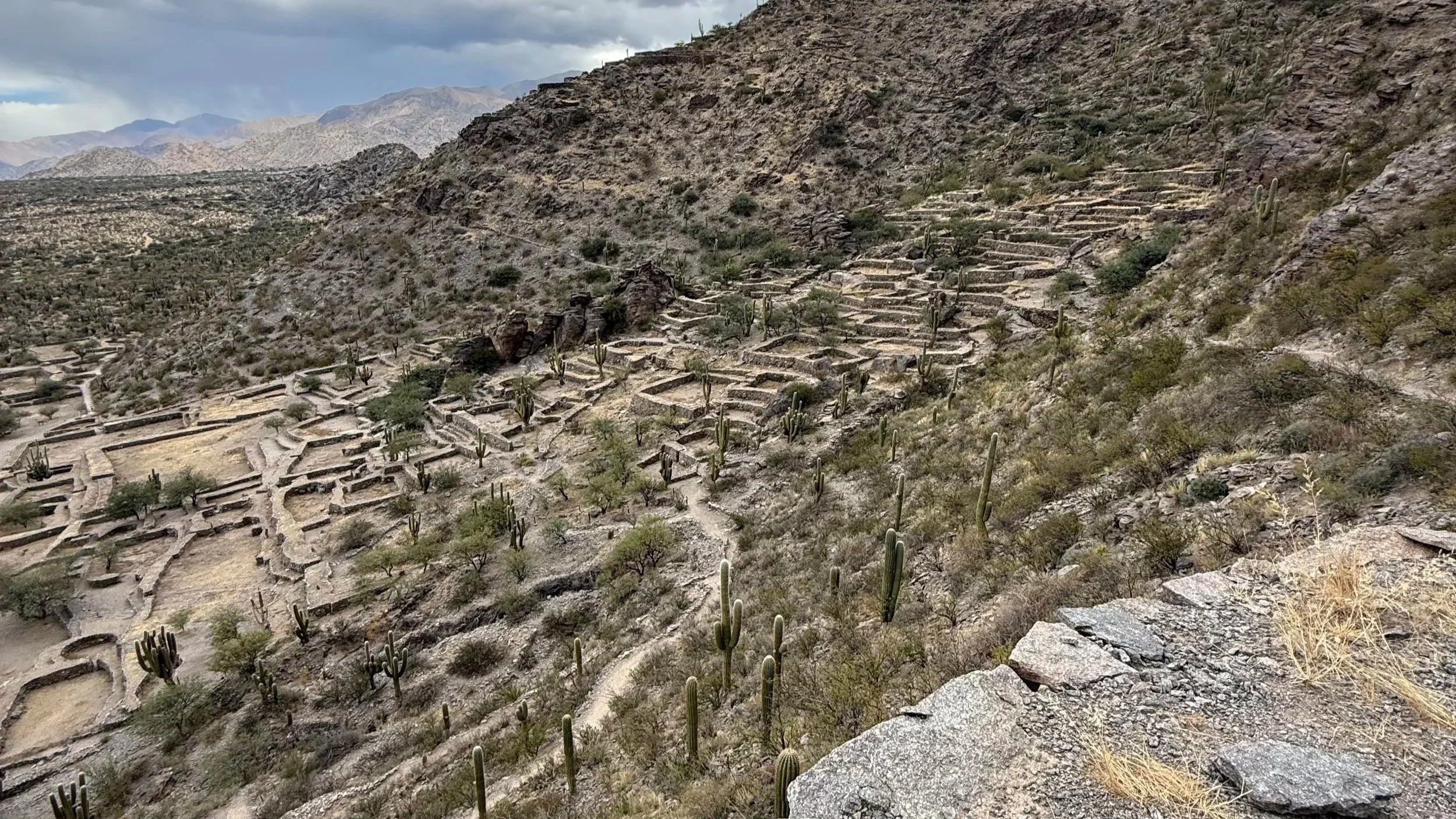
The fortified upper town, the ‘city of war’.
The city's own architecture extended this logic downward from the ridge. The narrow angled passages at Quilmes, some barely wide enough for one person to pass, each sealable with a single large rock, are not the architecture of a culture expecting to be welcomed. They are the architecture of a culture that understood, from pre-Inca experience of defending against external pressure, that the geometry of an approach matters as much as the strength of the defenders. Force an attacker into a passage wide enough for one man and you have negated his numbers. The twin pukarás commanding the heights above the city served as observation posts and positions of last refuge, watching the valley approaches that are visible from them for many kilometres in both directions.
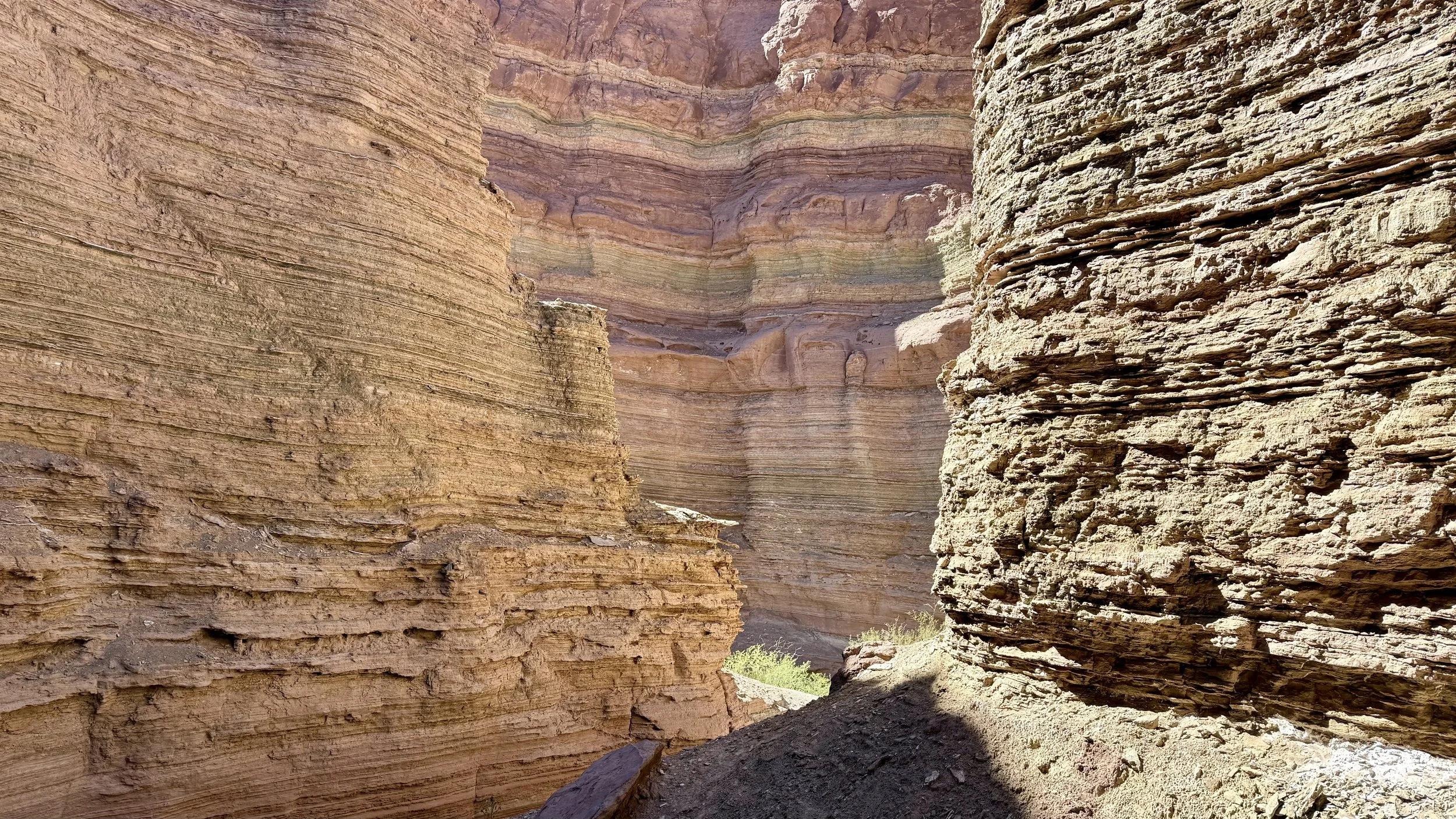
The Quebrada de las Conchas separating the Calchaquí valley from Salta proved to be a treachorous landscape for colonial expeditions.
But terrain alone does not explain 130 years. The Quilmes were not simply defending from behind walls. They were attacking. Sometime during the sixty-seven year peace between the First and Second Calchaquí Wars, in which the Spanish were kept to the eastern ends of the valleys and the Quilmes were left largely alone, they acquired horses. Escaped Spanish stock had been multiplying across the pampas since the 1530s. The Quilmes watched the instrument of Spanish military dominance become available in the landscape, and they took it. They learned to ride. By the time the Second War began in 1630, the Calchaquí confederation had become, in the precise words of the Encyclopaedia Britannica, effective cavalrymen who carried the attack to Spanish towns. Not defenders behind walls waiting to be besieged. Raiders. Mounted, fast, intimate with every fold of the terrain the Spanish were trying to cross. The people who had spent a century learning to neutralise Spanish cavalry from the heights had become cavalry themselves.
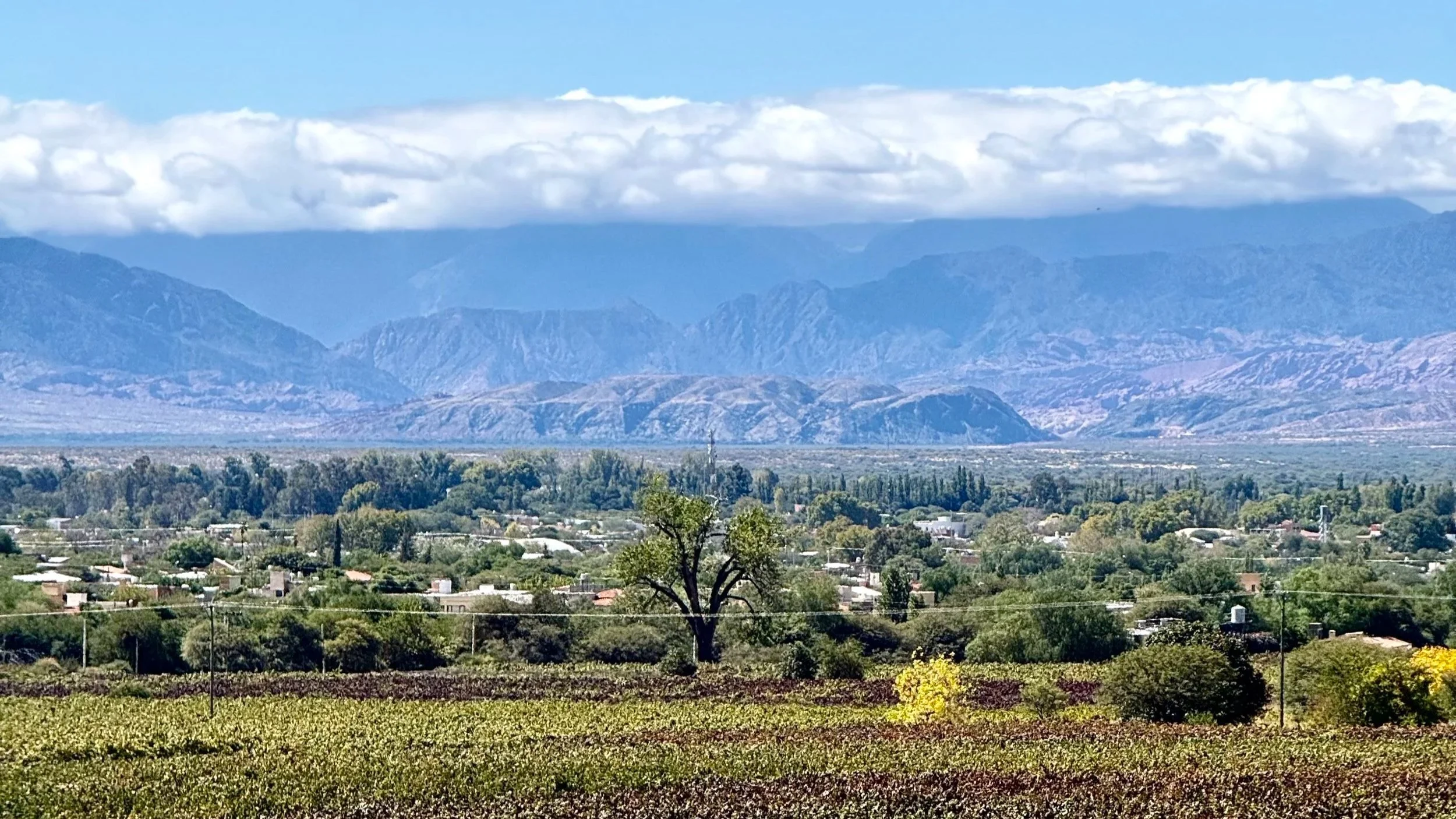
Cafayaté looking north towards the Quebrada de las Conchas.
This transformation is worth pausing on. It required a specific kind of cultural intelligence. The horse was the symbol and instrument of Spanish power. It was what made the conquistador terrifying, what made the cavalry charge the decisive weapon of the colonial period. Looking at that instrument and choosing to learn it, master it, turn it back on the people who brought it, required seeing past the symbol to the tool. The Calchaquí were not unique in this, the Mapuche in Chile made the same adaptation, and it extended their resistance to the end of the nineteenth century, but they were among the first in South America to understand that the most effective answer to Spanish cavalry was more cavalry, ridden better, in terrain of your own choosing.
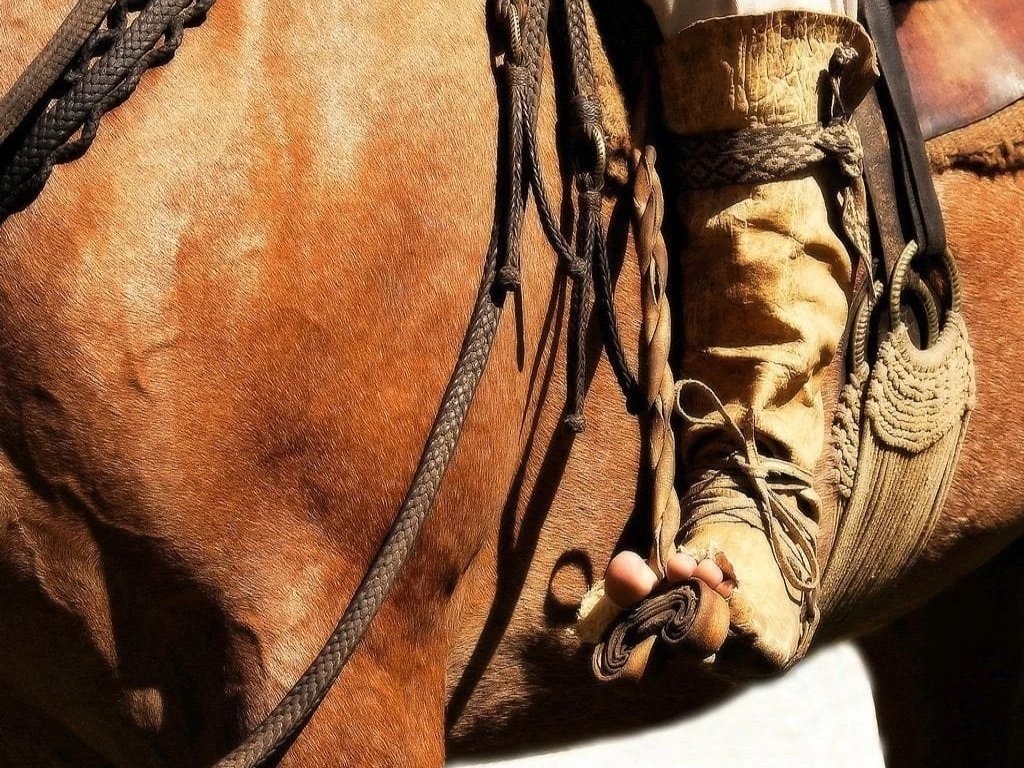
The traditional bota de potro (foal-skin boot) and stirrup.
By the Third War, which began in 1658, the Calchaquí confederation could put six thousand mounted warriors in the field under a unified command. The commander was, improbably, a Spanish adventurer named Pedro Bohórquez, an Andalusian who arrived in the valley claiming to be the Inca Hualpa, a descendant of the last Inca emperor. He was not. He was a man who understood what the Calchaquí needed - a unifying figure who could speak to both their Inca-influenced cultural memory and their military requirements. The Calchaquí accepted him. The Jesuits, who believed he might pacify the valleys through persuasion where military force had failed, gave him their support. For several years he held the region against the Spanish with an army that was, by any measure, formidable.
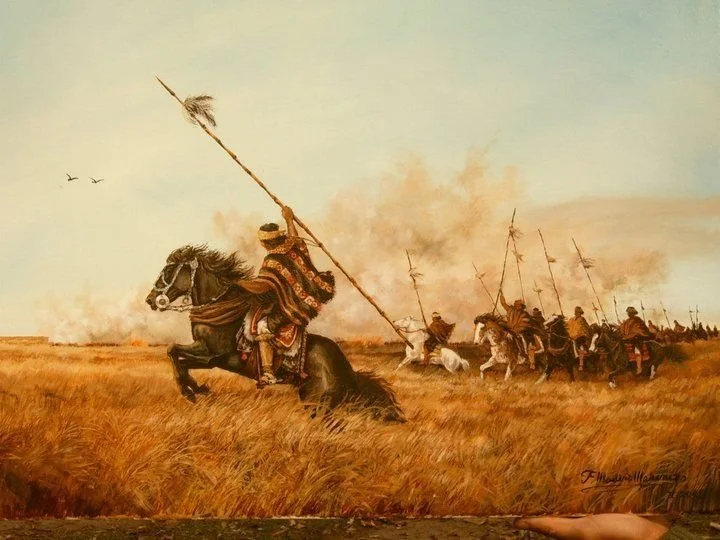
Horsemen of the Calchaquí Confederation.
In 1659, Bohórquez surrendered to the Spanish in exchange for a promised pardon. The Spanish sent him to Lima and executed him. This is how holdouts end, more often than military defeat: not by being outfought but by being outmanoeuvred, by the introduction of a false promise into the political structure of the resistance. The confederation continued under indigenous leadership for another eight years, but the six thousand were no longer unified, the political logic had been broken, and the Spanish were tightening. The ring of cities that had been slowly closing around the Calchaquí Valleys for a century from Santiago del Estero in the 1550s, Tucumán in 1565, Salta in 1582, La Rioja in 1591, Jujuy in 1593, had by now cut the valleys off from external contact, trade and support. The Quilmes were the last to fall, in 1665.
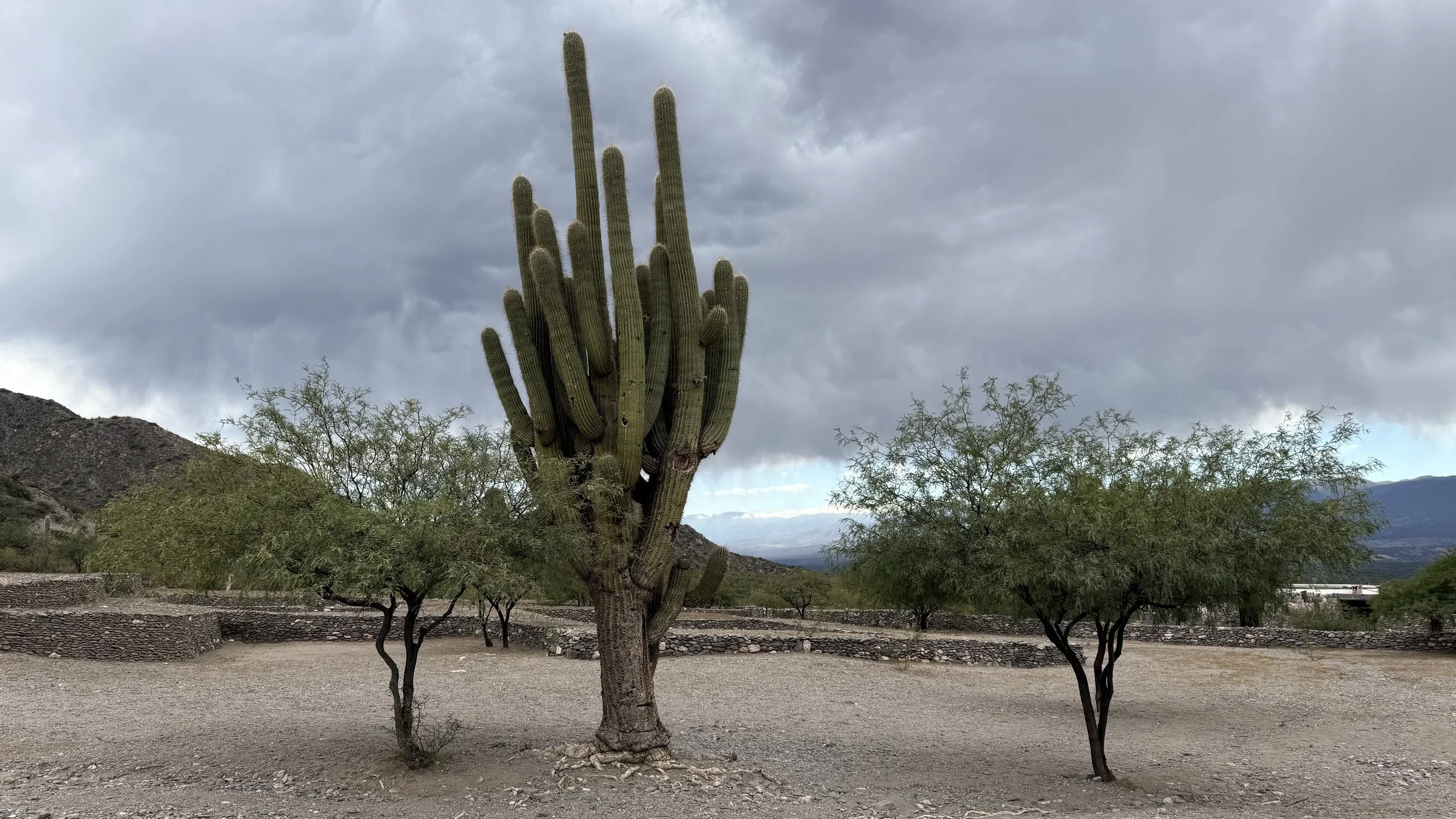
Two crucial Quilmes resources - Cardón (Cardon cactus) and Algarrobo (Mesquite/Prosopis).
What followed was not an execution. It was more deliberate than that. The Spanish governor ordered what he called desnaturalización (denaturalisation) of the entire surviving Quilmes population. They were to be marched on foot to a reservation on the outskirts of Buenos Aires, approximately 1,400 kilometres away. The march was not a logistical necessity. Moving the defeated could have been accomplished in other ways over shorter distances. The march was ideological. It was designed to sever permanently the relationship between the Quilmes and the land where they had lived for eight centuries, the land their resistance had been built to defend, the land that was the source of everything their identity comprised. The Spanish understood, at some operational level, that what made the Quilmes the Quilmes was not their walls or their horses or even their language. It was the specific relationship between this people and this valley. Move them far enough and that relationship cannot survive.
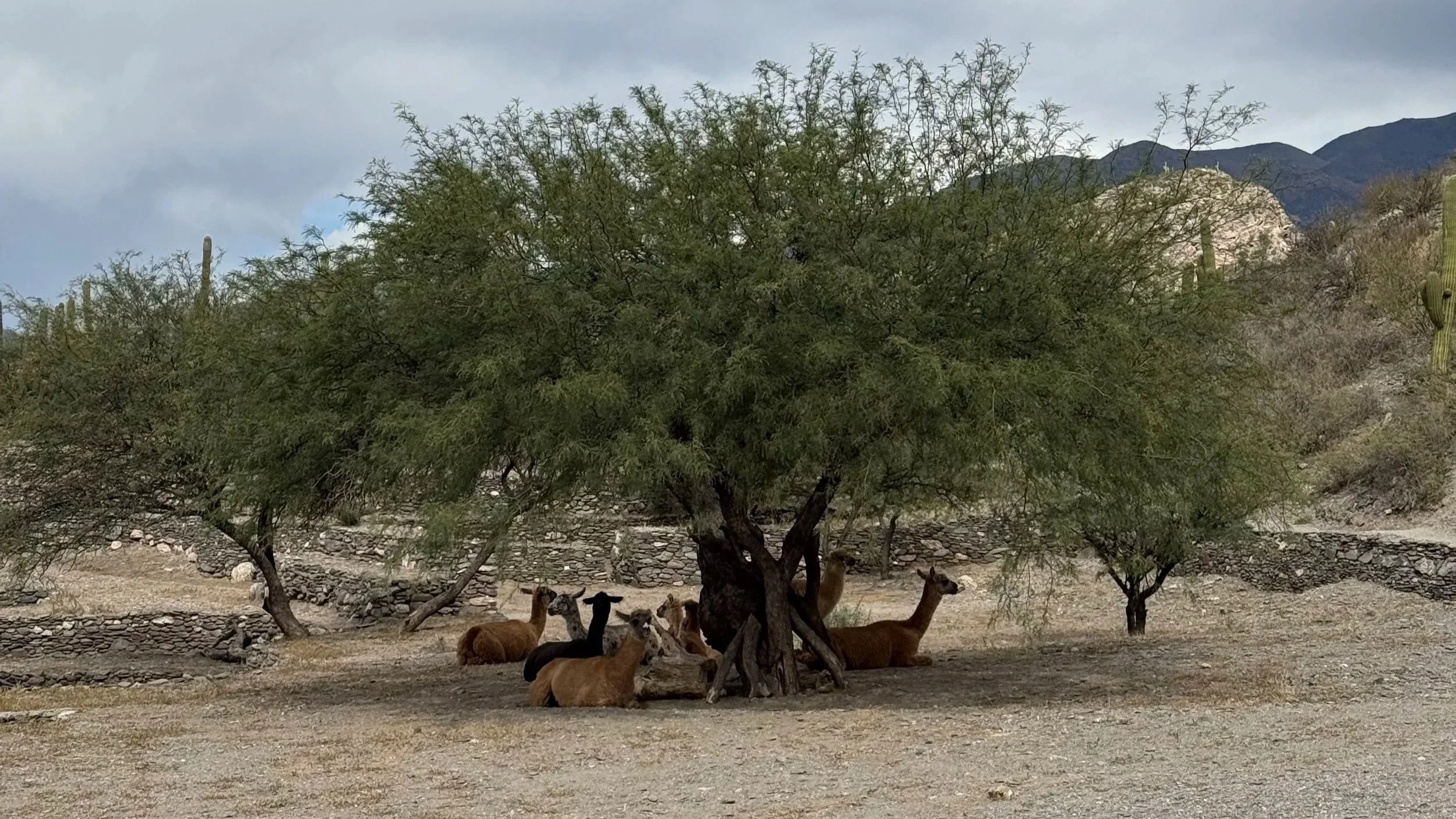
Llama are a crucial Diaguita and Andean precursor technology, which explain human presence in the Calchaquí.
The population at defeat is estimated at around 2,000 people. Spanish records show only 347 at the reservation on arrival in 1666 — though some sources put the figure higher. By 1726 there were 141. The reservation became a ghost town within another generation. The Argentine government officially declared the Quilmes ethnically extinct on 12 February 1812.
But not everyone had marched. Some escaped into the broader valley population during the chaos of defeat, hiding their identity, becoming legible to the Spanish as mestizo, criollo, the generic rural poor of the northwest. They passed what they carried into the population around them without being able to name what they were passing. Their descendants mixed with Spanish settlers across the valley. The language was gone. The formal political identity was gone. What remained was the knowledge: the terrain, the horses, the logic of resistance in this specific landscape.
The people who inherited that knowledge called themselves gauchos. They were mestizo of mixed indigenous and European descent, which in the Calchaquí Valleys meant, in many cases, of Quilmes and Spanish descent. They were horsemen. They carried the bolas, three stone balls on leather cords, the ancient Calchaquí weapon for hunting llama and bringing down cavalry horses, now repurposed for cattle work. They rode in open-toed boots of green colt skin shaped to the foot, controlling the horse through seat and knee and the bare grip of the big toe in the stirrup ring, a riding style as far from the closed Andalucian boot in a deep iron stirrup as it was possible to get while still using the same animal. And they fought, when the need arose, with the guerrilla logic of people who know their terrain completely and cannot be beaten on it by any conventionally organised force.
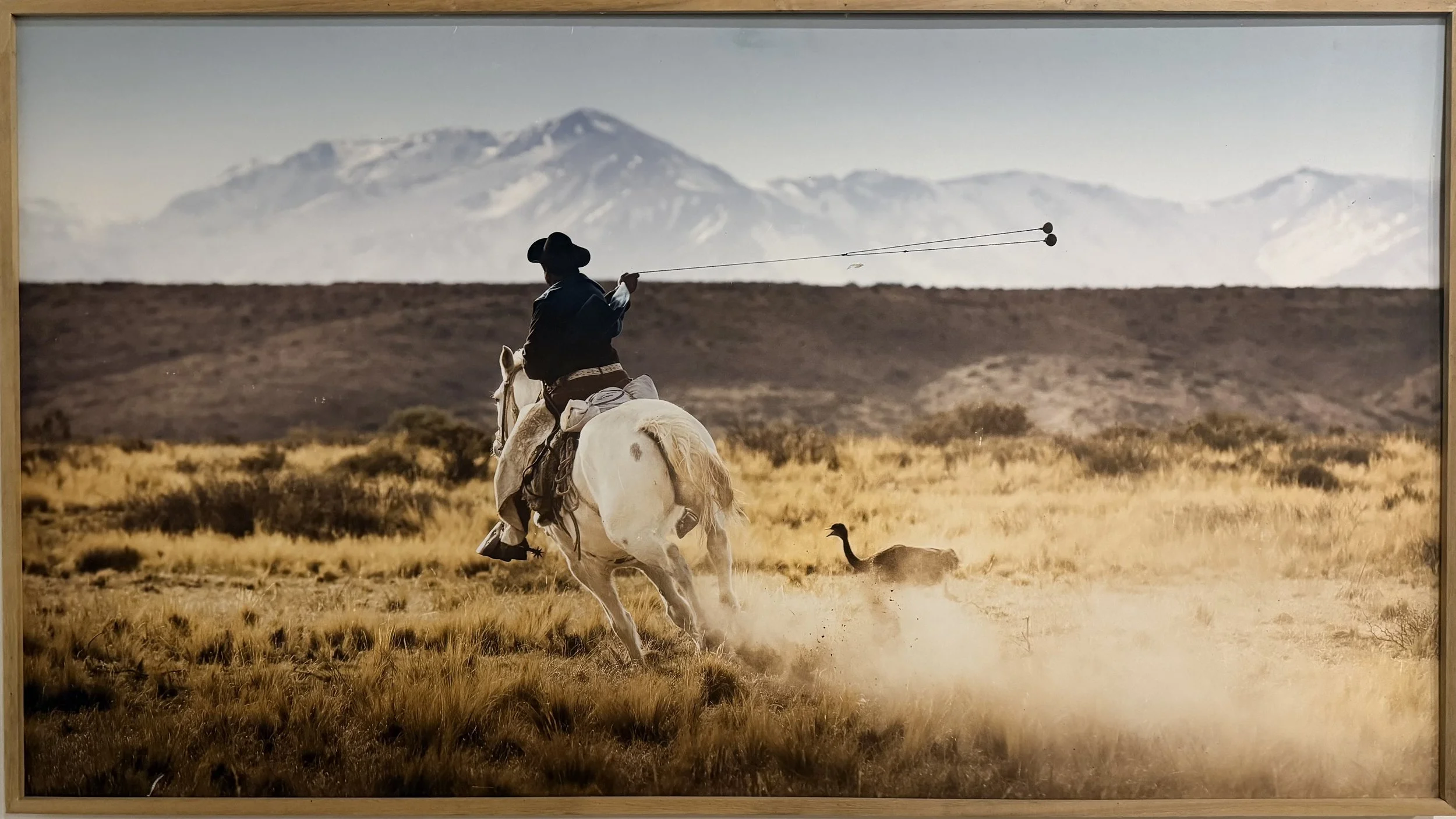
A gaucho photographed wielding boleadoras (bolas). Principal weapons of the gauchos included la chuza (lance), huaraca (sling), lazo (lasso).
The need arose in 1814. The Spanish royalist army, retreating from the collapse of the viceregal order but still capable of reconquest, came south from Upper Peru toward Buenos Aires. The regular Argentine forces had withdrawn. What stood between the Spanish army and the undefended interior was a Salta-born officer named Martín Miguel de Güemes and whatever irregular force he could raise from the rural population of the northwest. The force he raised were gauchos from the valleys around Salta, where the Calchaquí had fought for 130 years. Güemes organised them into mounted guerrilla units and held the line for seven years, from 1814 to 1821, using methods that would have been immediately recognisable to any Calchaquí kuraka of the previous century: terrain exploitation, supply interdiction, rapid concentration and dispersal, the refusal of pitched battle.
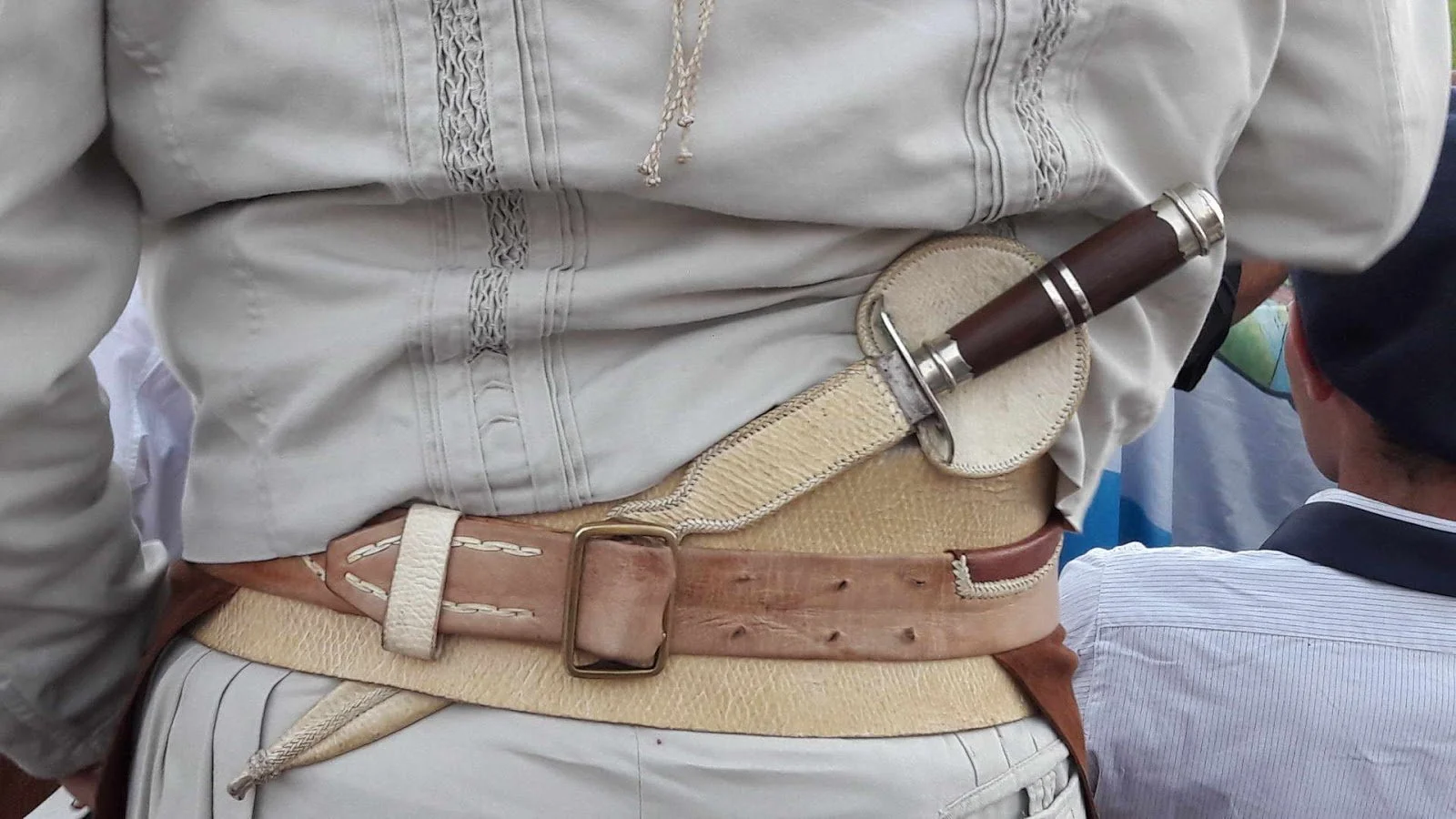
An Argentine daga (dagger), along with the facon, the traditional sidearm and working knife of the gaucho.
A Spanish general who fought against Güemes wrote that his men were horsemen whose excellent qualities for guerrilla warfare and swift surprise they had to endure on many occasions. The Spanish used the word gaucho as a slur against these fighters… mongrel, mixed-blood, uncivilised. Güemes picked it up as a badge of honour and referred to his troops as his gauchos. It was the same gesture the Calchaquí had made when they took the Spanish horse and rode it back at Spanish towns: take the instrument of your designation and make it your own.
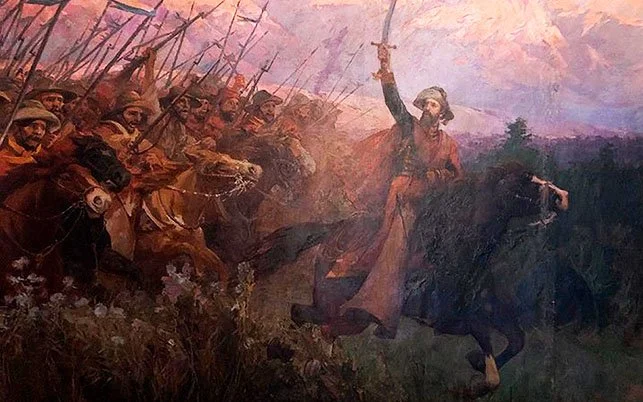
Güemes and his gauchos, depicted in 1912 by Antoni Estruch.
The holdout that began on the slopes above the Santa María River in the sixteenth century ended, in one sense, with the desnaturalización of 1667. In another sense it ended in 1821, when the royalist army finally gave up on the northwest and withdrew. The people who finally expelled the Spanish from the Calchaquí region were the biological and cultural heirs of the people the Spanish thought they had destroyed. The adaptive capacity that had looked at a cavalry horse and seen a weapon to be learned, that had survived official extinction by hiding inside a new identity, that had passed its guerrilla logic through generations of rural mestizo horsemen, proved more durable than the colonial project that had tried to extinguish it.
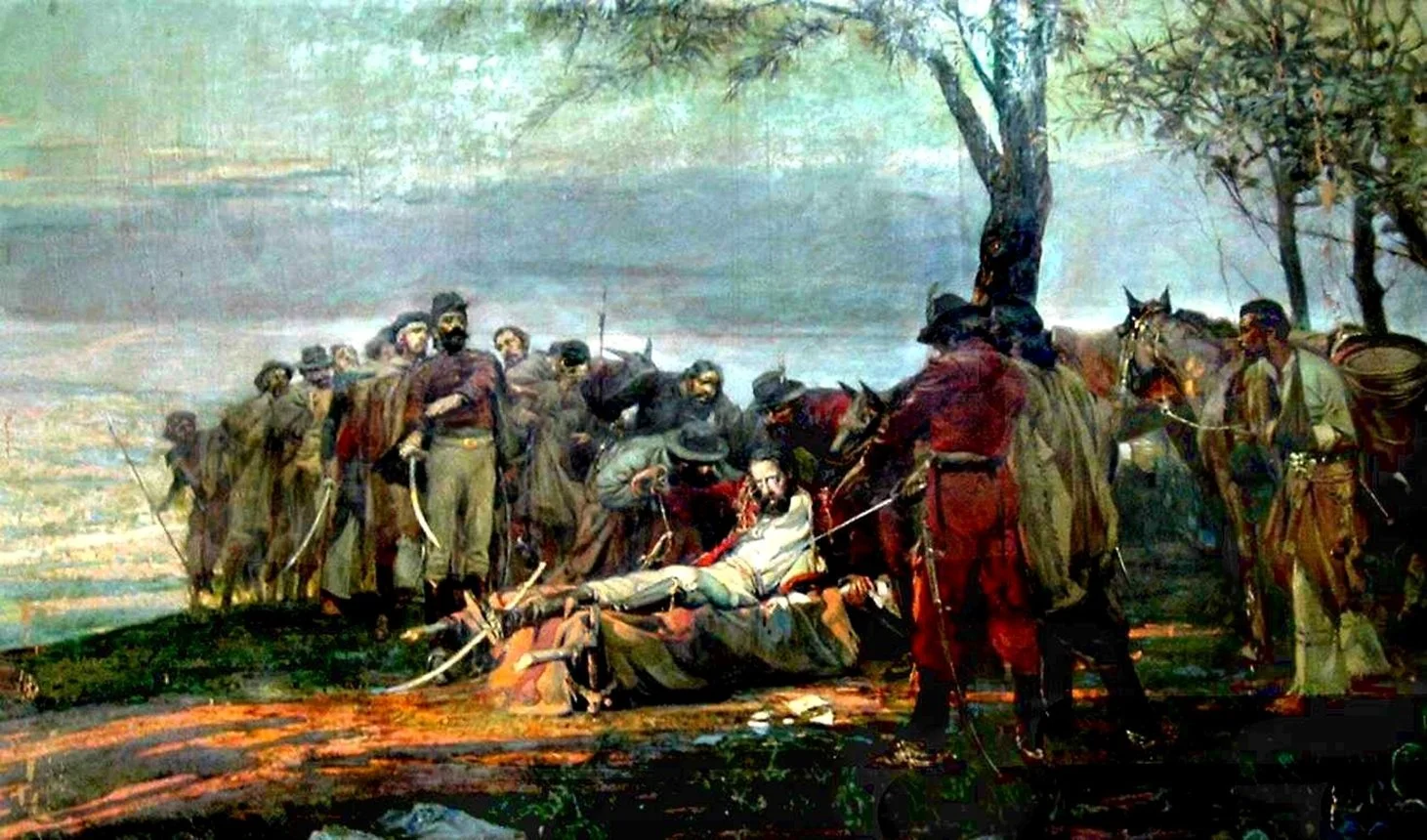
The death of Güemes, pictured by Antonio Alice in 1910.
This is a story Argentina has not fully told itself. José Hernández published Martín Fierro in 1872 fifty years after independence, the same decade the Argentine state was conducting the Conquest of the Desert, the military campaign that exterminated the remaining indigenous peoples of the pampas. The poem mourns a people being erased by the nation they had helped create: the gaucho, dispossessed by fencing laws and military conscription, his way of life dismantled by the very state whose independence his horsemen had secured. Martín Fierro became Argentina's national epic. Every Argentine schoolchild knows its opening lines:
Aquí me pongo a cantar
al compás de la vigüela,
que el hombre que lo desvela
una pena estraordinaria,
como la ave solitaria
con el cantar se consuela.
Here I set myself to sing
to the beat of my guitar,
for the man kept awake
by some extraordinary sorrow,
like the solitary bird,
consoles himself with song.
What Argentina has not fully reckoned with is what the gaucho was made of, and where his horsemanship came from, and whose resistance it had once been — before it became, by a long process of transformation and concealment, the foundation of a national mythology. Later in that same poem, Hernández wrote:
Él nada gana en la paz
y es el primero en la guerra;
no le perdonan si yerra,
que no saben perdonar,
porque el gaucho en esta tierra
sólo sirve pa votar.
Para él son los calabozos,
para él las duras prisiones,
en su boca no hay razones
aunque la razón le sobre;
que son campanas de palo
las razones de los pobres.
He gains nothing in peace and is the first into war;
they do not forgive him if he errs,
for they do not know how to forgive,
because the gaucho in this land is only useful for voting.
For him the dungeons, for him the hard prisons;
in his mouth there are no arguments,
though reason he has in plenty —
for the reasons of the poor are wooden bells.
He was writing about what it means to have no voice and no recourse. He was writing, intentionally or not, about the Quilmes. The struggle is the same struggle, the mountain-side is the same mountain-side. The poem Argentina made its national soul is an elegy for a resilient people who were themselves an elegy for another people… and the first elegy was slow to be sung, because the state that would have sung it had declared the subject extinct.
