I am writing this in Iruya, a Quechua village in the quebradas of Salta province, at 2,780 metres above sea level. The road in was unpaved, vertiginous, cut into the side of a canyon that drops several hundred metres to the river below and took an hour from the main highway. The village has no traffic, no chain anything, and a handful of guesthouses whose kitchens operate on the same principle they always have: earthenware pots, long heat, the ingredients that grow or are preserved at this altitude. Water does not boil at 100 degrees here. The cold is serious at night. And on the stove this evening, as it has been on stoves in these mountains for longer than any written record in this part of the world, there is a pot of locro.
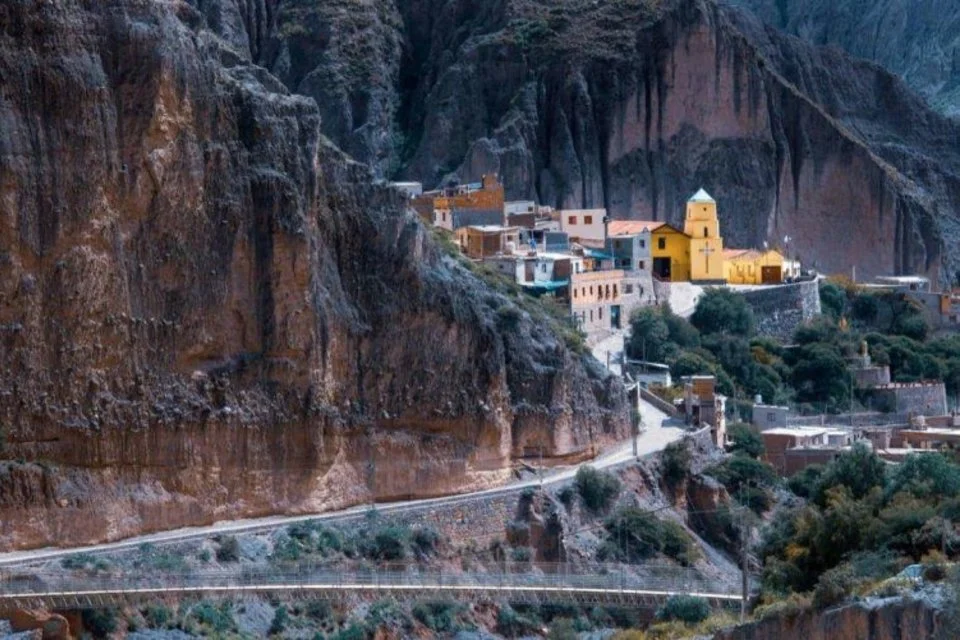
Iruya, Salta province.
Locro is a thick stew of maize, squash, beans and meat, cooked low and slow for several hours until the vegetables dissolve into each other and the broth becomes something between a liquid and a solid. It smells of dried corn and rendered fat and dried chilli, which is a combination that has been coming out of Andean kitchens since before the Inca, before the Quilmes built their city in the valley two hours south of here, before any of the empires that would subsequently claim or contest this territory had arrived. It is, today, the national dish of Argentina. It is served in Buenos Aires restaurants on the 25 de Mayo to celebrate independence from Spain. It is eaten in every province. But it is not from Buenos Aires, and it is not from Spain, and the story of how it got from this pot in these mountains to a symbol of Argentine nationhood is the story of Argentina itself.
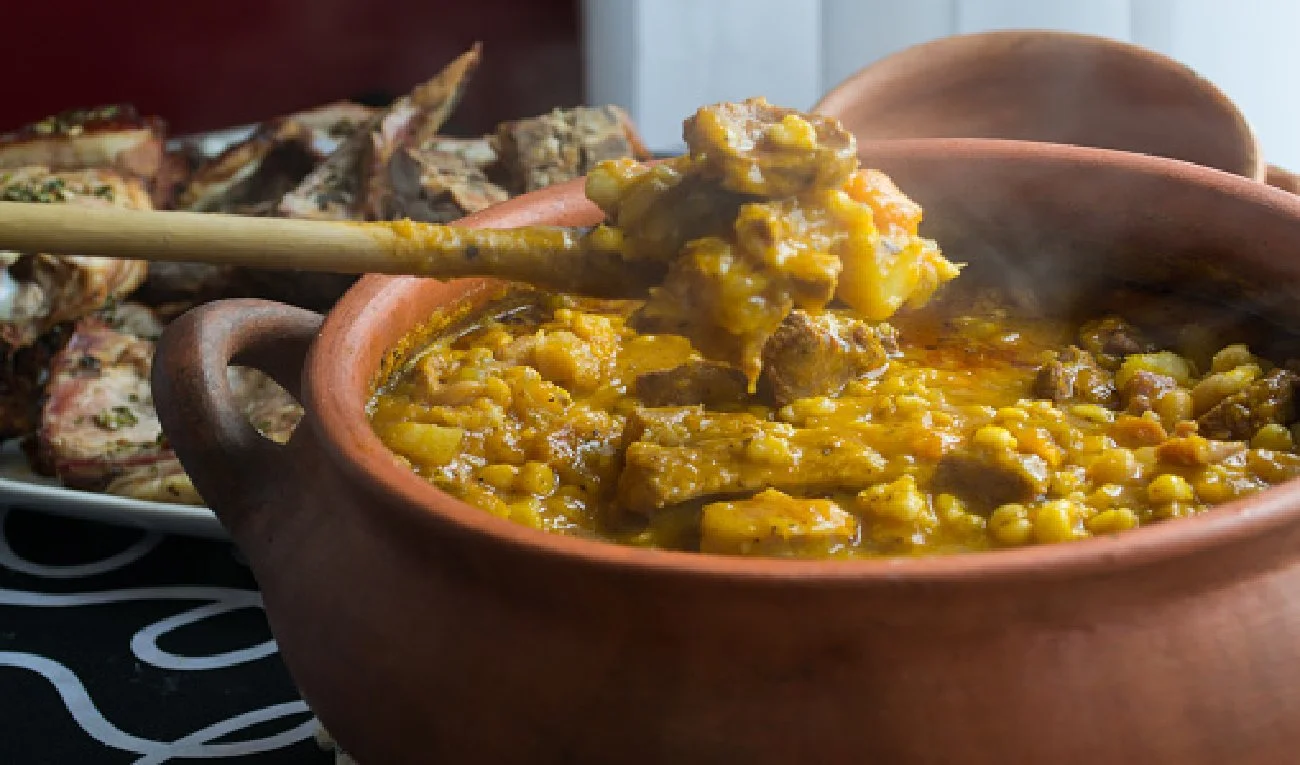
Locro is a thick stew of maize, squash, beans and meat.
Its name tells you where it comes from before you look at the ingredients. Locro is a Spanish rendering of the Quechua ruqru or luqru - a thick stew or mash, in the language of the people around me right now, who were speaking Quechua long before the Inca empire adopted it as its administrative tongue. The word is pre-Inca, which means the dish is pre-Inca. The Quilmes grew maize and squash and beans on terraced hillsides above the Santa María River. The pot on those terraces contained something recognisable as the ancestor of the dish that will come off this stove in an hour.
The indigenous base
The vegetable foundation of locro is the tres hermanas (three sisters): maize, beans and squash. This is the companion-planting system of pre-Columbian Andean agriculture, in which the three crops are grown together because they support each other structurally and nutritionally. The maize stalks support the climbing beans; the beans fix nitrogen in the soil that feeds the maize and squash; the squash leaves spread along the ground suppressing weeds and retaining moisture. Together they provide a near-complete nutritional profile: carbohydrate, protein, fat, vitamins. The system sustained large, dense urban populations in the Andes for millennia without the livestock that European agriculture depended upon.
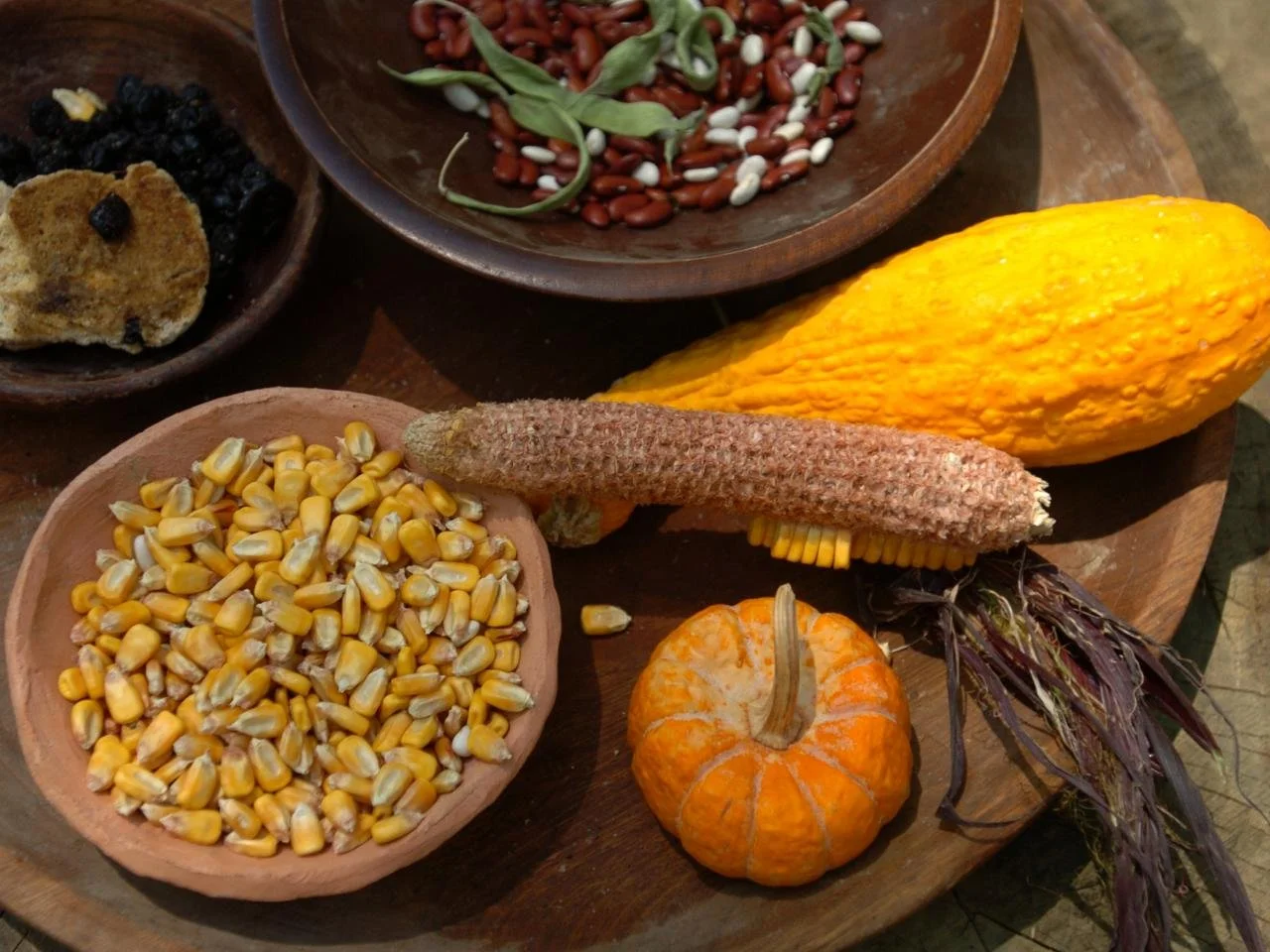
Tres hermanas — the three sisters: maize, beans and squash.
The maize in locro is specifically maíz blanco (white hominy corn), dried and sometimes nixtamalised, with a texture that breaks down slowly under long cooking to a soft, starchy consistency that thickens the broth. This is not sweet corn. It is field corn, the ancient Andean variety grown at altitude. The zapallo (Andean squash) dissolves almost entirely into the stew, becoming the creamy orange body of the broth. The beans add protein and texture.
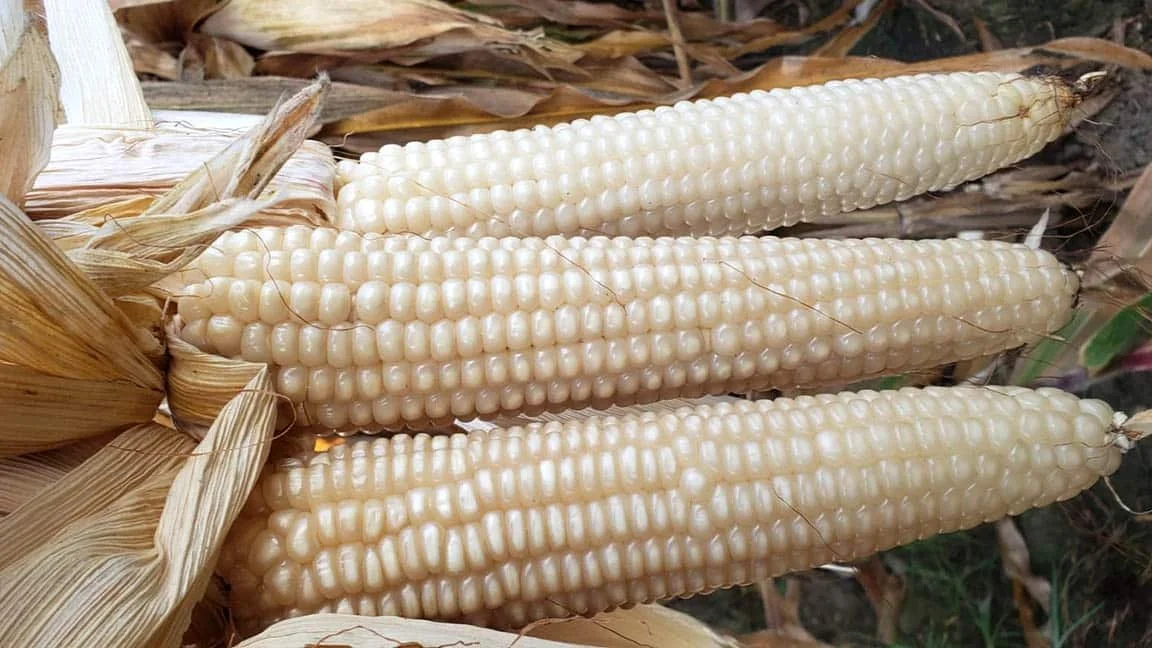
Maíz blanco — white hominy corn.
Then there is charqui (dried salted meat), the Andean preservation technology whose name, from the Quechua ch'arki, gave English the word jerky. Charqui is the ingredient that most precisely places locro in its pre-contact context: a technique developed for the specific conditions of Andean life, where altitude, cold nights and intense dry sun created ideal conditions for desiccation, and where the need to preserve meat through seasons of scarcity was pressing. In its original form, locro was built around charqui rather than fresh meat. The fresh meat came later, with the Spanish.
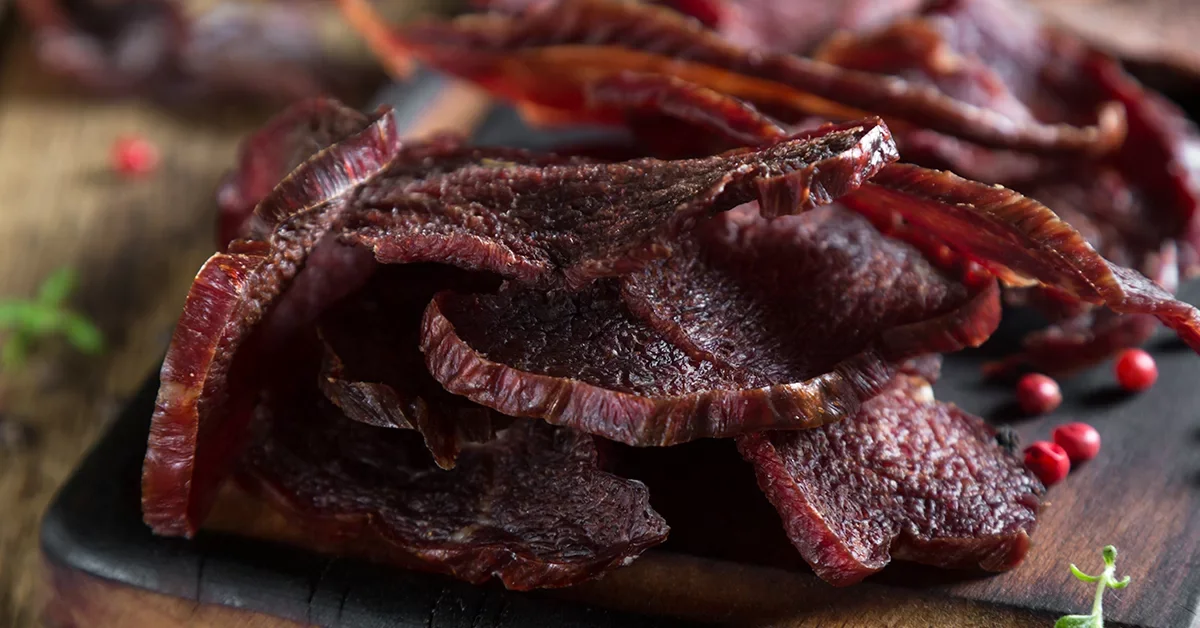
Charqui — dried salted meat.
The reason locro is cooked the way it is, on low heat, many hours, everything eventually merging, is physics rather than preference. Here in Iruya, water boils at around 90 degrees Celsius. Fast cooking is not possible. Boiling does not achieve the temperatures it achieves at sea level. Slow braising and long simmering are not culinary choices in the high Andes; they are the only options. The technique of locro was written by altitude before it was written by any cook.
The original locro is still known by its Quechua name wakcha luqru (poor locro). It contained no meat beyond charqui, or sometimes none at all. It was the vegetable base, the corn and squash and beans, cooked down to a thick porridge. This is the form that predates the Spanish arrival, the form eaten on the Quilmes terraces, the form that sustained the people who held out in those valleys for 130 years. The word wakcha means poor or orphaned in Quechua. The name for poverty in this context is, precisely, the name for the original.
The European layer
The Spanish brought animals. Cattle, pigs, sheep, horses did not exist in the Americas before 1492. With the animals came their meat, their fat, and the culinary tradition built around them: the Iberian and Moorish practice of cooking cheap cuts and offal low and slow in a covered pot, extracting richness from the parts of the animal that the wealthy did not want. Puchero, cocido, olla podrida - the Spanish tradition of the long-simmered pot - met the Andean tradition of the long-simmered pot and recognised itself.
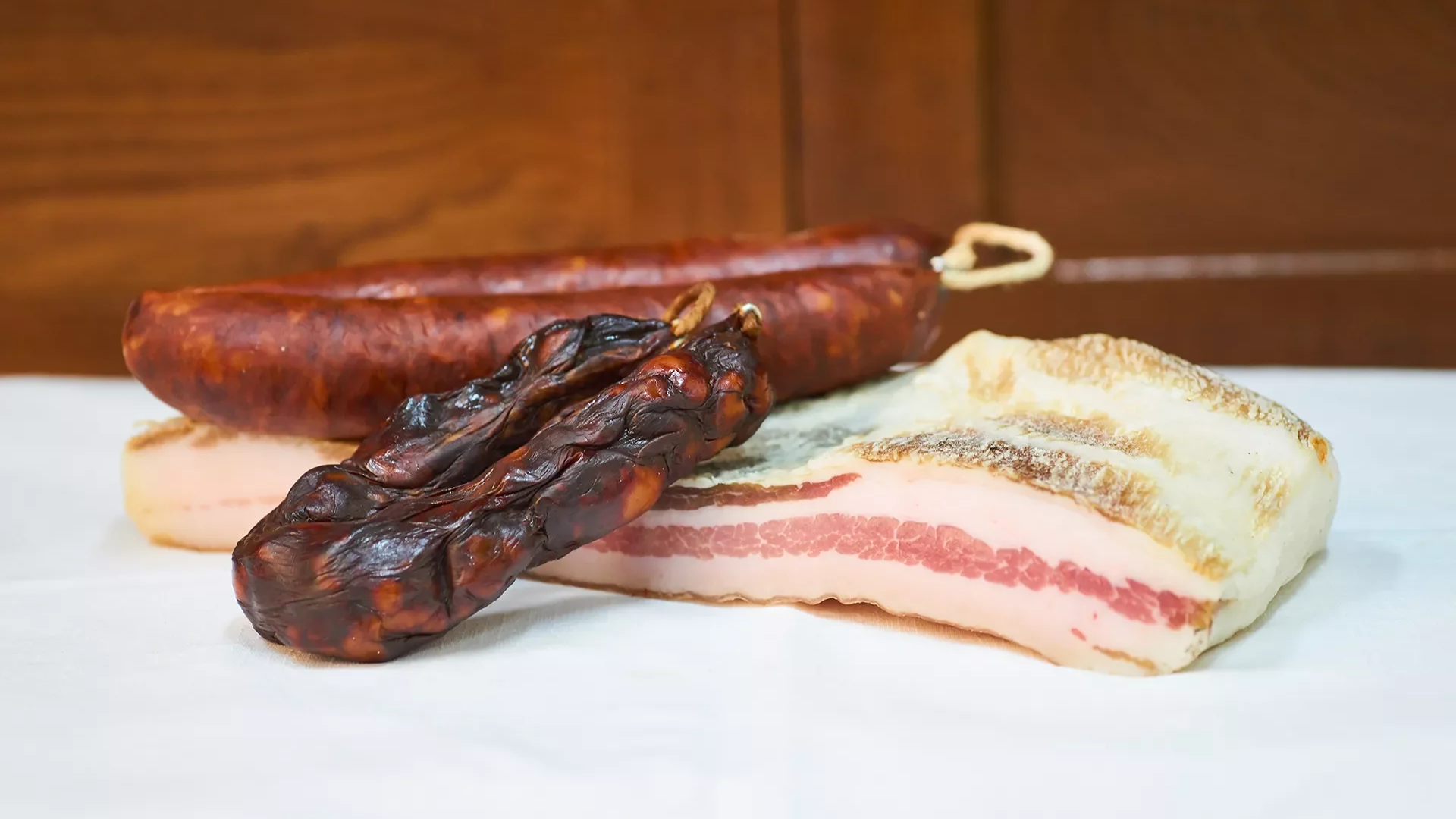
Locro uses a similar compango to that found in Asturían cuisine.
Into locro went panceta (salted pork belly), fat and gelatinous. Chorizos, the cured pork sausages of the Iberian tradition, whose spicing ultimately traces back through Spain to North African Moorish cooking. Mondongo (tripe), the stomach lining of cattle, which requires very long cooking to become tender and which was historically the meat of the poor, the cut left over after the valuable parts of the animal were sold. Costillas (pork ribs). Cuero de cerdo (pork skin), which dissolves under prolonged heat and gives the broth a particular unctuous body.
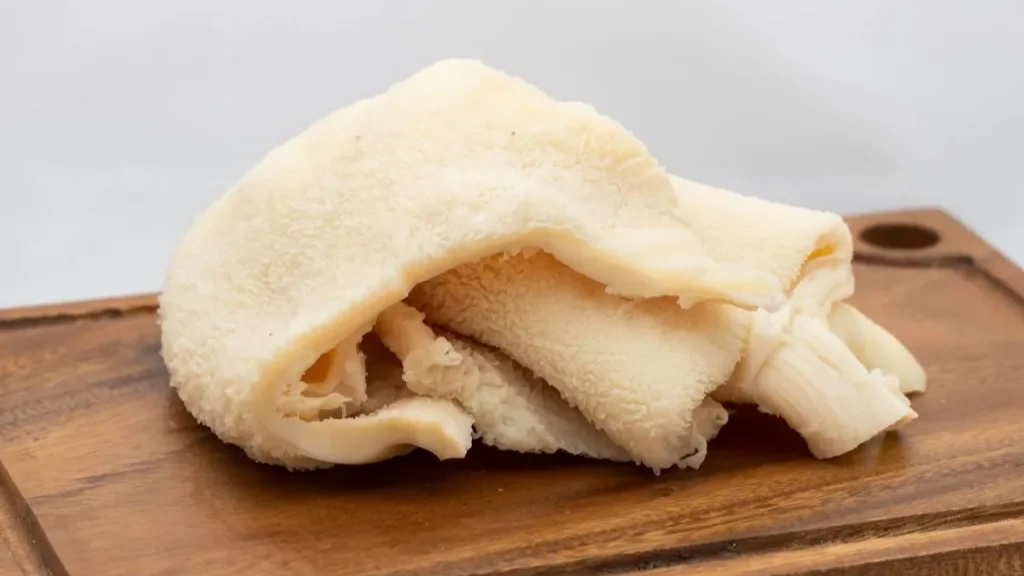
Mondongo (tripe).
The paprika is worth noting separately: it is the Spanish New World contribution turned back on itself. Paprika is made from dried red capsicum peppers, which are indigenous to the Americas, taken to Spain, dried and ground, then returned to South America in the Spanish culinary tradition as a spice. It is one of the stranger loops of the Columbian exchange - an American ingredient processed in Europe and reintroduced to America as European cooking. The ají (fresh or dried chilli) in the dish is indigenous, Andean and ancient, its presence uninterrupted from the pre-contact version to the present.
The vessel
The traditional cooking vessel for locro is the olla de barro, a large earthenware pot, unglazed or partially glazed, with thick walls that retain heat evenly and release it slowly. Here in Iruya the earthenware pot is not a culinary affectation or a heritage revival. It is simply the pot. Earthenware cooking is pre-Columbian: the Diaguita ceramic tradition, which produced some of the finest pottery in pre-contact Argentina also produced the everyday cooking pots used on those terraced hillsides. The same hands that made the funerary urns found in the Quilmes cemeteries made the cooking vessels that held the ruqru.
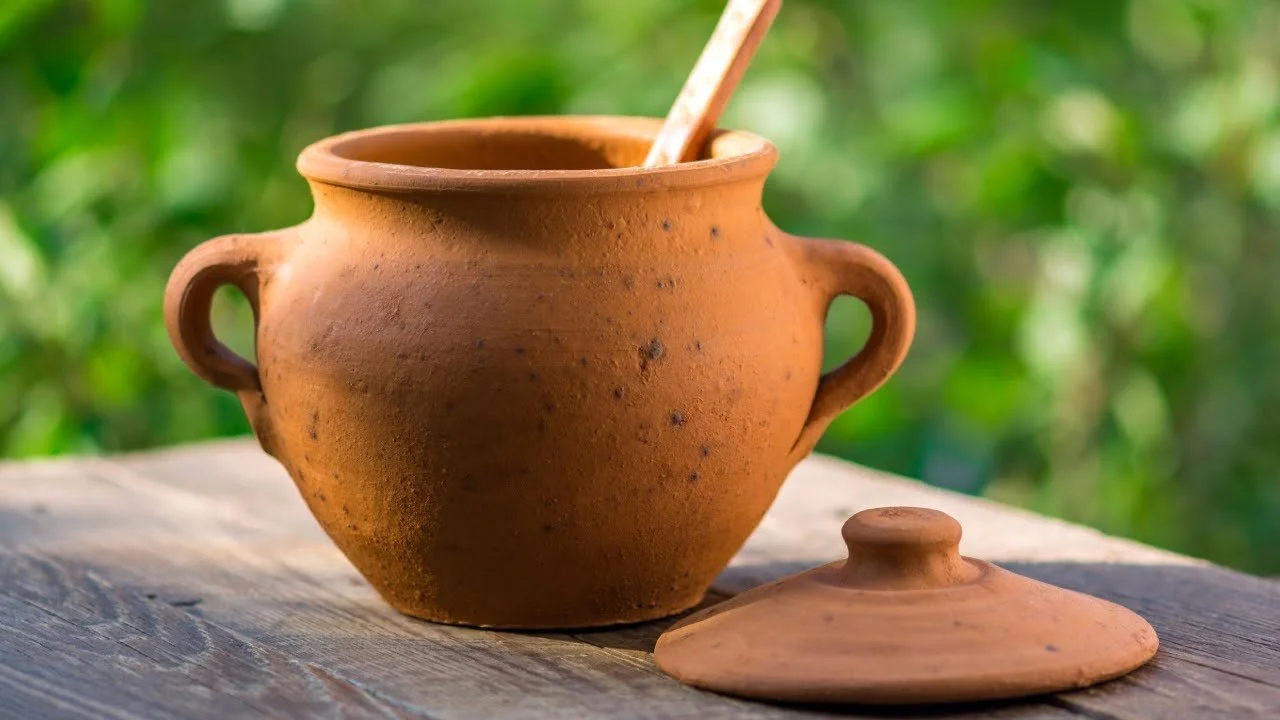
The olla de barro.
Earthenware changes the dish. The porous walls absorb and release moisture differently from metal. The heat distribution is more even and more gentle. The slow thermal mass of thick clay sustains a barely-there simmer that would be difficult to maintain in a thin metal pot. A locro cooked in earthenware over low heat for four hours tastes different from the same recipe in stainless steel: earthier, more unified, less sharp.
The journey down from the mountains
Given the antiquity of the Quechua name, the pre-Inca ingredients, the earthenware vessel, the altitude technique, it might be assumed that locro has been the Argentine national dish since Argentina existed. It has not. According to food scholar Carina Perticone, locro first appeared in Buenos Aires' rural areas only in the 1820s, a decade after independence. It did not reach the city itself until the 1840s. The first Argentine cookbook, published in 1888 under a pseudonym by Susana Torres de Castex, still described it as a rural dish. It was the food of the northwest, of the gaucho, of the poor.
Its status as the mandatory food of the 25 de Mayo is approximately 60 years old. Before that, the patriotic dish was asado (beef ribs on the grill), a statement about what Argentina imagined itself to be: European in origin, cattle-rich, of the pampas rather than the mountains. The elevation of locro to national symbol happened in the second half of the twentieth century, as Argentina went through a longer process of acknowledging what it was actually made of… a country whose indigenous and mestizo heritage ran deeper than the European immigration story it had preferred to tell about itself.
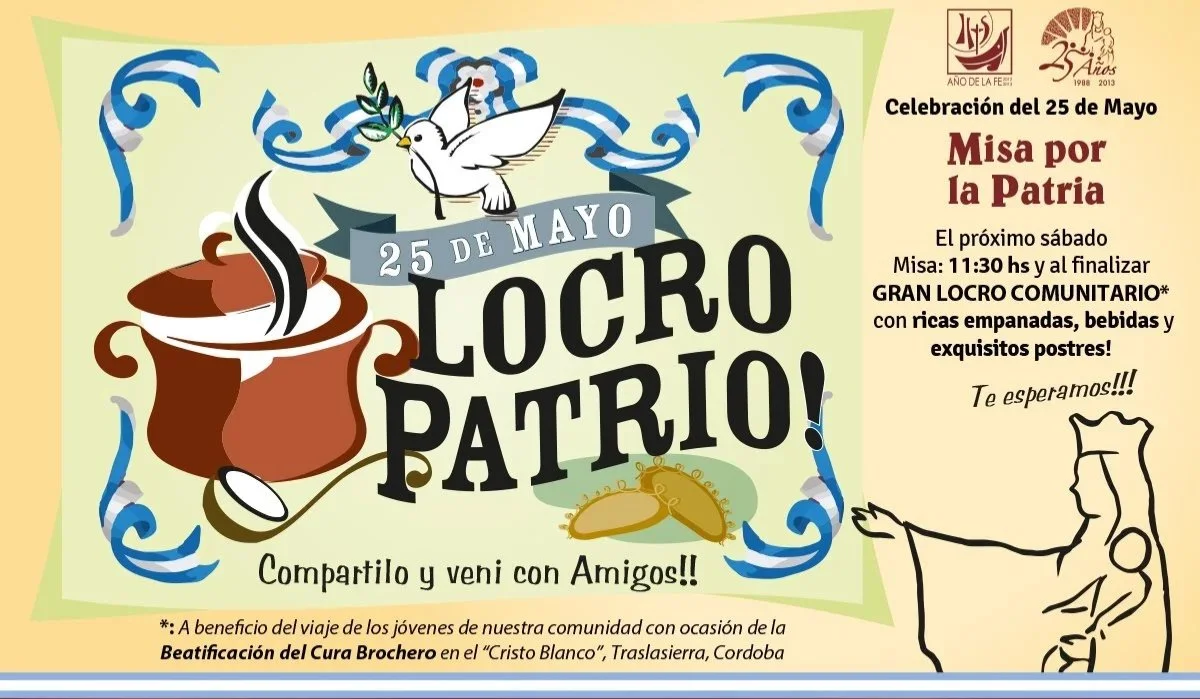
“25th of May, homegrown locro, share this traditional stew and come with friends!”
This is not a diminishment of the dish. It is the most interesting thing about it. A country that had spent its first century treating its Andean and indigenous heritage as something to be superseded eventually reached back into the northwest, into these quebradas, into the food of the poor, and found there something it wanted to call its own. The dish that Argentina now eats on its independence day to celebrate freedom from Spain is built on the culinary tradition of the people Spain spent 130 years trying to destroy. The ruqru of the Quilmes terraces, dressed in European meat and carried down from the mountains to a Buenos Aires restaurant, is mestizo on a plate in the most precise and unremarked sense.
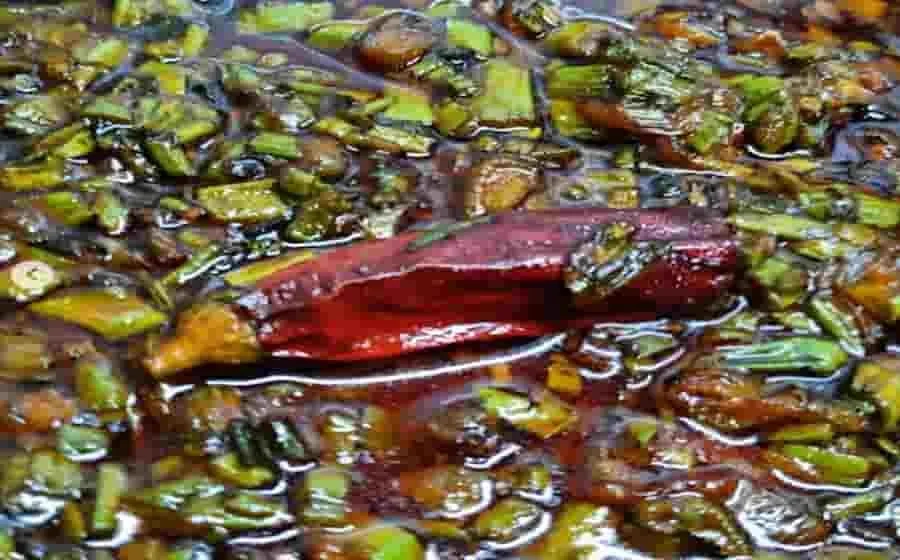
Quiquirimichi, a spicy Quechua sauce.
There is a finishing sauce called quiquirimichi served alongside locro in the northwest. It combines chilli, paprika and sliced green onion briefly fried in oil, drizzled over the bowl at the table. It is optional everywhere else and habitual here. It is also the moment in the eating of locro when the Andean origin reasserts itself most clearly: the chilli heat, the bright oil, the green onion against the deep orange of the squash-thickened broth.
The recipe
What follows is a locro in the northwestern Argentine tradition closer to the mountain original than the Buenos Aires version, with charqui alongside the fresh meat, earthenware if you have it, and quiquirimichi to finish. It serves six to eight, takes four hours, and should be started in the morning. The ingredients are a map: the maize and squash and beans are pre-contact Andean; the pork and chorizo are colonial Spanish with Moorish roots; the charqui is indigenous preservation technology; the paprika is the Columbian exchange completing its loop. The pot holds all of it along with the affection of a nation.
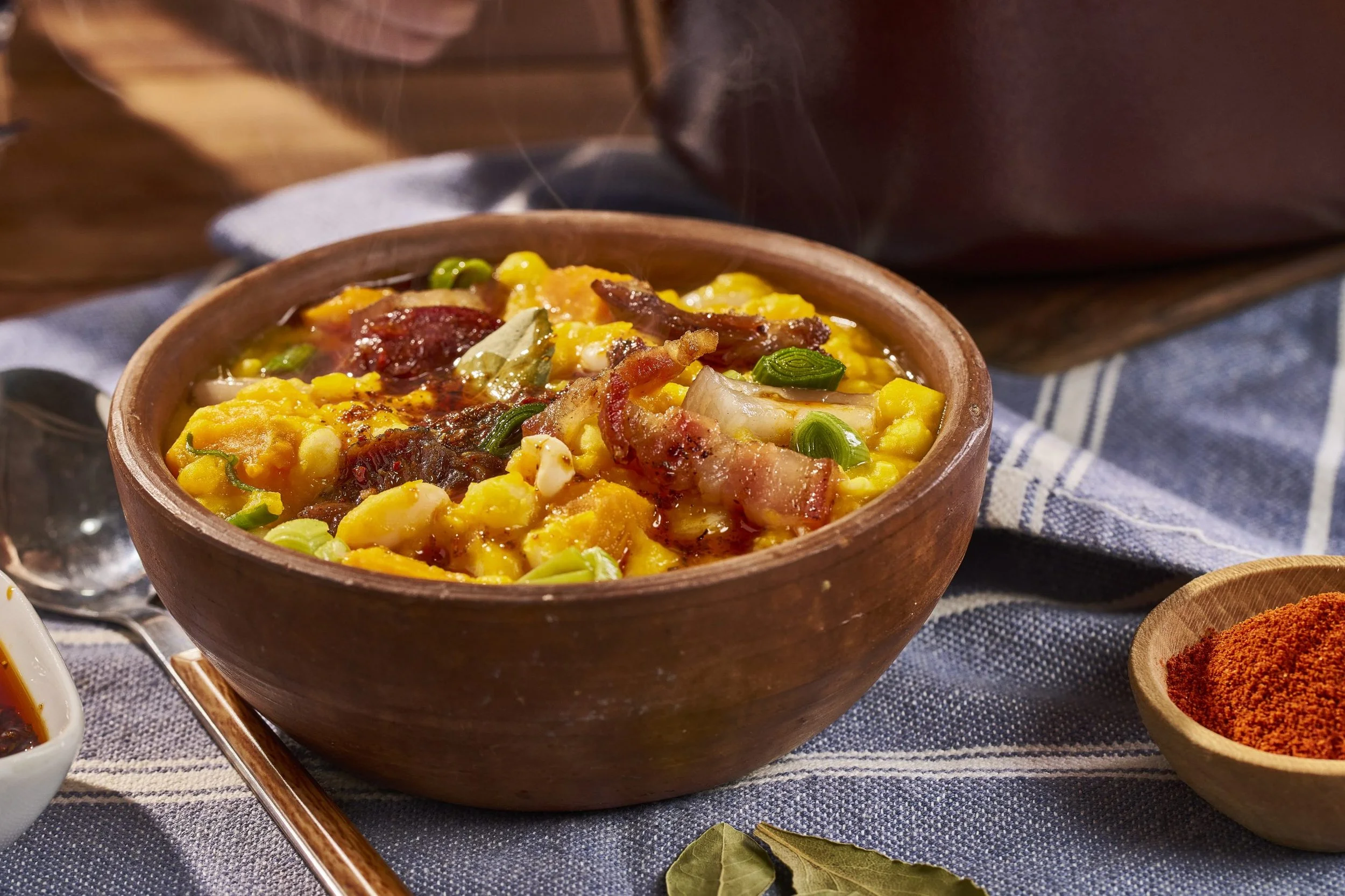
LOCRO — NORTHWESTERN ARGENTINE STYLE
Serves 6–8. Start in the morning.
A pre-Columbian stew dressed in colonial meat, cooked low and slow in an earthenware pot. The ingredients are a map: the maize, squash and beans are pre-contact Andean; the pork and chorizo are colonial Spanish with Moorish roots; the charqui is indigenous preservation technology; the paprika is the Columbian exchange completing its loop.
-----
THE NIGHT BEFORE
Soak 400g dried white hominy corn (maíz blanco) and 250g dried white beans in separate bowls, covered generously with cold water, for at least 12 hours. Drain and rinse before use.
If using charqui, soak 150g in cold water for 2 hours to reduce the salt, then drain.
-----
INGREDIENTS
For the stew:
400g dried white hominy corn (maíz blanco), soaked overnight
250g dried white beans, soaked overnight
150g charqui (dried salted beef) or good quality beef jerky, cut into small pieces
400g pork shoulder, cut into 3cm cubes
300g beef skirt or chuck, cut into 3cm cubes
200g panceta (salted pork belly), cut into small pieces
300g pork ribs, cut into sections
2 chorizo colorado (cured red chorizo), sliced thickly
600g zapallo or butternut squash, peeled and cut into 3cm cubes
300g white or sweet potato, peeled and cut into 3cm cubes
2 onions, finely diced
4 garlic cloves, minced
1 leek, white and light green parts, sliced
2 tsp smoked paprika
1 tsp ground cumin
1 tsp dried oregano
1 tsp dried ají or chilli flakes
2 bay leaves
3 tbsp beef or pork fat (grasa), or neutral oil
Salt and black pepper
For the quiquirimichi:
4 spring onions (scallions), sliced
1 tsp smoked paprika
1 tsp dried chilli flakes
4 tbsp neutral oil
-----
METHOD
Build the base
In a large heavy pot — earthenware if you have it, otherwise cast iron or heavy-based — warm the fat over medium heat. Add the onion, garlic and leek and cook gently, stirring occasionally, until soft and translucent, about 15 minutes. Add the paprika, cumin, oregano and chilli flakes and stir through for 2 minutes until fragrant.
Brown the meats
Add the pork shoulder, beef and panceta to the pot in batches and brown on all sides. Do not crowd the pot. Add the pork ribs and charqui and stir everything together.
Add the corn and simmer
Add the drained hominy corn and bay leaves. Pour in enough cold water to cover everything by about 5cm — approximately 2.5 litres. Bring to a boil, skimming any foam that rises. Reduce heat to the lowest possible simmer, cover, and cook for 90 minutes. The corn needs this time before the vegetables go in.
Add beans and vegetables
Add the drained white beans, squash and potato. Stir well. Continue to simmer, covered, for a further 60 minutes, stirring every 20 minutes. Add hot water if the stew looks too thick at this stage — it will thicken considerably as the squash breaks down.
Add the chorizo and finish
Add the chorizo for the final 30 minutes of cooking. Remove the lid. Using the back of a wooden spoon, crush some of the squash and potato against the side of the pot to help thicken the broth. The finished locro should be thick enough that a spoon drawn across the surface leaves a brief trail. Remove the bay leaves and any large bones. Season with salt and pepper.
Make the quiquirimichi
While the locro finishes, warm the oil in a small pan over medium-low heat. Add the spring onions and fry gently for 3 minutes until softened. Add the paprika and chilli flakes, stir through and cook for 1 further minute. Remove from heat. The sauce should be bright red-orange and fragrant.
Serve
Ladle the locro into deep bowls — cazuelitas of earthenware if you have them. Drizzle a generous spoonful of quiquirimichi over each bowl at the table and let each person add more to taste. Serve with good bread and, if in Argentina, a glass of Torrontés or Malbec from the Calchaquí Valley — wine made a few kilometres from where this dish was born.
-----
NOTES
On the charqui: If charqui is unavailable outside Argentina, good quality beef jerky works as a substitute, though it will be less pungent. The charqui is the oldest ingredient in the pot — pre-contact Andean preservation technology. It adds a deep, almost smoky intensity that fresh meat alone cannot provide.
On the corn: Dried white hominy corn (not canned, not sweet corn) is essential for authentic texture. It must be soaked overnight and needs the full 90-minute head start before the vegetables go in. At sea level it will cook faster than at altitude — adjust accordingly.
On the pot: A heavy earthenware pot changes the character of the dish. If you have one, use it. The thick walls retain heat more evenly than metal and produce a gentler, more unified stew.
On timing: Locro improves overnight. Make it the day before if possible, refrigerate, and reheat slowly. The flavours consolidate and the texture deepens.
On the quiquirimichi: This finishing sauce is habitual in Salta and optional everywhere else. I highly recommend it. The chilli heat and bright oil cut through the richness of the broth in a way that makes the whole dish come alive. Make more than you think you need, it will keep.
