Ten thousand years in a glass
The Torrontés at Bodega Puna arrives pale gold, almost luminescent in the afternoon light, and smells of jasmine and stone fruit and something harder to name: a particular intensity that altitude imparts to aromatic grapes, as though the thin air concentrates the vine's effort into the berry rather than the canopy. The bodega sits at 2,600 metres in the Calchaquí Valleys above Cachi, with the Nevado de Cachi visible to the west and the high desert stretching away in every direction: cardón cactus, red earth, the occasional herd of goats picking their way across terrain that looks hostile to almost everything. The vines disagree. The Spanish missionaries planted the first vines in Argentina at Santiago del Estero in 1557, and the Criolla varieties spread northward through the colonial settlements into the Calchaquí Valleys over the following decades, finding in this high desert exactly the conditions the vine had always preferred. The wine they produce has a precision and a floral intensity that the lower valleys of Mendoza cannot replicate. The label says Cachi, Salta, Argentina. The DNA says something considerably older and considerably further away.
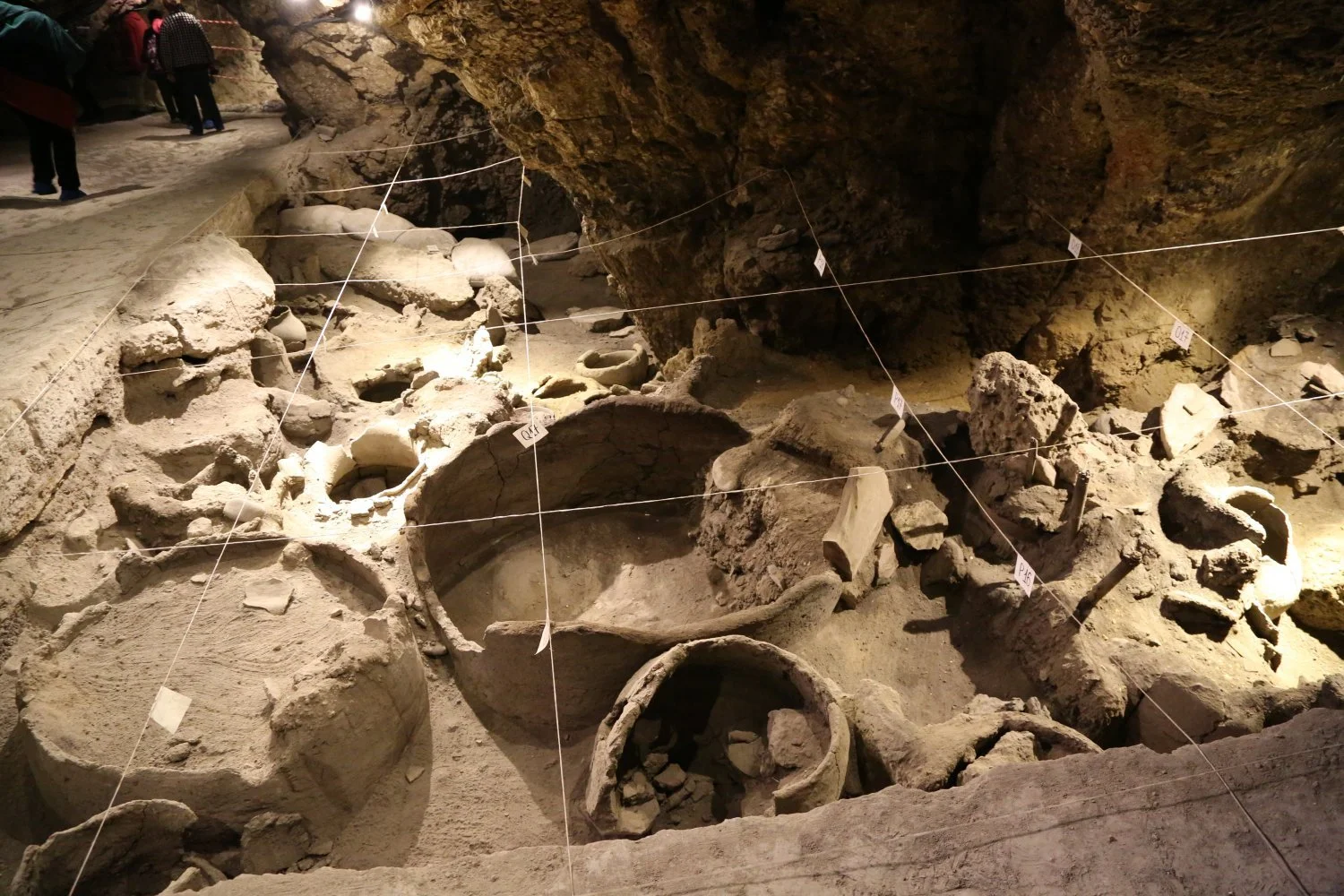
Traces of winemaking at Areni-1 Cave in Armenia.
Torrontés Riojano, the grape in the glass and the one that matters among the three Argentine varieties that share the Torrontés name, is not one thing but the product of a collision. DNA research conducted in the early 2000s, primarily by the ampelologist José Vouillamoz working with colleagues including Jancis Robinson, established that it is a natural crossing between two distinct parents: Muscat of Alexandria and Criolla Chica. Neither parent is Argentine. Neither parent is even New World. The crossing almost certainly happened by accident, in an Argentine vineyard, at some point in the colonial period: an unrecorded moment when pollen from one immigrant vine reached another and produced something that exists nowhere else on earth. The grape Argentina calls its signature white variety, the one that defines the high-altitude style of Salta and whose floral intensity fills the glass at Bodega Puna, is a hybrid of two arrivals that met here and made something new. It is, in the most literal sense, an Argentine.
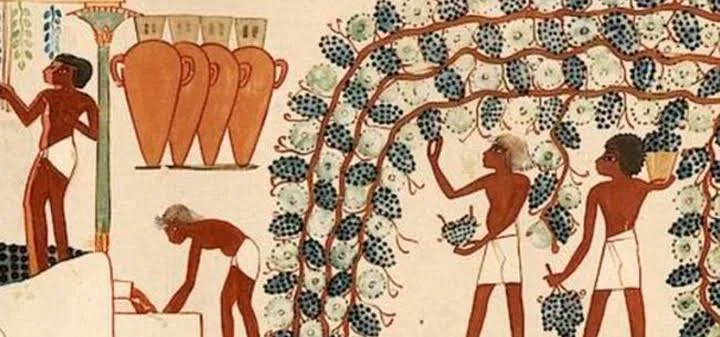
Winemaking was already widespread in Ancient Egypt.
The first parent, Criolla Chica, known outside Argentina as Listán Prieto, arrived from the Canary Islands with the Spanish missionaries in the 16th century, among the first vines planted in the Americas. The Canary Islands were themselves a convergence: Spanish, Moorish, and North African agricultural traditions meeting on a mid-Atlantic archipelago that served as the provisioning and departure point for the transatlantic crossing. The Criolla family that descended from these first plantings became the oldest continuous viticultural tradition in South America, the backbone of colonial winemaking for three centuries before the Italian and French varieties arrived and claimed the premium positions. Criolla Chica is still planted in the Calchaquí Valleys, still growing alongside Torrontés in the landscape of its most famous offspring, largely overlooked by the international market while sharing the same red earth and the same mountain air. One of Torrontés's parents never left.

Phoenician and Greek traders carried grape varieties throughout the Mediterranean.
The second parent has a longer memory. Muscat of Alexandria is itself a hybrid, a crossing somewhere in the eastern Mediterranean between Muscat à Petits Grains Blancs and the ancient Greek variety Heptakilo. The Muscat aromatic character, that specific floral intensity that defines the family and that fills the glass at Bodega Puna, is traceable through genetic analysis to Western Asia approximately 10,500 years ago, when early human selection of wild vines first began to favour aromatic traits. The parent varieties spread through the Mediterranean on Phoenician and Greek trade routes across the second millennium BCE and beyond. Muscat of Alexandria itself takes its name from the great Hellenistic emporium where it was traded and celebrated: the grape known in Ancient Egypt, associated with Alexandria, reputedly drunk by Cleopatra from the Greek island of Lemnos. Arab agricultural knowledge then maintained and extended it through Al-Andalus, from where it entered the Iberian Peninsula, reached the Canary Islands, and crossed the Atlantic as part of the same colonial cargo that carried Criolla Chica westward. When the two vines met in an Argentine vineyard and produced Torrontés, Muscat of Alexandria had already been travelling for the better part of ten millennia.
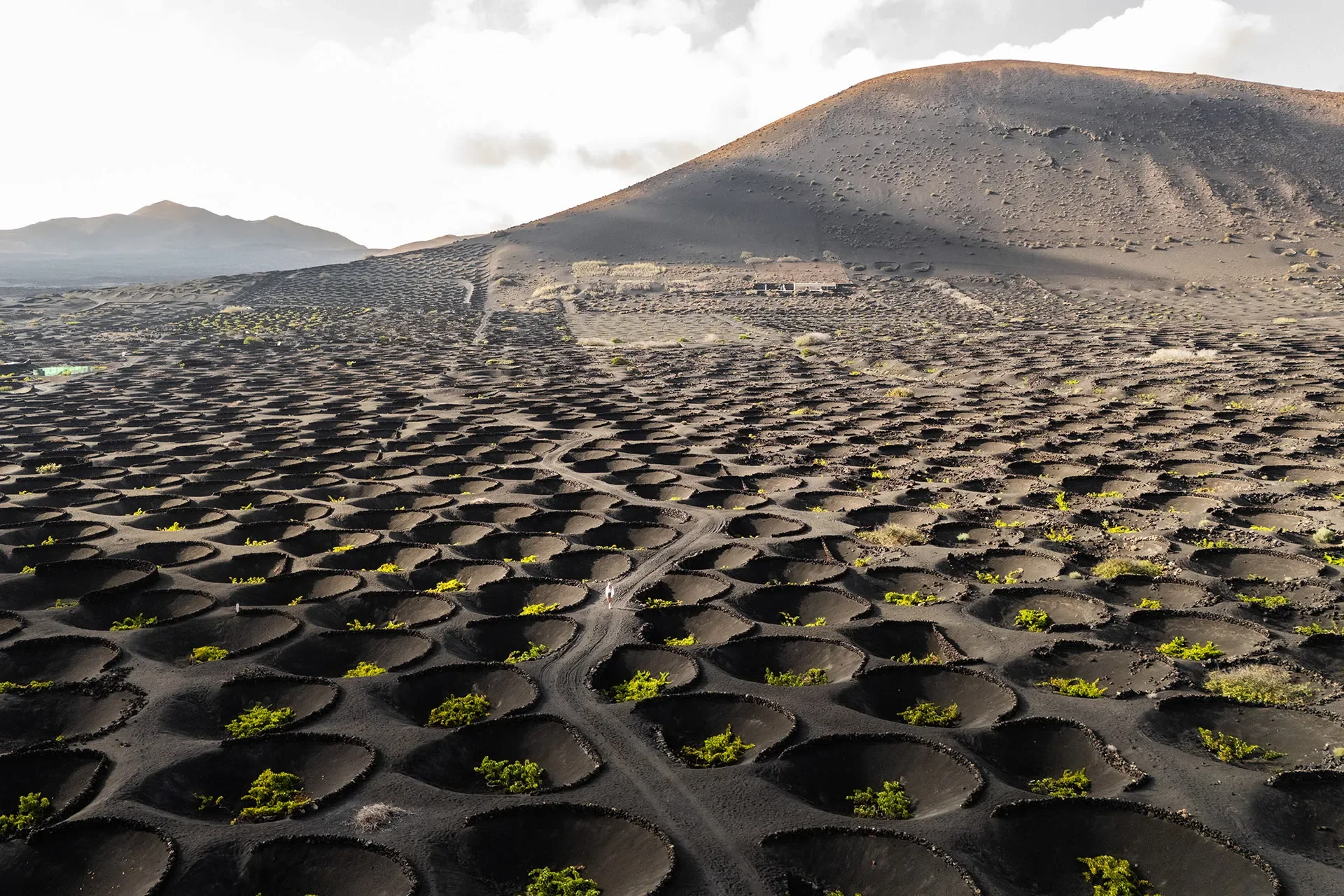
Volcanic vine growing in the Canary Islands.
What gives the glass at Bodega Puna its particular character, the altitude, the thin air, the cold nights, the intensity, is not a New World innovation. The vine was first domesticated in mountains. The Caucasus, understood broadly to include the Armenian Highlands, the Zagros Mountains of western Iran, and the Taurus range of eastern Turkey, is simultaneously the cradle of viticulture and some of the most elevated landscape on earth. The world's oldest known winery, the Areni-1 cave complex in Armenia's Vayots Dzor province, dates to approximately 4,100 BCE and sits in mountain terrain at elevations comparable to the Calchaquí Valleys. More than ninety percent of Armenia lies above 1,000 metres, and Armenian vineyards average higher elevation than almost any other wine-producing country on earth. The vine did not descend from the Caucasian mountains to the Mediterranean plains and then get experimentally carried back upward by New World viticulturalists. It began in mountains. The great civilisations of the ancient Mediterranean brought it down to the valleys and the coastal plains, where it thrived and spread. The conquistadors carried it across the Atlantic to the Andes, where it climbed. At 2,600 metres in the Calchaquí Valleys, the vine is closer to its original conditions than it is in Burgundy or Bordeaux.

Conquistadors and missionaries brought vine stock to the New World.
This is what the DNA research on Argentine grape varieties keeps revealing: that the distinction between Old World and New World is a marketing construction applied to a process that has been running for ten thousand years without regard for it. Every grape variety is the product of a journey, most of which happened before anyone was keeping records. The story of Torrontés is unusually legible because the research is recent and the lineage is traceable, but the principle applies universally. Cabernet Sauvignon's parentage, a crossing of Cabernet Franc and Sauvignon Blanc, almost certainly accidental, was confirmed by DNA analysis only in 1996, unknown to the Bordelais vignerons who spent centuries refining it. Chardonnay is the offspring of Pinot Noir and the obscure Gouais Blanc, a grape of such low reputation that it was periodically banned in medieval France. The grapes we treat as ancient and definitive are mostly accidents that happened to be good.
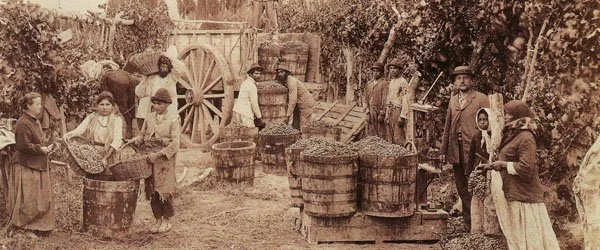
Winemaking was expanded by Italian immigrants to Argentina.
Two Argentine cases illustrate the point in different ways. Bonarda, the second most widely planted red grape in Argentina, is sold under an Italian name and assumed to be an Italian variety brought by the immigrant winemakers of the 19th century. DNA analysis has established that it is not Italian Bonarda at all but Douce Noire from Savoie in France, a grape carrying a false identity built on a century of mistaken naming, commercially entrenched and largely undisturbed by the research that disproved it. Malbec tells a different kind of story: genuinely French, introduced by Michel Pouget in 1853, largely abandoned in its homeland after phylloxera, so thoroughly naturalised in Argentina that it is now understood globally as Argentine. A grape that had to leave home to become itself… and here it really is everywhere, to the extent that it would be foolhardy to produce a bad example.
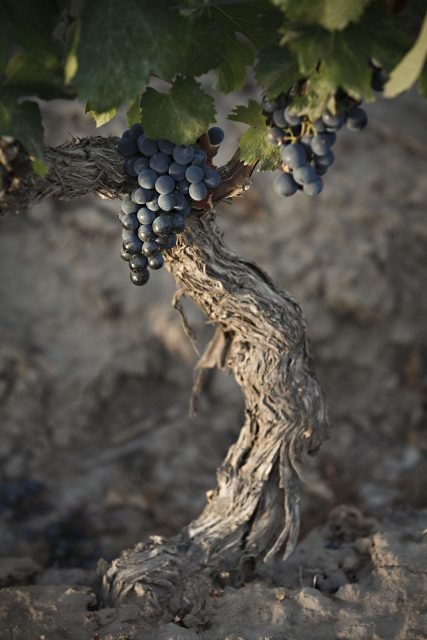
Old stock vines nearby Mendoza.
Back at the glass. The Torrontés Riojano at Bodega Puna is Argentine in the sense that it was born here, crossed here, shaped here over four centuries by the altitude and the dryness and the particular intensity of the Calchaquí sunlight. It is also 10,500 years old, or thereabouts. It carries the memory of Egyptian harvest festivals and Greek island wines and Moorish agricultural knowledge and Spanish colonial missions and an unnamed moment in an unnamed Argentine vineyard when two immigrants crossed and made something new. The mountain air it grew in is not so different from the mountain air of the Armenian Highlands where the vine first learned what it was. The cold nights, the thin atmosphere, the concentration of effort into the berry: these are conditions the vine recognised long before anyone thought to plant a vineyard in the Andes.
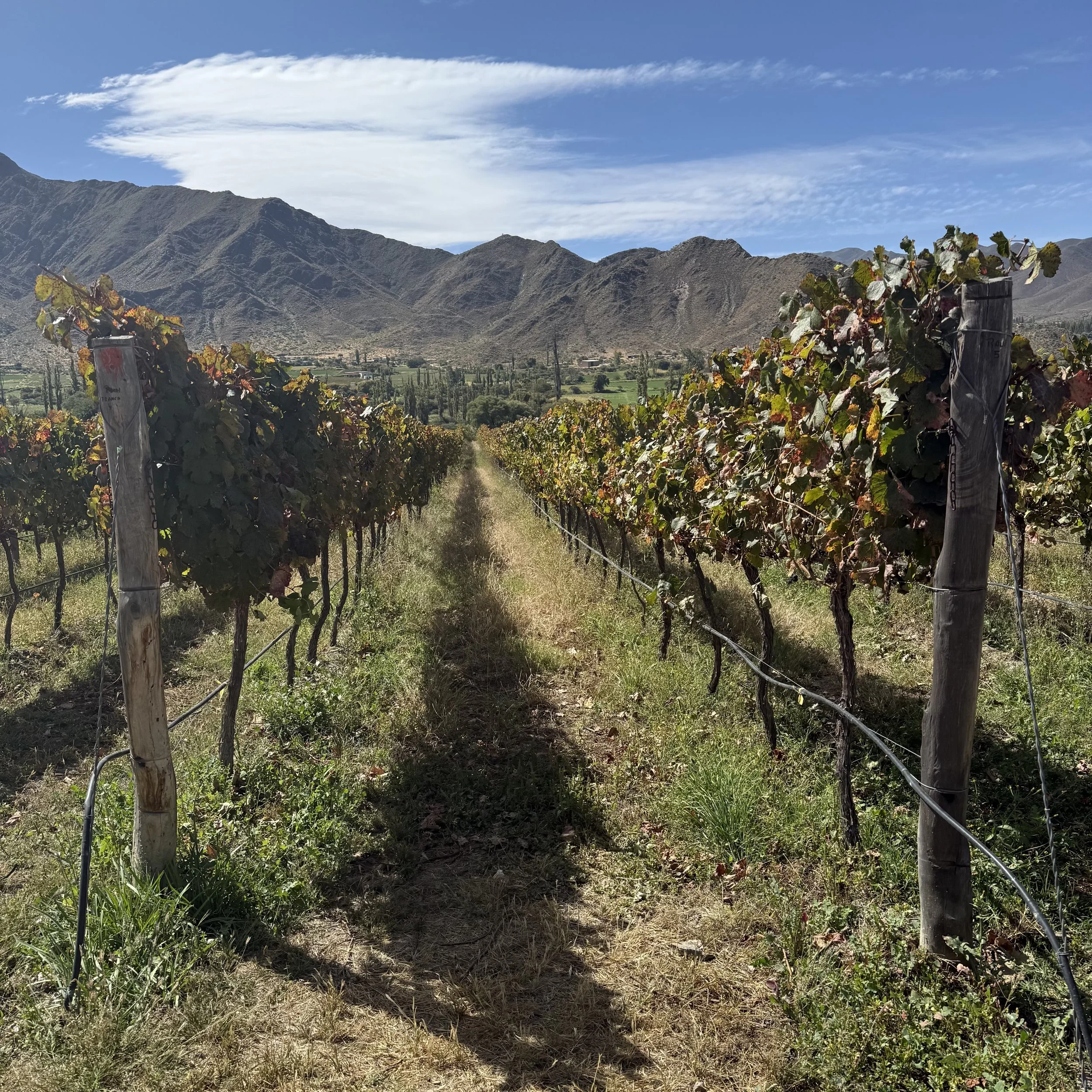
A high altitude vineyard in the Calchaquí Valley.
There is a word in wine for the total character that a place imparts to what grows in it: the soil, the climate, the elevation, the aspect, the accumulated particularity of a specific patch of earth. The French call it terroir, and it has become one of the most contested and overused terms in the wine world, deployed to justify prices and construct identities and distinguish one valley's product from the next. But the glass at Bodega Puna suggests a longer version of the same idea: that terroir is not only the place but the entire journey that brought a particular vine to that particular place, the ten thousand years of selection and crossing and movement and accident that produced the specific set of aromatic compounds now dissolving on the palate. The vine knows where it has been. The wine, if one looks as closely as Vouillamoz and Robinson, might even tell you.
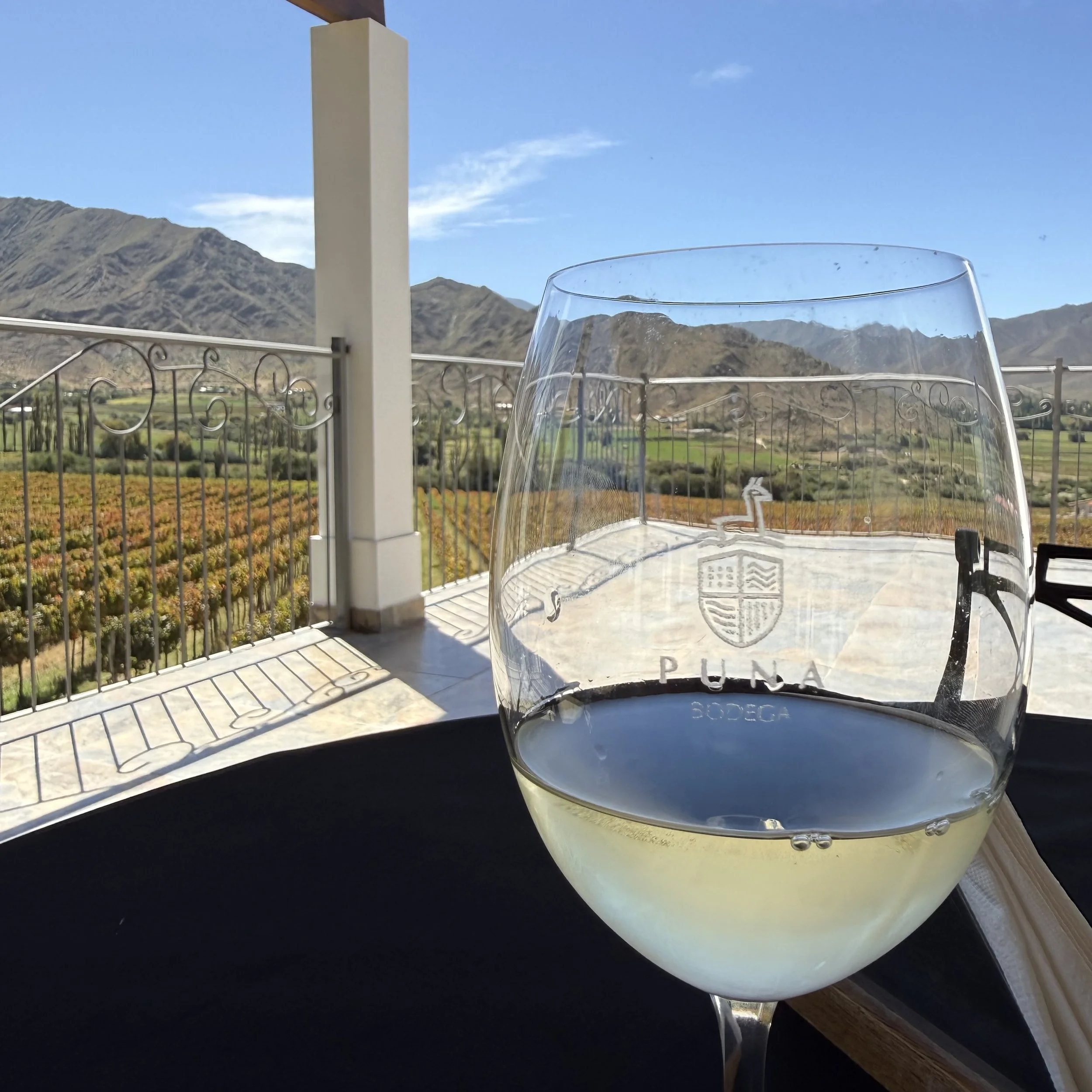
My crisp, dry torronté travelled as far to meet me as I did it.
