Nobody knows their names. The people who, somewhere in the high puna of the central Andes between seven and five thousand years ago, first learned to manage rather than merely hunt the guanaco and the vicuña. They left no monuments, no inscriptions, no cultural identity recoverable from the record. The only clue they have left us is bone. At Telarmachay Rockshelter, 170 kilometres northeast of Lima at 4,420 metres above sea level, where there is frost three hundred nights a year and an average annual temperature of below five degrees, the faunal sequence tells a story across millennia: generalised hunting gave way to specialised hunting of the two camelids, giving way by around 6,000 years ago to controlled herding. Corrals appear in the stone structures of the high ravines by 4,500 years ago. No culture claimed this achievement. It happened as slowly and irrevocably as the domestication of wheat in the Fertile Crescent, and like that event it reorganised the possibilities of human life across an entire continent.
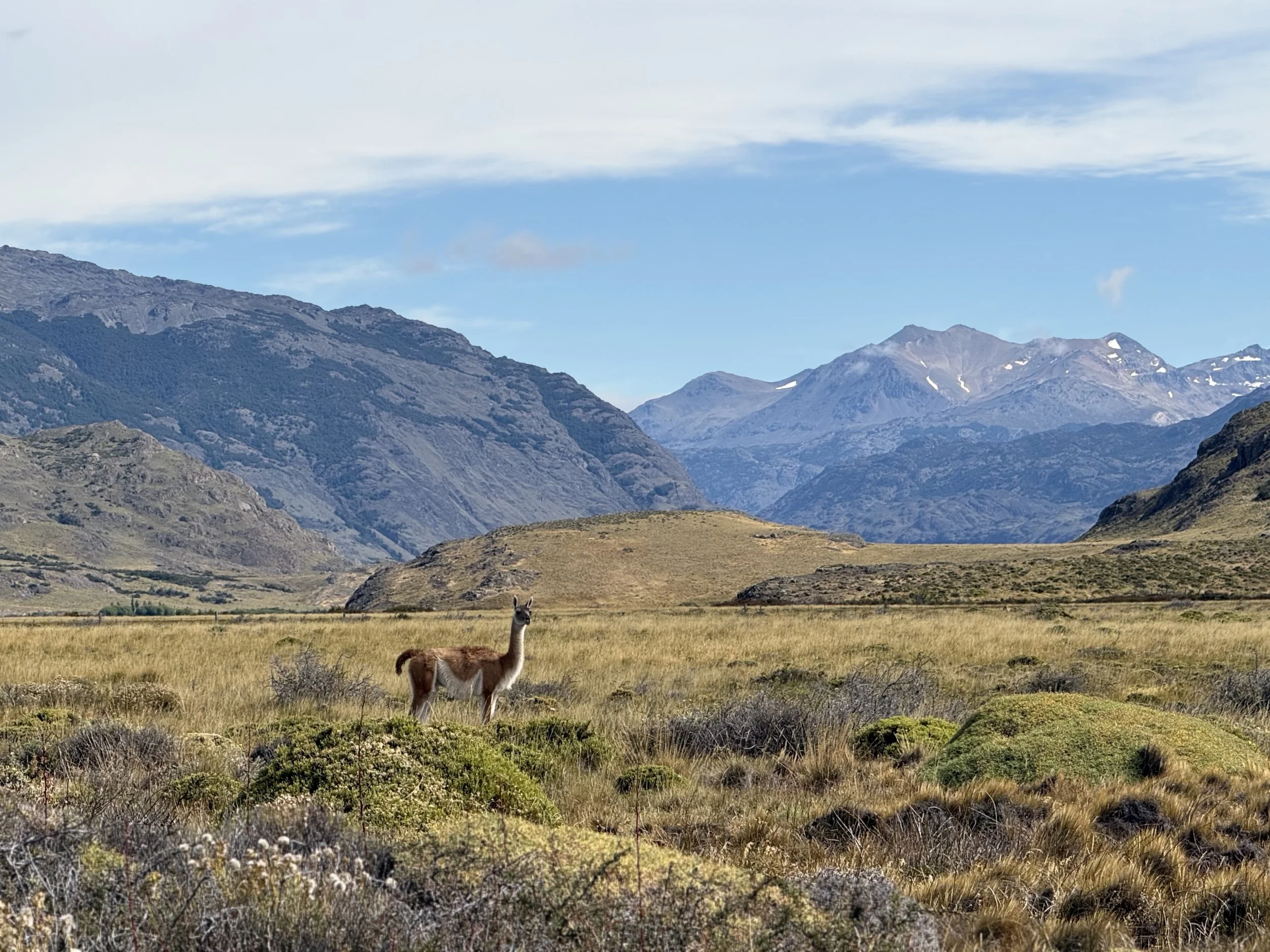
A wild guanaco, lama guanicoe
The four South American camelids divide into two pairs. The guanaco, large and wide-ranging, found from the high puna down through the Patagonian steppe, is the wild ancestor of the llama. The llama’s utility reflects that generalist inheritance: it can carry forty kilograms across terrain that defeats every other large animal, sustain itself on grasses nothing else will eat, provide meat, fuel from its dung, and insulation from its fleece. The vicuña, smaller and more delicate, confined to the high puna above roughly 3,500 metres and exquisitely adapted to thin air and sparse grasses, is the wild ancestor of the alpaca, bred for meat and textile fibre. The llama and the alpaca exist only as the product of a relationship, millennia of human selection acting on the Lama genus’ adaptability, producing animals neither species could have arrived at alone. They are, in the most literal sense, co-produced beings.
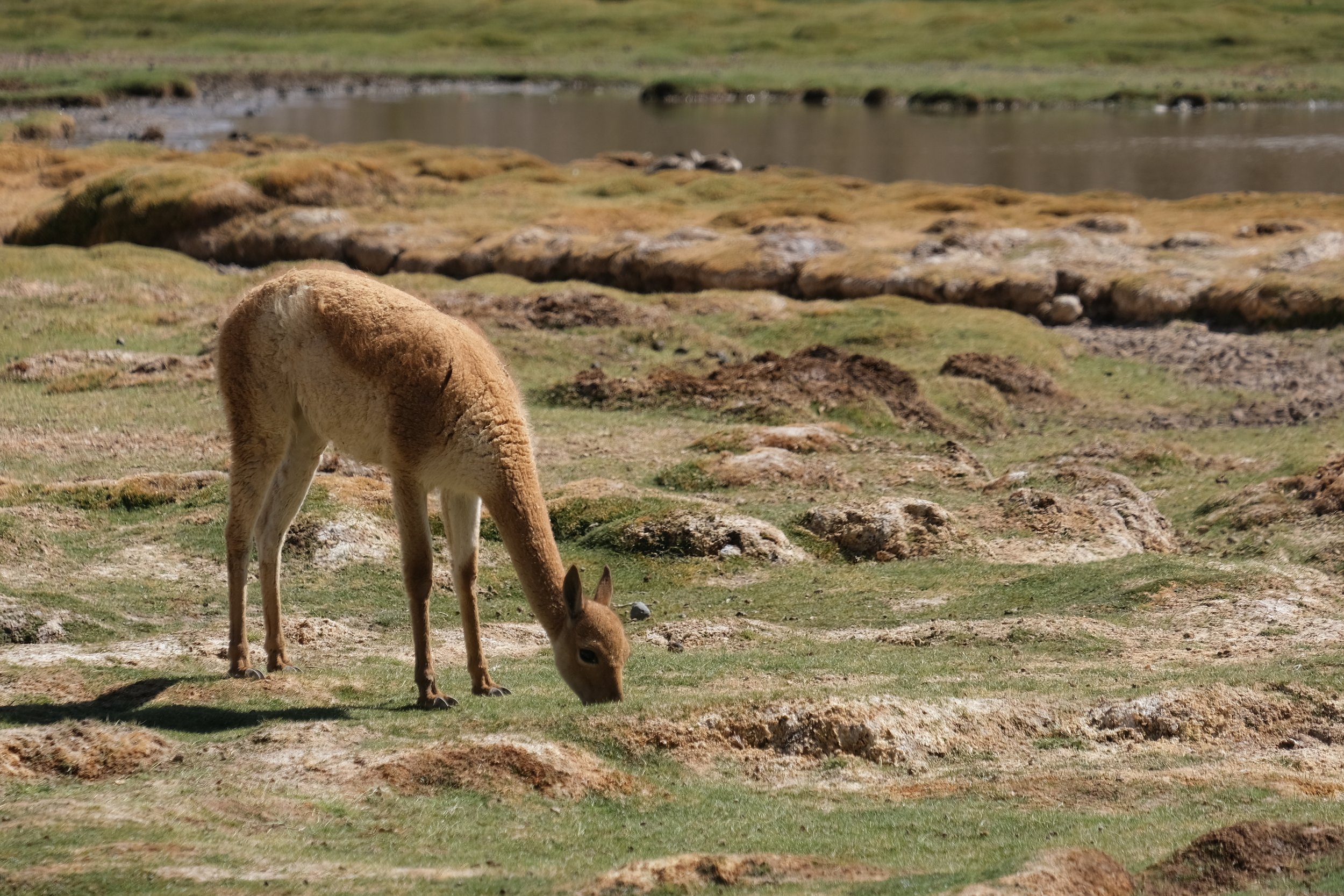
A vacuña on the Andean plateau, lama vicugna
What they co-produce, beyond themselves, is the possibility of the puna as a corridor. Before the llama, the puna, the high-altitude grassland biome of the Andes stretching above 3,500 metres from Peru through Bolivia, Chile, and northwest Argentina, and the arid descents into the Atacama were barriers. The distances between water sources, forty to a hundred and sixty kilometres across the driest sections, exceed what human physiology can sustain without support. The llama reorganises this calculus entirely. A caravan is a mobile provisioning system: self-fuelling, carrying its own insulation and emergency protein, structured around accumulated ecological knowledge of which springs flow in dry years, where the vegas hold water in March, how to read the puna for grazing and shelter. By at least 2,200 years ago the archaeological record is writing this story in distributed objects: obsidian from the Salar del Hombre Muerto in the Catamarca puna appearing at sites two hundred kilometres from its source; spondylus shell from the Pacific Ocean off Ecuador appearing across the Argentine and Bolivian northwest. These objects are not travelling for purely practical reasons. Obsidian is an excellent cutting tool, but workable stone exists everywhere. Spondylus carried cosmological weight, associated with rain and fertility, offered to the mountain apus. What the caravan was carrying, beyond its cargo, was the maintenance of relationship: proof that the distance could be crossed, that the community on the other side of the puna still existed and still remembered you. This is not only commerce. It is something older and more fundamental.
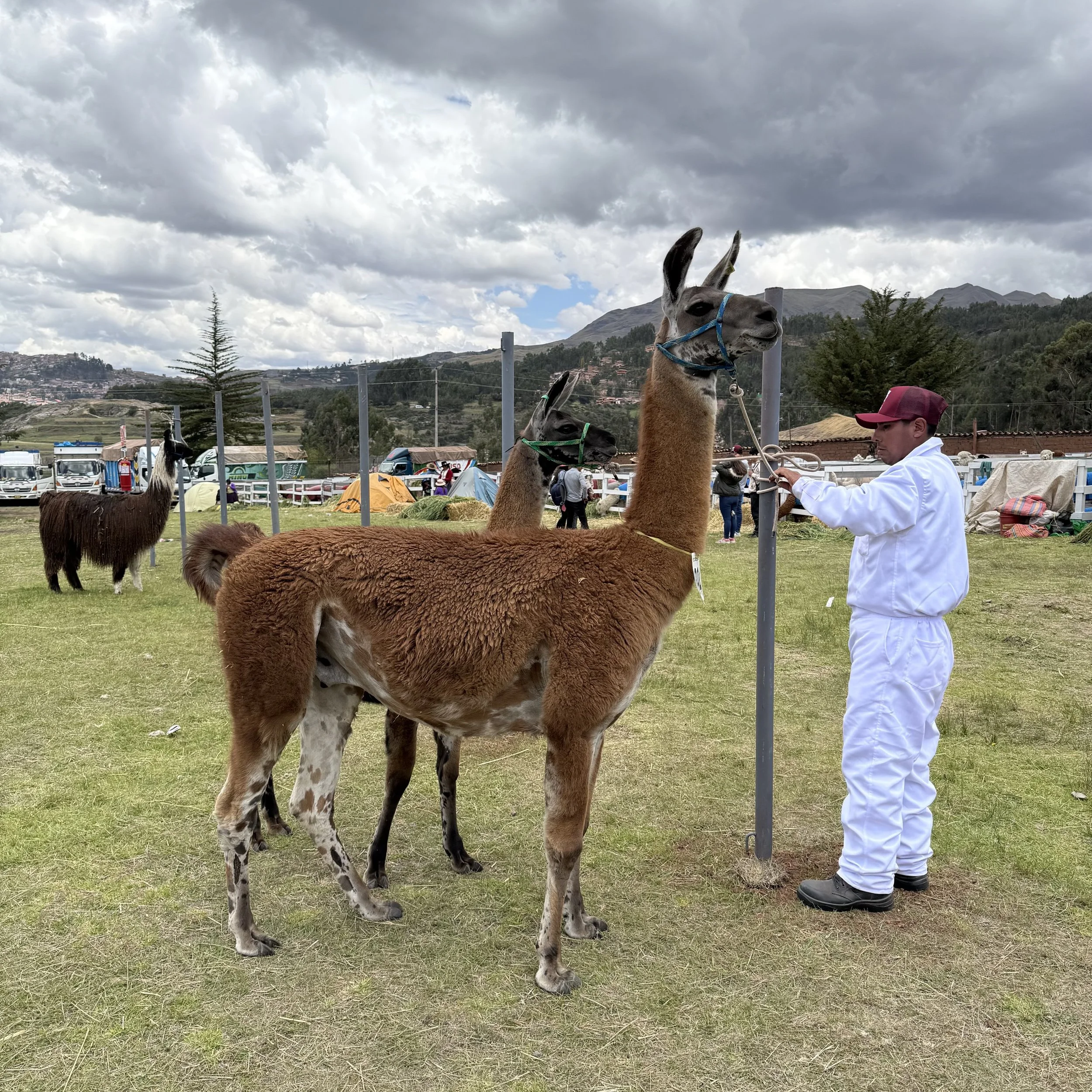
A domesticated llama, lama glama
The road that eventually formalised these corridors, the Qhapaq Ñan or Royal Road, was not invented by the Inca. UNESCO's designation of the network acknowledges explicitly that it connected centres constructed over more than two thousand years of pre-Inca Andean culture. The Wari, whose state dominated the central Peruvian highlands between roughly 500 and 1000 CE, built road infrastructure the Inca later incorporated. The Tiwanaku, centred on Lake Titicaca and extending their influence across the altiplano between the 6th and 12th centuries, developed exchange systems whose traces appear in the ceramics and iconography of northwest Argentina long before the Inca arrived. The caravan routes had been corridors for millennia. What the Inca achieved in their century of expansion was not the creation of Andean connectivity but its bureaucratisation: they paved what was already there, regularised it, and claimed it as their own.
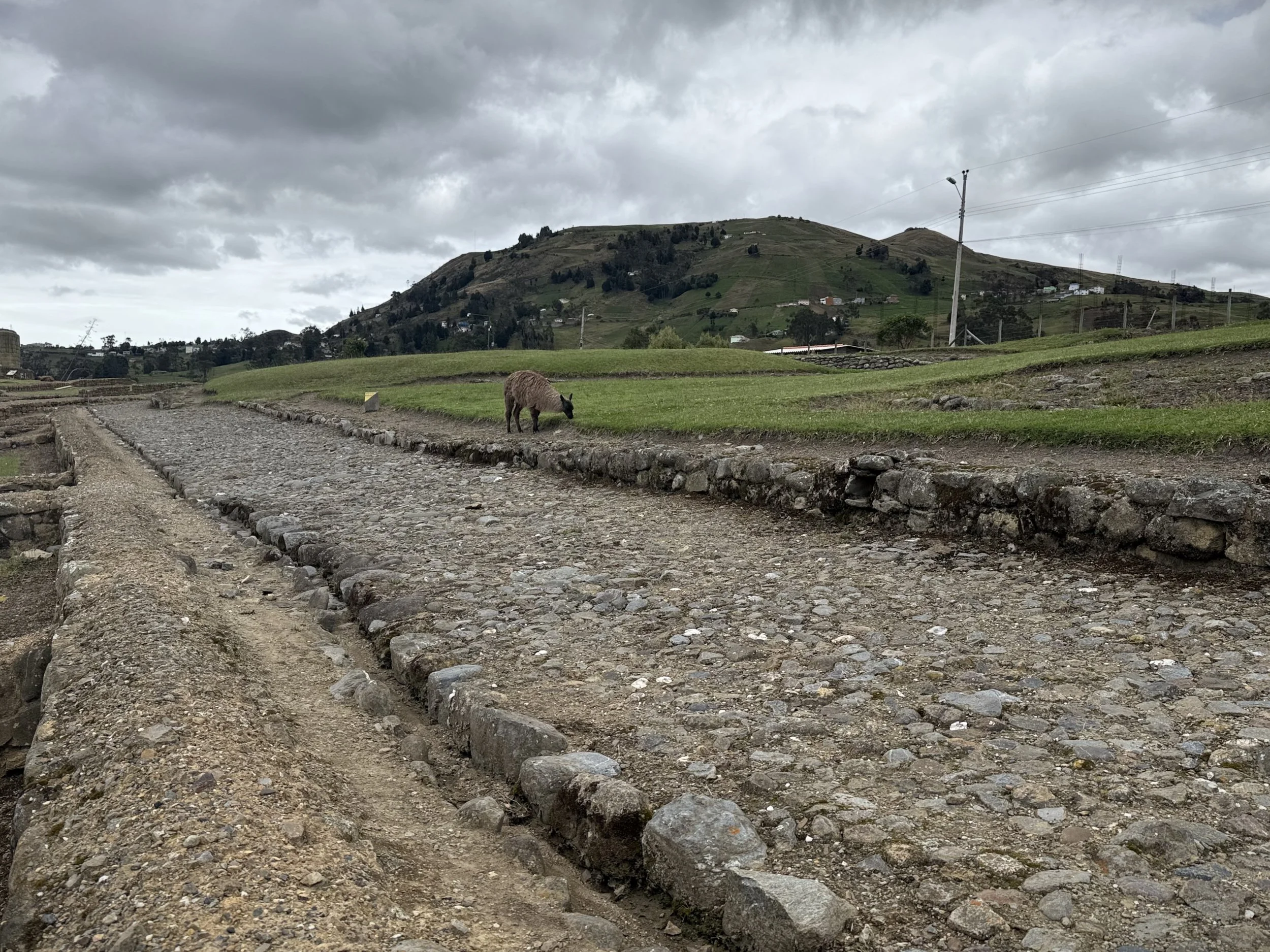
Archaeologists uncovered a pristine section of the Qhapaq Ñan at Ingapirca in Ecuador (bonus alpaca, lama pacos)
The engineering achievement, even understood as the culmination of a longer tradition rather than a sudden imperial act, is extraordinary. At its maximum extent in the 15th century the Qhapaq Ñan covered somewhere between 30,000 and 40,000 kilometres across six modern countries, operating on two main axes, a highland road running the spine of the Andes from present-day Colombia to Chile, and a coastal road running parallel through the Pacific lowlands, with thousands of transverse routes connecting them. It was built without wheeled vehicles, without iron tools, and without draft animals larger than a llama. Stone stairways were cut into vertical cliff faces. Suspension bridges of braided ichu grass, the same high-altitude grass the llamas grazed, crossed gorges up to 45 metres wide, strong enough that the early Spanish chroniclers noted with astonishment that they could carry a horse at a gallop. Drainage channels integrated into the roadbed have remained functional for six centuries. In the highland sections the road was paved with fitted stone; in the coastal desert it was marked with posts and bordered by walls to prevent travellers losing their way in shifting sand; in swampy areas a raised causeway of rough stone and clay mortar carried the surface above the waterline. There was no single engineering solution because there was no single terrain. The road moved through coastal desert, tropical cloud forest, high-altitude plateau, and volcanic massif, and each environment demanded different answers. The Inca gave those answers in a century of concentrated construction.
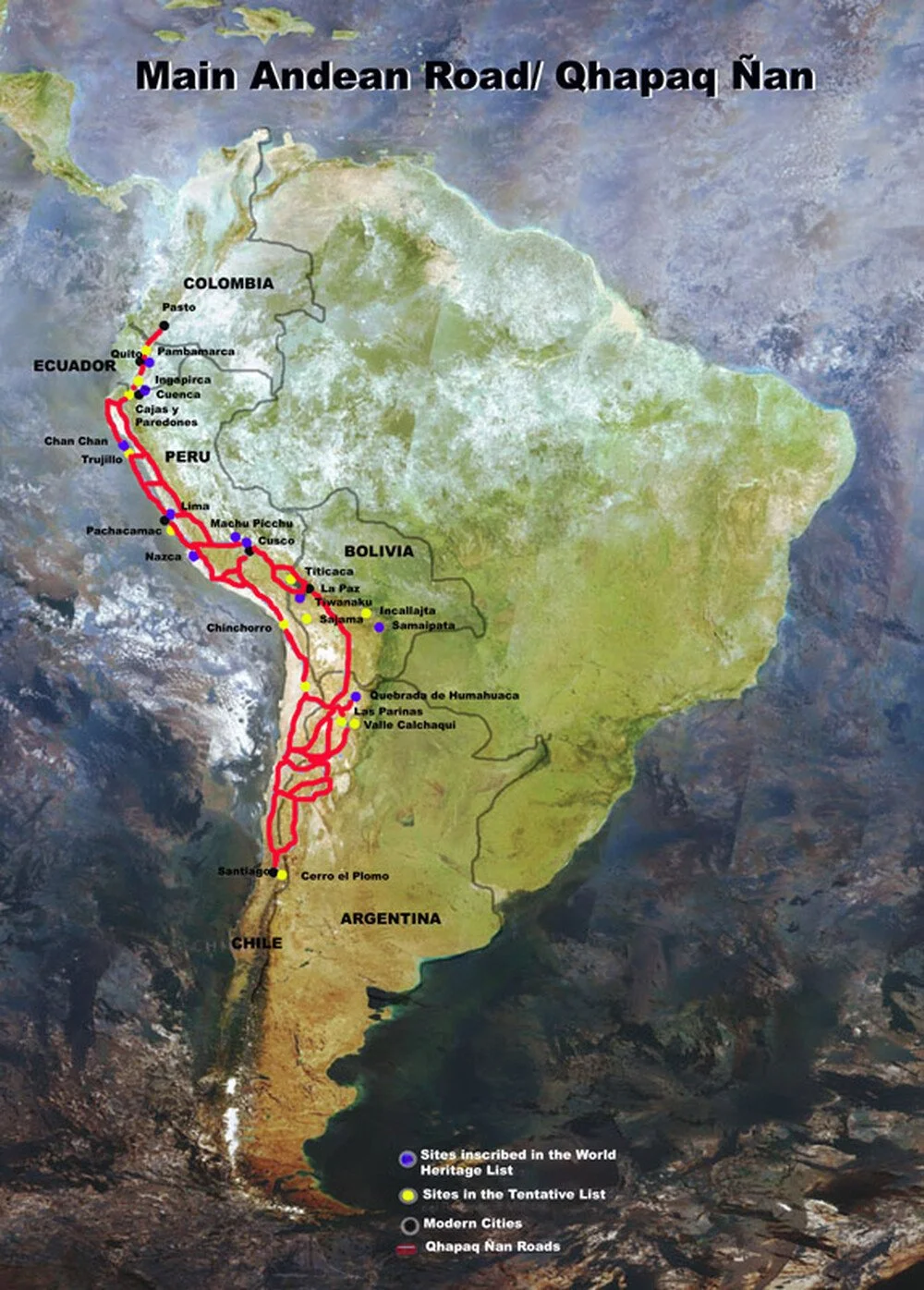
The Andean Road System, as inscribed by UNESCO
The ruins at Tastil, above the Quebrada del Toro at 3,200 metres in the province of Salta, are a specific instance of what the road touched and in some cases ended. Built by the Atacameño people and peaking in the 14th and early 15th centuries, Tastil was a city of two to five thousand inhabitants: streets, plazas, workshops producing metal and textile for exchange, the whole complex integrated into the long-distance networks the caravan routes had maintained for millennia. Then the Inca expansion reached this far south. The Inca practised mitmaq, the systematic redistribution of conquered populations as labour, and the people of Tastil were dispersed across the empire. The city was emptied and never repopulated. What remains is the spatial grammar of a community without the community: thresholds, walls, plazas, all precisely where they were left. Below the ruins, Route 51 runs north through the quebrada toward the Chilean border, following the same corridor the Atacameño used, and before them the caravan traders whose obsidian distributions are traceable across the regional archaeological record. The Qhapaq Ñan passed through Tastil for the same reason the modern road does: the quebrada is the way through.
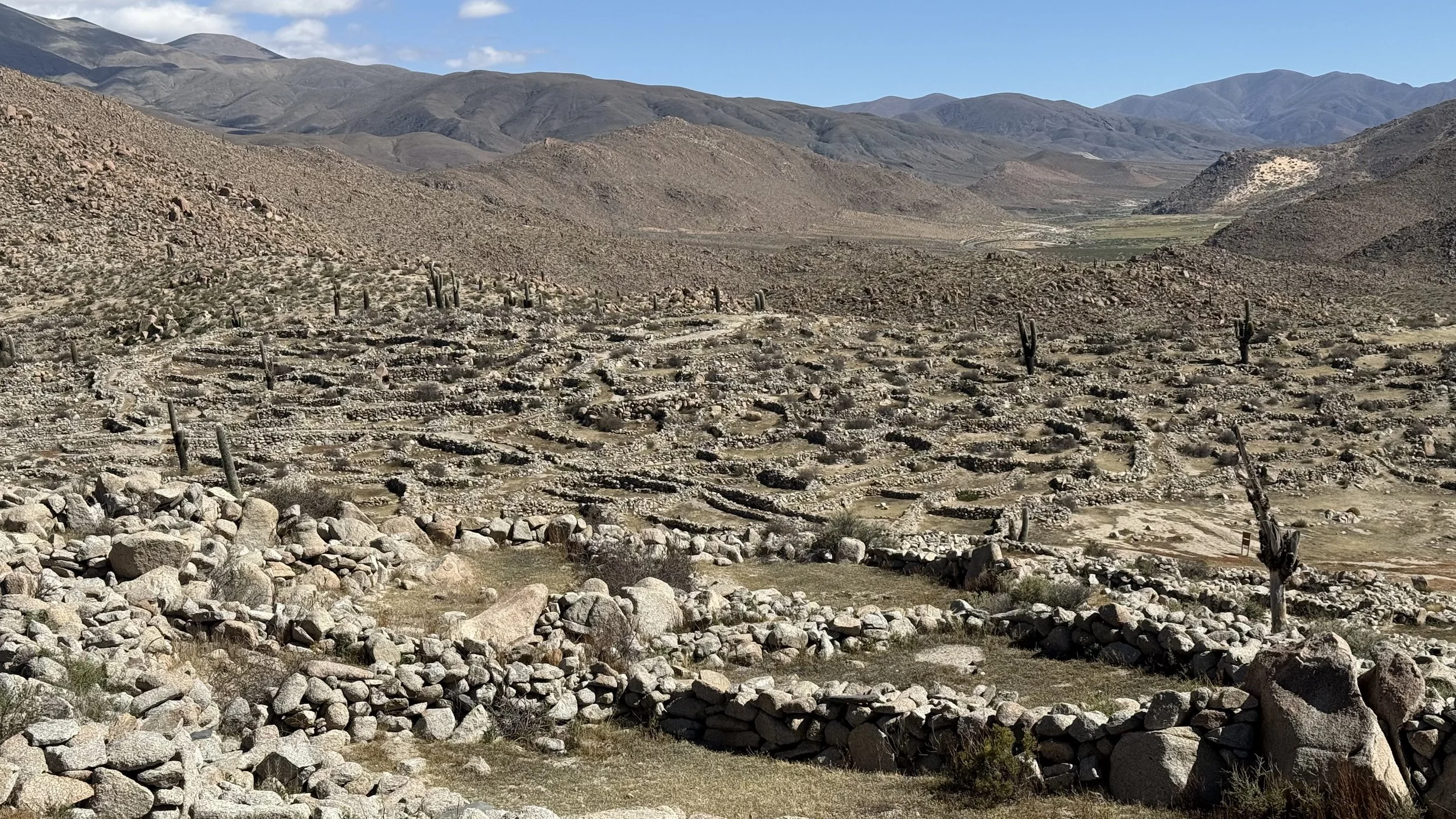
The sprawling remains at Tastil, built by the Atacameño people before being beseiged and ultimately depopulated by the Inca
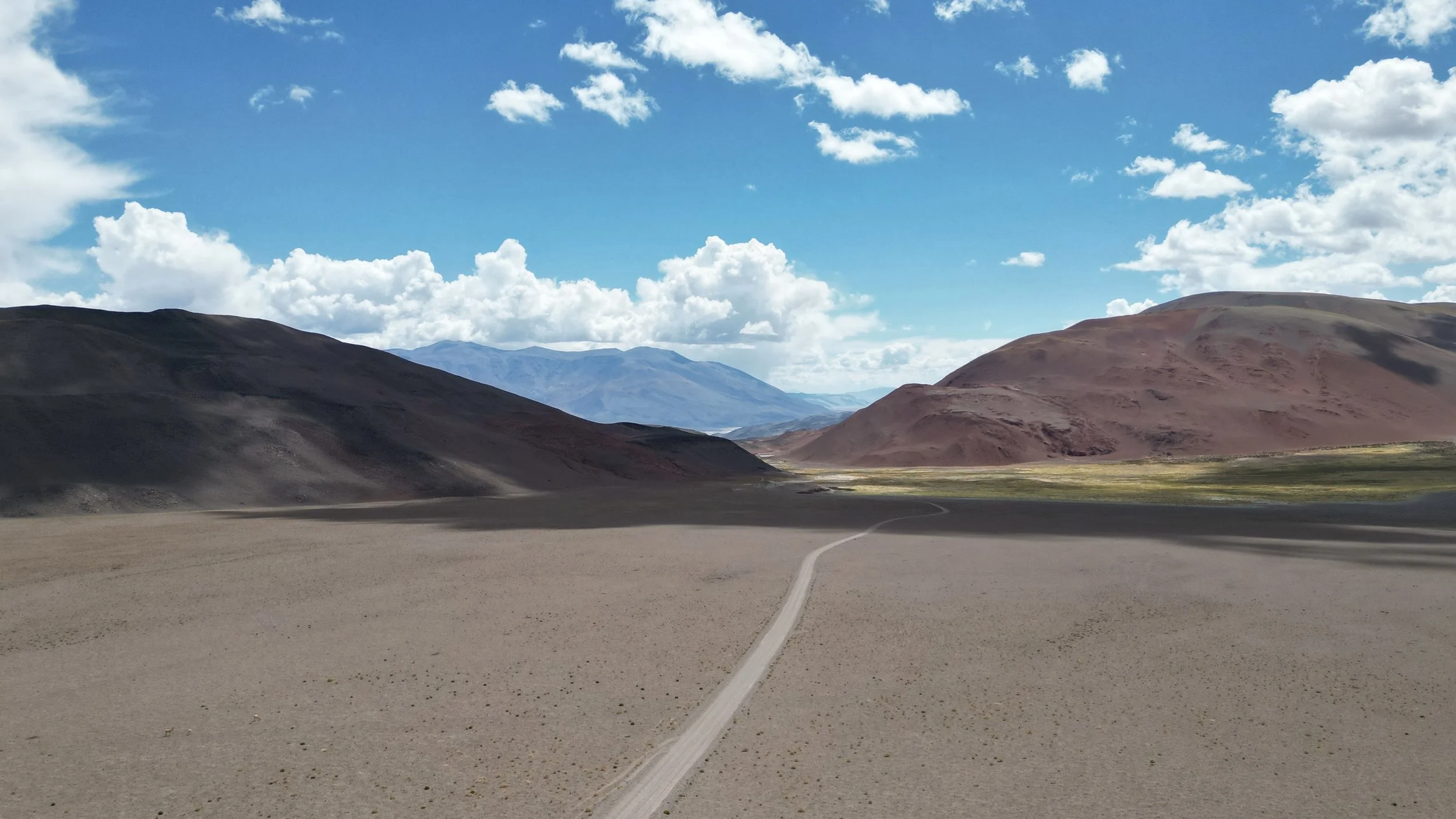
Which leads to the question worth sitting with on a clear morning above the road, the puna running west toward Chile. What is a road, as a category of human thing?
The instrumental answer, that a road reduces friction between points and enables movement, trade, and military projection, is true but insufficient. It cannot account for what a road does to the person who travels it, or for why the Panamericana continues to draw people to it long after the utilitarian necessity has been met by faster alternatives. Heidegger describes human existence as always already underway: not stationed but projected, thrown into a situation from which it cannot withdraw, oriented toward possibilities not yet realised. We are, ontologically, not settled beings but moving ones. The road gives this condition a form, a surface, a direction, a horizon ahead and a receding point behind. To travel a road of any length is to be confronted not with scenery but with temporality: the present extending ahead as possibility, what has already been driven settling as the ground of what can come next.
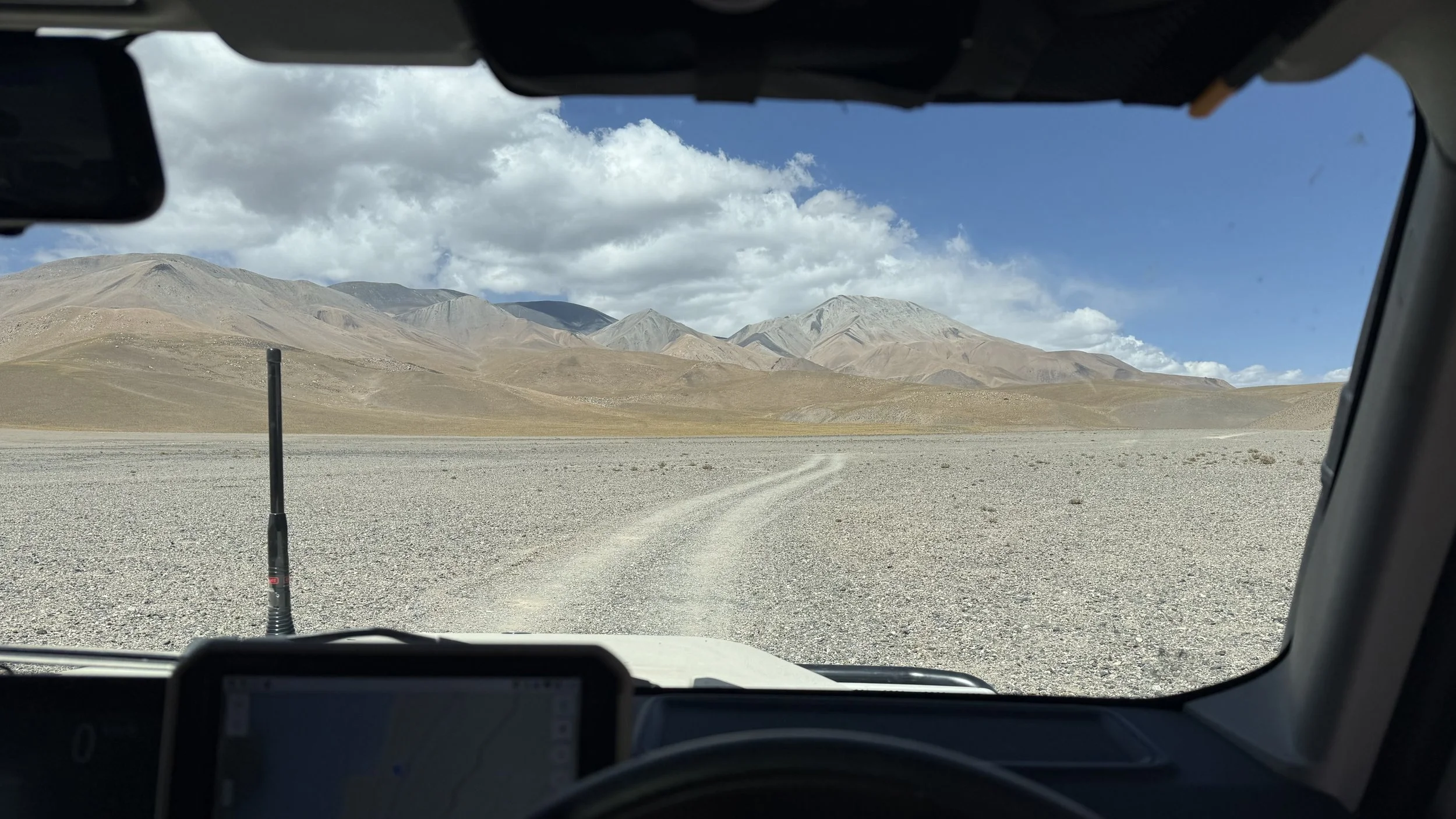
A prayer for the possible, a place to find wonderful things
The person who loaded a llama before dawn and walked north into the cold puna three thousand years ago was acting out the same orientation. The caravan was not metaphorical movement. It was the existential condition of being human made literal: the compulsion to cross the distance, establish or maintain the connection, refuse the severance that distance, terrain and time would otherwise impose. This was expressed in art and stone and livestock and the accumulated knowledge of which pass holds snow in July. The Panamericana follows the same corridors for the same geographic reasons. The compulsion it serves is unchanged. What has changed is the surface, and the speed, and the near-total loss of the ecological knowledge that once made the crossing possible without infrastructure. We have traded the caravan's self-sufficiency for the road's convenience, and most perhaps do not notice what we have given up.
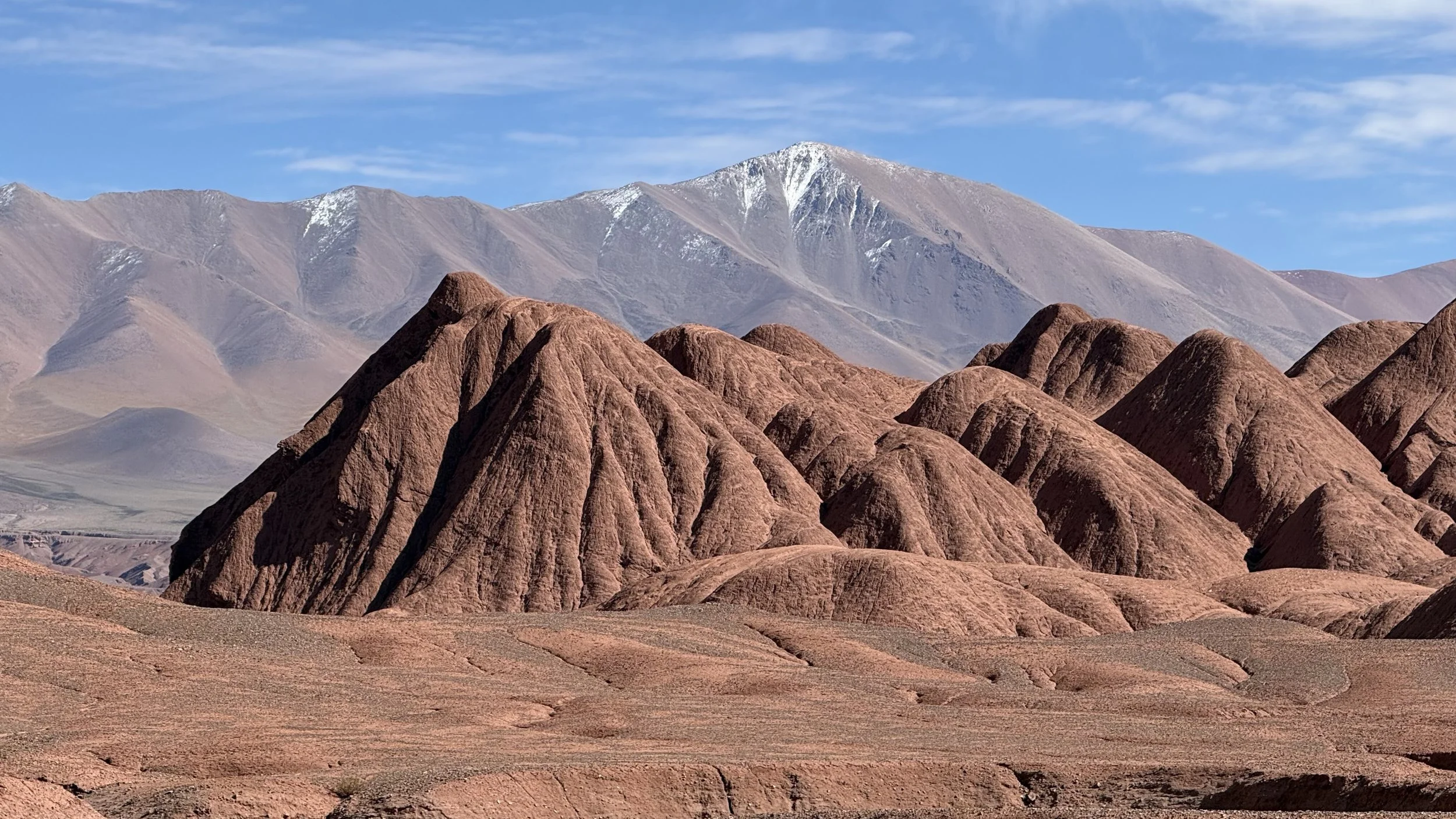
Discovering what lies beyond the next ridgeline is an act of becoming unmediated by an algorithim
Small groups of vicuñas on the slopes around Catamarca are only briefly disturbed by us passing. They graze the same ichu grass their ancestors grazed before the first llama was bred from a guanaco on a high puna ravine somewhere to the north. The road is new, but the route is not. And the impulse that puts one on it, the orientation toward what lies beyond the visible horizon, the refusal of severance, is older than the road, older than the caravan, older perhaps than anything else we do that deserves to be called distinctly human.
The road is life
